


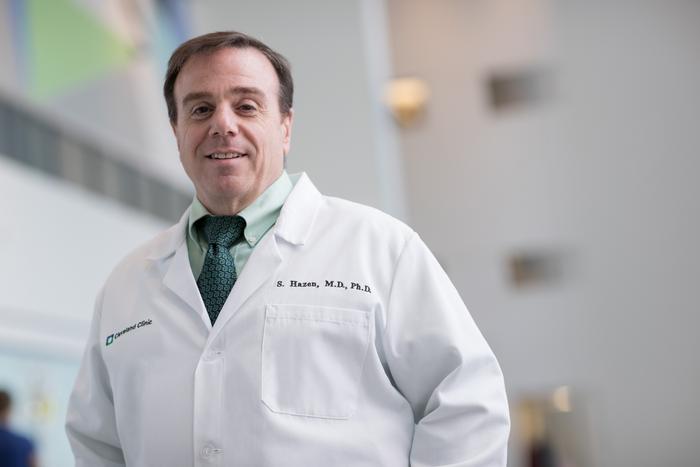
June 6, 2024, Cleveland: Cleveland Clinic researchers found higher amounts of the sugar alcohol xylitol are associated with increased risk of cardiovascular events like heart attack and stroke.

Credit: Cleveland Clinic
June 6, 2024, Cleveland: Cleveland Clinic researchers found higher amounts of the sugar alcohol xylitol are associated with increased risk of cardiovascular events like heart attack and stroke.
The team, led by Stanley Hazen, M.D., Ph.D., confirmed the association in a large-scale patient analysis, preclinical research models and a clinical intervention study. Findings were published today in the European Heart Journal.
Xylitol is a common sugar substitute used in sugar-free candy, gums, baked goods and oral products like toothpaste. Over the past decade, the use of sugar substitutes, including sugar alcohols and artificial sweeteners, has increased significantly in processed foods that are promoted as healthy alternatives.
The same research team found a similar link between erythritol and cardiovascular risk last year. Xylitol is not as prevalent as erythritol in keto or sugar-free food products in the U.S. but is common in other countries.
“This study again shows the immediate need for investigating sugar alcohols and artificial sweeteners, especially as they continue to be recommended in combatting conditions like obesity or diabetes,” said Dr. Hazen, Chair of Cardiovascular and Metabolic Sciences at Cleveland Clinic’s Lerner Research Institute and Co-Section Head of Preventive Cardiology in the Heart, Vascular & Thoracic Institute. “It does not mean throw out your toothpaste if it has xylitol in it, but we should be aware that consumption of a product containing high levels could increase the risk of blood clot related events.”
In this new study, researchers identified that high levels of circulating xylitol were associated with an elevated three-year risk of cardiovascular events in an analysis of more than 3,000 patients in the U.S. and Europe. A third of patients with the highest amount of xylitol in their plasma were more likely to experience a cardiovascular event. To confirm the findings, the research team conducted pre-clinical testing and found that xylitol caused platelets to clot and heightened the risk of thrombosis. Researchers also tracked platelet activity from people who ingested a xylitol-sweetened drink versus a glucose-sweetened drink and found that every measure of clotting ability significantly increased immediately following ingestion of xylitol but not glucose.
The authors note that further studies assessing the long-term cardiovascular safety of xylitol are warranted. The research had several limitations, including that clinical observation studies demonstrate association and not causation. They recommend talking to your doctor or a certified dietitian to learn more about healthy food choices and for personalized recommendations.
The research is part of Dr. Hazen’s ongoing investigation into factors that contribute to residual cardiovascular risk. His team follows patients over time and finds chemical signatures in blood that can predict the future development of heart and metabolic disease. He has made pioneering discoveries in atherosclerosis and inflammatory disease research, including the seminal discovery linking gut microbial pathways to cardiovascular disease and metabolic diseases.
Dr. Hazen also directs Cleveland Clinic’s Center for Microbiome and Human Health and holds the Jan Bleeksma Chair in Vascular Cell Biology and Atherosclerosis.
The study was supported in part by National Institutes of Health and the Office of Dietary Supplements.
Disclosures: Dr. Hazen is named as co-inventor on pending and issued patents held by Cleveland Clinic in relation to cardiovascular diagnostics and therapeutics.
About Cleveland Clinic
Cleveland Clinic is a nonprofit multispecialty academic medical center that integrates clinical and hospital care with research and education. Located in Cleveland, Ohio, it was founded in 1921 by four renowned physicians with a vision of providing outstanding patient care based upon the principles of cooperation, compassion and innovation. Cleveland Clinic has pioneered many medical breakthroughs, including coronary artery bypass surgery and the first face transplant in the United States. Cleveland Clinic is consistently recognized in the U.S. and throughout the world for its expertise and care. Among Cleveland Clinic’s 77,000 employees worldwide are more than 5,658 salaried physicians and researchers, and 19,000 registered nurses and advanced practice providers, representing 140 medical specialties and subspecialties. Cleveland Clinic is a 6,699-bed health system that includes a 173-acre main campus near downtown Cleveland, 23 hospitals, more than 275 outpatient facilities, including locations in northeast Ohio; southeast Florida; Las Vegas, Nevada; Toronto, Canada; Abu Dhabi, UAE; and London, England. In 2022, there were 12.8 million outpatient encounters, 303,000 hospital admissions and observations, and 270,000 surgeries and procedures throughout Cleveland Clinic’s health system. Patients came for treatment from every state and 185 countries. Visit us at clevelandclinic.org. Follow us at twitter.com/ClevelandClinic. News and resources available at newsroom.clevelandclinic.org.
June 6, 2024, Cleveland: Cleveland Clinic researchers found higher amounts of the sugar alcohol xylitol are associated with increased risk of cardiovascular events like heart attack and stroke.
The team, led by Stanley Hazen, M.D., Ph.D., confirmed the association in a large-scale patient analysis, preclinical research models and a clinical intervention study. Findings were published today in the European Heart Journal.
Xylitol is a common sugar substitute used in sugar-free candy, gums, baked goods and oral products like toothpaste. Over the past decade, the use of sugar substitutes, including sugar alcohols and artificial sweeteners, has increased significantly in processed foods that are promoted as healthy alternatives.
The same research team found a similar link between erythritol and cardiovascular risk last year. Xylitol is not as prevalent as erythritol in keto or sugar-free food products in the U.S. but is common in other countries.
“This study again shows the immediate need for investigating sugar alcohols and artificial sweeteners, especially as they continue to be recommended in combatting conditions like obesity or diabetes,” said Dr. Hazen, Chair of Cardiovascular and Metabolic Sciences at Cleveland Clinic’s Lerner Research Institute and Co-Section Head of Preventive Cardiology in the Heart, Vascular & Thoracic Institute. “It does not mean throw out your toothpaste if it has xylitol in it, but we should be aware that consumption of a product containing high levels could increase the risk of blood clot related events.”
In this new study, researchers identified that high levels of circulating xylitol were associated with an elevated three-year risk of cardiovascular events in an analysis of more than 3,000 patients in the U.S. and Europe. A third of patients with the highest amount of xylitol in their plasma were more likely to experience a cardiovascular event. To confirm the findings, the research team conducted pre-clinical testing and found that xylitol caused platelets to clot and heightened the risk of thrombosis. Researchers also tracked platelet activity from people who ingested a xylitol-sweetened drink versus a glucose-sweetened drink and found that every measure of clotting ability significantly increased immediately following ingestion of xylitol but not glucose.
The authors note that further studies assessing the long-term cardiovascular safety of xylitol are warranted. The research had several limitations, including that clinical observation studies demonstrate association and not causation. They recommend talking to your doctor or a certified dietitian to learn more about healthy food choices and for personalized recommendations.
The research is part of Dr. Hazen’s ongoing investigation into factors that contribute to residual cardiovascular risk. His team follows patients over time and finds chemical signatures in blood that can predict the future development of heart and metabolic disease. He has made pioneering discoveries in atherosclerosis and inflammatory disease research, including the seminal discovery linking gut microbial pathways to cardiovascular disease and metabolic diseases.
Dr. Hazen also directs Cleveland Clinic’s Center for Microbiome and Human Health and holds the Jan Bleeksma Chair in Vascular Cell Biology and Atherosclerosis.
The study was supported in part by National Institutes of Health and the Office of Dietary Supplements.
Disclosures: Dr. Hazen is named as co-inventor on pending and issued patents held by Cleveland Clinic in relation to cardiovascular diagnostics and therapeutics.
About Cleveland Clinic
Cleveland Clinic is a nonprofit multispecialty academic medical center that integrates clinical and hospital care with research and education. Located in Cleveland, Ohio, it was founded in 1921 by four renowned physicians with a vision of providing outstanding patient care based upon the principles of cooperation, compassion and innovation. Cleveland Clinic has pioneered many medical breakthroughs, including coronary artery bypass surgery and the first face transplant in the United States. Cleveland Clinic is consistently recognized in the U.S. and throughout the world for its expertise and care. Among Cleveland Clinic’s 77,000 employees worldwide are more than 5,658 salaried physicians and researchers, and 19,000 registered nurses and advanced practice providers, representing 140 medical specialties and subspecialties. Cleveland Clinic is a 6,699-bed health system that includes a 173-acre main campus near downtown Cleveland, 23 hospitals, more than 275 outpatient facilities, including locations in northeast Ohio; southeast Florida; Las Vegas, Nevada; Toronto, Canada; Abu Dhabi, UAE; and London, England. In 2022, there were 12.8 million outpatient encounters, 303,000 hospital admissions and observations, and 270,000 surgeries and procedures throughout Cleveland Clinic’s health system. Patients came for treatment from every state and 185 countries. Visit us at clevelandclinic.org. Follow us at twitter.com/ClevelandClinic. News and resources available at newsroom.clevelandclinic.org.
Journal
European Heart Journal
Article Title
Xylitol is prothrombotic and associated with cardiovascular risk
Article Publication Date
6-Jun-2024
Cite Scienmag News
Cassandra Pierce. (June 6, 2024). Cleveland clinic-led study links sugar substitute to increased risk of heart attack and stroke. Scienmag. https://scienmag.com/cleveland-clinic-led-study-links-sugar-substitute-to-increased-risk-of-heart-attack-and-stroke/
Cassandra Pierce. "Cleveland clinic-led study links sugar substitute to increased risk of heart attack and stroke." Scienmag, 6 June 2024, https://scienmag.com/cleveland-clinic-led-study-links-sugar-substitute-to-increased-risk-of-heart-attack-and-stroke/. Accessed 3 September 2026.
Cassandra Pierce. "Cleveland clinic-led study links sugar substitute to increased risk of heart attack and stroke." Scienmag. June 6, 2024. https://scienmag.com/cleveland-clinic-led-study-links-sugar-substitute-to-increased-risk-of-heart-attack-and-stroke/

