


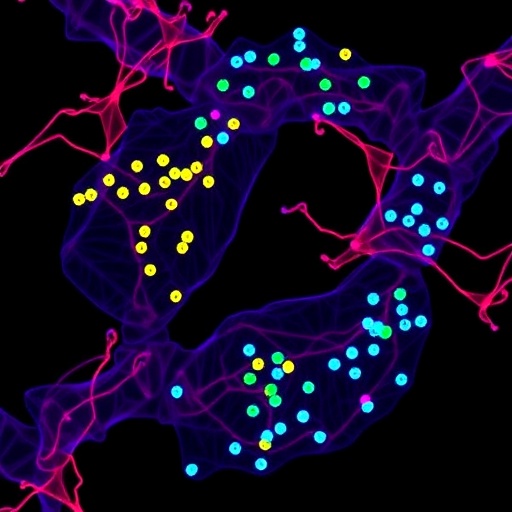
In a significant breakthrough poised to redefine therapeutic approaches for metabolic liver disorders, a recent study has illuminated the potent role of a novel circular RNA, CircZBTB46, in mitigating metabolic dysfunction-associated steatotic liver disease (MASLD). This chronic liver condition, often a precursor to severe hepatic complications such as fibrosis and hepatocellular carcinoma, has long challenged clinicians due to its complex pathogenesis and limited treatment options. The research, conducted by Zeng, Hu, Jiang, and colleagues, published in Cell Death Discovery on January 9, 2026, unravels the intricate molecular interplay whereby CircZBTB46 exerts its effect through a miRNA-326/FGF1 axis, heralding new vistas for targeted intervention.
MASLD, a widespread metabolic derangement, pivots on excessive fat accumulation in hepatocytes linked to metabolic irregularities such as obesity, insulin resistance, and dyslipidemia. The study brings to light the previously underappreciated significance of non-coding RNAs, particularly circular RNAs, in modulating hepatic metabolic pathways. Unlike linear RNAs, circular RNAs form covalently closed loops, conferring remarkable stability and endogenous resistance to exonucleases, thus positioning them as robust molecular regulators and appealing therapeutic targets.
Central to the findings is CircZBTB46, a circular RNA transcribed from the ZBTB46 gene, traditionally recognized for transcriptional repression functions. The research reveals that CircZBTB46 is markedly downregulated in liver tissues afflicted by MASLD, both in murine models and human biopsies. This correlation prompted meticulous mechanistic inquiries, culminating in the discovery that CircZBTB46 acts as a molecular sponge, sequestering miRNA-326, a microRNA overexpressed during disease states and implicated in dysregulated lipid metabolism.
MicroRNAs govern post-transcriptional gene expression by binding to complementary mRNA sequences, often resulting in translational repression or degradation. By sponging miRNA-326, CircZBTB46 effectively elevates the expression of fibroblast growth factor 1 (FGF1), a critical growth factor allied with cellular repair, metabolic homeostasis, and liver regeneration. Fascinatingly, the FGF1 signaling cascade has been extensively studied for its metabolic benefits, including enhancement of glucose uptake and mitigation of lipotoxicity, rendering its upregulation an attractive therapeutic prospect.
Through comprehensive in vitro and in vivo experimental platforms, including gene knockdown and overexpression assays, the investigators demonstrated that replenishing CircZBTB46 levels attenuated hepatocellular steatosis, reduced inflammatory markers, and improved insulin sensitivity. These phenotype reversals affirm the circRNA’s protective role and underscore the therapeutic potential of modulating the miRNA-326/FGF1 axis. Notably, the study’s rigor extended to employing adeno-associated viral vectors to restore CircZBTB46 expression in murine MASLD models, further substantiating its efficacy in a living organismal context.
The implications of manipulating CircZBTB46 transcend MASLD pathophysiology alone. Given the intricate network of metabolic signalling pathways, targeting this axis could have cascading benefits on systemic metabolic syndromes, including type 2 diabetes and cardiovascular disease, which often co-exist with fatty liver disease. This multifaceted influence presents an appealing paradigm shift toward RNA-based therapeutics that offer precision modulation with potentially minimized off-target effects compared to conventional pharmacotherapy.
Critically, the study navigates the challenges associated with RNA stability and delivery, demonstrating that CircZBTB46’s circular structure provides inherent resistance to degradation, bolstering its potential as a stable therapeutic agent. Additionally, the research delves into the spatial dynamics within hepatocytes, showing that CircZBTB46 predominantly localizes in the cytoplasm, strategically positioned to interface effectively with miRNA-326, orchestrating a fine-tuned regulatory network.
The research team also explored downstream effects related to FGF1 signaling, illuminating how elevated FGF1 ameliorates oxidative stress and endoplasmic reticulum stress, both contributors to hepatocellular injury and apoptosis in MASLD. By attenuating these stress responses, CircZBTB46 restoration preserves hepatocyte integrity, slowing disease progression and enhancing liver function.
Furthermore, this study sheds light on potential diagnostic utilities. Quantitative measurement of CircZBTB46 levels in patient serum could serve as a non-invasive biomarker reflecting disease severity or therapeutic response, offering a dual role as both a therapeutic target and diagnostic tool. This aligns with the burgeoning field of liquid biopsy and personalized medicine, emphasizing molecular signatures for tailored management.
However, the authors caution that despite promising preclinical data, translation into clinical applications warrants thorough investigation of long-term safety, immunogenicity, and optimized delivery methods for RNA therapeutics. The risk of unintended gene modulation or adverse inflammatory responses remains a challenge that necessitates meticulous validation in human trials. Nonetheless, the foundation laid by this work streamlines the pathway toward innovative clinical strategies.
In an era marked by the explosion of epigenetic and non-coding RNA research, this study exemplifies the transformative potential of RNA biology in addressing complex metabolic diseases. The elucidation of the CircZBTB46-miRNA-326-FGF1 axis imports a nuanced understanding of hepatic metabolic regulation, moving beyond traditional protein-centric perspectives to embrace multi-layered genetic control mechanisms.
Moreover, the findings invigorate the broader research community’s interest in circular RNAs, propelling investigations into their diverse biological roles, stability advantages, and capacity to act as molecular decoys or scaffolds in health and disease. Such insights widen the horizon for RNA-targeted approaches not only in hepatology but across oncology, neurology, and immunology.
The study by Zeng and colleagues also underscores the importance of leveraging advanced omics technologies and integrative bioinformatics to pinpoint key nodal regulators like CircZBTB46, spotlighting the swift evolution of precision medicine frameworks. Combining genomic, transcriptomic, and metabolomic data presents unprecedented opportunities for uncovering novel intervention points within multifactorial diseases.
In sum, the groundbreaking revelation that CircZBTB46 can alleviate MASLD by modulating miRNA-326 and elevating FGF1 activity heralds a promising chapter in combating a hepatic epidemic intertwined with modern lifestyles. This molecular insight bridges gaps between RNA science and metabolic disease treatment, providing a compelling vision for future therapeutics that harness endogenous regulatory circuits for maximal efficacy with minimal toxicity.
As clinical translation endeavors advance, continued exploration of circular RNA biology and its therapeutic harnessing promises to reshape our approach to some of the most pressing metabolic and hepatic disorders afflicting global populations today.
Cite Scienmag News
Ophelia Keating. (January 10, 2026). CircZBTB46 Targets miRNA-326/FGF1 to Combat Liver Disease. Scienmag. https://scienmag.com/circzbtb46-targets-mirna-326-fgf1-to-combat-liver-disease/
Ophelia Keating. "CircZBTB46 Targets miRNA-326/FGF1 to Combat Liver Disease." Scienmag, 10 January 2026, https://scienmag.com/circzbtb46-targets-mirna-326-fgf1-to-combat-liver-disease/. Accessed 4 September 2026.
Ophelia Keating. "CircZBTB46 Targets miRNA-326/FGF1 to Combat Liver Disease." Scienmag. January 10, 2026. https://scienmag.com/circzbtb46-targets-mirna-326-fgf1-to-combat-liver-disease/


