


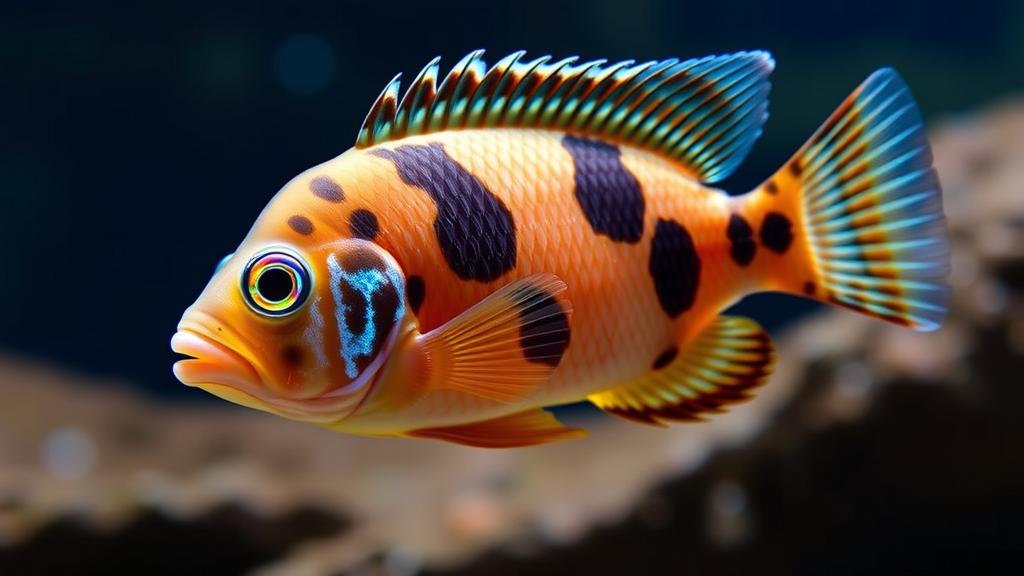
In the volcanic lakes of Nicaragua, a group of fish that has become one of evolutionary biology’s favorite models is once again rewriting what scientists thought they knew about the immune system. A new study of Midas cichlids and their African relatives suggests that the diversity of the major histocompatibility complex, or MHC, one of the most intensively studied gene families in immunology and evolutionary genetics, extends far beyond the sequence of the genes themselves. According to research published in BMC Genomics, the amount of MHC class IIB gene expression varies dramatically from allele to allele, from population to population, and even between deeply divergent cichlid lineages on opposite sides of the Atlantic, adding a previously underappreciated dimension to the genetic variation that parasites and pathogens must contend with.
The MHC is the molecular gatekeeper of vertebrate adaptive immunity. Its class IIB genes encode cell-surface receptors that grab fragments of invading parasites and present them to immune cells, triggering the response that ultimately clears an infection. Because parasites constantly evolve to evade this surveillance, MHC genes are among the most polymorphic in the vertebrate genome, and decades of research have documented how this sequence diversity is shaped by parasite-mediated selection within and among populations. But sequence is only part of the story. An allele that is transcribed at high levels presents many more antigen fragments than an allele transcribed at low levels, meaning that two alleles with identical binding properties could still differ functionally simply because of how actively they are expressed. The new study set out to measure exactly that: allele-specific expression of MHC class IIB genes in wild cichlid populations, and how that expression relates to allele frequency, functional supertypes, and population structure.
The researchers, led by Seraina E. Bracamonte of the Museo Nacional de Ciencias Naturales in Madrid and Uppsala University, together with Pascal I. Hablützel, Carlos Lozano-Martín and Marta Barluenga, built on previous work showing that MHC class IIB diversity is associated with ecological divergence in cichlid fish. Midas cichlids, which inhabit multiple Nicaraguan crater lakes and have repeatedly adapted to different habitats within and among those lakes, offer an ideal natural laboratory for asking how immune genes vary across populations that occupy distinct selective environments. Using quantitative PCR-based approaches to measure how much of each allele’s transcript was present in individual fish, the team generated expression profiles for the MHC alleles carried by wild-caught animals, and then compared those profiles with allele frequencies and with the functional supertypes to which each allele had previously been assigned.
The results were striking. A handful of highly abundant alleles, those found in a large proportion of individuals across populations, turned out to be consistently expressed at low levels. Meanwhile, many of the rarer alleles were expressed at high levels and, crucially, were restricted to particular host populations. In other words, the most common versions of the gene were the quietest, while the loudest versions of the gene were the rarest and the most geographically localized. This inverse relationship between allele frequency and expression is the kind of pattern that immediately suggests an evolutionary explanation, although the authors are careful to note that the mechanism remains to be demonstrated. It could reflect a trade-off in which broadly shared alleles perform a generalist function at low cost, while population-specific alleles provide specialized defense against local parasites and are maintained at high expression where those parasites occur.
Expression also tracked functional supertypes, the groupings of MHC alleles that share similar antigen-binding properties despite differing in sequence. Alleles belonging to the same supertype showed similar expression patterns, which means that the functional units of MHC diversity, the supertypes rather than individual alleles, appear to be regulated in a coordinated fashion. Even more intriguing was the pattern across populations: supertypes with low expression showed relatively consistent expression everywhere they occurred, while highly expressed supertypes exhibited substantially greater variation among populations. This suggests that the most functionally conspicuous components of the immune repertoire are also the ones most sensitive to local conditions, consistent with the idea that different lakes and habitats impose different parasite pressures and that expression, not just sequence, is part of the local adaptation story.
To test whether these patterns were unique to Midas cichlids or a general feature of the family, the team turned to African cichlids, the most species-rich vertebrate radiation on Earth and the evolutionary cousins of the Nicaraguan fish. In the African dataset, putative MHC class IIB loci also showed marked variation in expression, indicating that allele- and locus-specific expression differences are not a quirk of one lineage but a recurring feature of cichlid immunogenetics. The comparison across continents produced the study’s most unexpected finding: when the researchers placed all the alleles and loci into a phylogenetic tree, the lowly expressed Midas cichlid alleles clustered together with the lowly expressed putative African loci, while most highly expressed variants formed separate clusters. Expression level, in other words, appears to track deep evolutionary lineages, hinting that low expression may be an ancient property of particular MHC lineages rather than a recent adjustment to local conditions.
The phylogenetic association raises fascinating questions about the origins and maintenance of expression diversity. If low expression is tied to distinct MHC lineages that have persisted across tens of millions of years of cichlid evolution and across an ocean, then expression differences may be deeply embedded in the genome, perhaps reflecting regulatory divergence that arose early in the family’s history and has been inherited ever since. Alternatively, similar selective pressures acting independently on both continents could have produced the same association between lineage and expression level. The authors are explicit that the functional significance of these patterns remains unresolved. Whether lowly expressed lineages perform different immunological roles, whether they are subject to different regulatory control, or whether their low expression is itself adaptive, cannot yet be determined from expression data alone.
What the study does establish is that MHC diversity cannot be fully captured by sequencing alone. Immunogeneticists have long recognized that the number of MHC alleles an individual carries, and the functional diversity of those alleles, shape disease resistance. The new findings add a third axis: how much each allele is actually transcribed. An individual carrying a high-diversity MHC repertoire in its genome may express only a subset of those alleles at meaningful levels, effectively narrowing its functional antigen-presenting capacity. Conversely, population-level comparisons based purely on allele frequencies may miss the fact that the same allele can behave differently in different populations, as the among-population variation in highly expressed supertypes demonstrates. For studies of local adaptation, host-parasite coevolution, and even conservation genetics of endangered fish populations, incorporating expression measurements could change the interpretation of MHC data substantially.
The path forward, the authors emphasize, lies in connecting expression to phenotype. The study was conducted on wild fish without direct parasite and infection data, so the critical next step is to test whether the observed expression patterns actually influence parasite recognition and resistance, and whether parasite-mediated selection shapes expression as it demonstrably shapes sequence. If it does, then the hidden layer of MHC diversity documented here may prove to be a key ingredient in the extraordinary adaptive radiation of cichlids, the same evolutionary process that has filled African lakes with hundreds of species and Nicaraguan crater lakes with repeated pairs of lake- and stream-adapted forms. For now, the message is clear: in the immune genes of cichlids, how loudly a gene speaks matters as much as what it says, and evolution has been listening to both.
Subject of Research: Allele-specific expression variation of MHC class IIB genes in wild cichlid fish populations
Article Title: Expression diversity of cichlid MHC alleles
Article References: Bracamonte, S. E., Hablützel, P. I., Lozano-Martín, C., & Barluenga, M. (2026). Expression diversity of cichlid MHC alleles. BMC Genomics. https://doi.org/10.1186/s12864-026-13370-x
Image Credits: AI Generated
DOI: 10.1186/s12864-026-13370-x
Keywords: MHC, cichlids, gene expression, immunogenetics, host-parasite interactions, local adaptation, Midas cichlid, functional supertypes, BMC Genomics, evolutionary biology, allele frequency, population genetics
Cite Scienmag News
Juliet Wilcox. (September 22, 2026). Cichlid Fish Reveal Hidden Layer of Immune Gene Diversity in Expression. Scienmag. https://scienmag.com/cichlid-fish-reveal-hidden-layer-of-immune-gene-diversity-in-expression/
Juliet Wilcox. "Cichlid Fish Reveal Hidden Layer of Immune Gene Diversity in Expression." Scienmag, 22 September 2026, https://scienmag.com/cichlid-fish-reveal-hidden-layer-of-immune-gene-diversity-in-expression/. Accessed 5 October 2026.
Juliet Wilcox. "Cichlid Fish Reveal Hidden Layer of Immune Gene Diversity in Expression." Scienmag. September 22, 2026. https://scienmag.com/cichlid-fish-reveal-hidden-layer-of-immune-gene-diversity-in-expression/


