


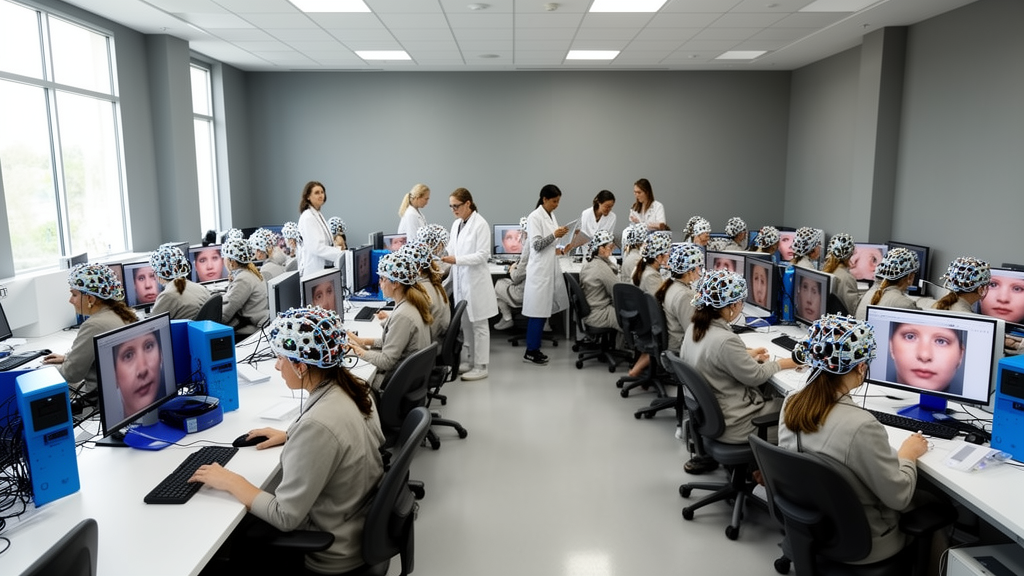
Women with chronic pain assigned greater pain intensity and reported more willingness to help when shown neutral bodily images than women without chronic pain, but the two groups did not differ significantly in their responses to pain-related images. The study included 136 women—76 with chronic pain and 60 controls without chronic pain—and suggests that the observed differences were specific to neutral or ambiguous bodily cues rather than reflecting a general increase across all three measures associated with empathic responding. Researchers Keren Grinberg and Chen Musafi-Frankenthal designed the experiment to distinguish pain appraisal, self-oriented discomfort and willingness to help.
Pain appraisal meant estimating how much pain the person in an image appeared to be experiencing. Self-oriented discomfort measured discomfort reported by the participant while viewing the image, whereas willingness to help captured a stated intention to assist. The researchers emphasized that these measures represent distinguishable processes and should not be treated as interchangeable indicators of a single empathy response.
Participants viewed a set of eight images, comprising six pain-related images and two neutral bodily images. After viewing each stimulus, they rated the inferred pain intensity, their own discomfort and their willingness to help. The researchers examined group differences separately for each rating and stimulus type, using two-sided t tests.
Because the design was observational and included only women, it cannot establish that chronic pain caused the reported differences or determine whether the same pattern occurs in men or other populations. No significant group difference was detected for any response to the pain-related stimuli. The neutral images produced two significant differences.
Women with chronic pain gave mean pain-appraisal ratings of 1.30, compared with 0.73 among controls, with t(134) = −2.27, p = .025 and Cohen’s d = 0.39. They also reported a mean willingness-to-help rating of 1.66, versus 0.81 for controls, with t(134) = −2.89, p = .004 and d = 0.50. These were measured associations between group status and participants’ responses, not effects demonstrated to have been caused by chronic pain.
Self-oriented discomfort for the neutral stimuli differed numerically in the same direction, but the difference did not reach statistical significance. Interpretation of the neutral-image results is constrained by the small and imbalanced stimulus set, which included only two neutral images, the potentially first-person perspective of the images, the absence of facial information and the lack of criterion ratings from the people depicted. The findings therefore do not demonstrate globally heightened empathy, and the reported willingness to help represents a stated intention rather than observed helping behavior.
Subject of Research: Differences in pain appraisal, self-oriented discomfort and willingness to help among women with and without chronic pain
Article Title: Image-based responses to pain-related and neutral stimuli among women with and without chronic pain: pain appraisal, self-oriented discomfort, and willingness to help
Article References: Grinberg, K., & Musafi- Frankenthal, C. (2026). Image-based responses to pain-related and neutral stimuli among women with and without chronic pain: pain appraisal, self-oriented discomfort, and willingness to help. BMC Psychology. https://doi.org/10.1186/s40359-026-05310-x
Image Credits: AI Generated
DOI: 10.1186/s40359-026-05310-x
Keywords: chronic pain, pain appraisal, self-oriented discomfort, willingness to help, neutral bodily images, empathy, psychology, women’s health, observational study, Image-based, responses, pain-related
Cite Scienmag News
Glenn Wilkins. (October 26, 2026). Chronic-pain status associated with stronger neutral-cue appraisals in 136 women. Scienmag. https://scienmag.com/chronic-pain-status-associated-with-stronger-neutral-cue-appraisals-in-136-women/
Glenn Wilkins. "Chronic-pain status associated with stronger neutral-cue appraisals in 136 women." Scienmag, 26 October 2026, https://scienmag.com/chronic-pain-status-associated-with-stronger-neutral-cue-appraisals-in-136-women/. Accessed 26 October 2026.
Glenn Wilkins. "Chronic-pain status associated with stronger neutral-cue appraisals in 136 women." Scienmag. October 26, 2026. https://scienmag.com/chronic-pain-status-associated-with-stronger-neutral-cue-appraisals-in-136-women/


