


In the relentless pursuit to refine forensic methodologies, a new frontier has opened with the study of chondrocyte viability as a pivotal marker in determining the postmortem interval (PMI). Recent groundbreaking research led by Mihić and colleagues has unveiled compelling evidence underscoring the potential of chondrocyte viability assays to transform forensic investigations, offering unprecedented precision in estimating time of death. This promising development is rooted in cellular biology, merging cutting-edge techniques with traditional forensic science to enhance the accuracy and reliability of PMI assessments.
The postmortem interval, the time elapsed since death, is a crucial element in forensic pathology, bearing significant implications for criminal investigations and legal proceedings. Conventional methods—ranging from rigor mortis observations to entomological assessments—have often been hampered by environmental variables and biological complexity, leading to approximations rather than exactitudes. However, the internal milieu of articular cartilage, primarily its resident chondrocytes, has long been hypothesized as a stable biological substrate less susceptible to rapid environmental degradation, positioning it as a promising candidate for more precise PMI biomarkers.
Chondrocytes, the exclusive cellular population within cartilage, maintain the extracellular matrix essential for joint function. Their unique metabolic profile, characterized by low mitotic activity and adaptation to hypoxic environments, seemingly enables their survival postmortem significantly longer than many other cell types. This characteristic resilience offers a valuable temporal window that forensic scientists can exploit. The challenge lies in accurately quantifying chondrocyte viability postmortem—a feat now methodically addressed by the work from Mihić et al., who developed a robust assay designed to quantify this viability with high sensitivity and reproducibility.
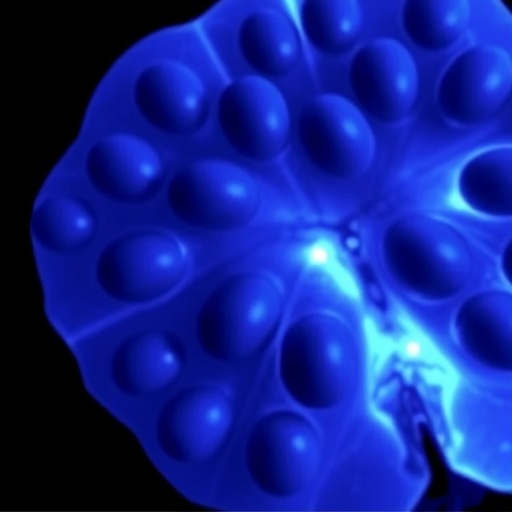
The authors have meticulously validated their chondrocyte viability assay across a range of postmortem intervals and conditions, demonstrating a clear correlation between the percentage of living chondrocytes and elapsed time since death. This assay hinges on advanced fluorescent staining protocols coupled with flow cytometric analysis, enabling not only qualitative but quantitative assessment of cell viability from cartilage biopsies. By objectively discriminating viable from non-viable chondrocytes, this method circumvents the subjectivity and environmental dependency that plague classical PMI estimation techniques.
Moreover, this study’s experimental protocols accounted for various confounding factors traditionally problematic in PMI evaluations. Temperature fluctuations, varying humidity, and differing cause-of-death scenarios were incorporated into their analyses, reinforcing the assay’s robustness. The researchers highlighted the comparatively slow decline in chondrocyte viability, with statistically significant viability detectable even beyond 72 hours postmortem under typical ambient conditions. This extended viability timeframe surpasses many earlier benchmarks reliant on other tissues, marking a notable advance in forensic pathological science.
Importantly, the practical application of chondrocyte viability assays could revolutionize the forensic workflow. Sampling cartilage is minimally invasive and can be performed even on decomposed remains where soft tissues are compromised, expanding the repertoire of forensic investigators when confronted with challenging cases. The method’s reproducibility and sensitivity mean that chondrocyte viability could potentially serve as a reliable biological clock, providing forensic experts with a clearer temporal narrative in death investigations.
In addition to rigorous laboratory validation, the research team explored the molecular underpinnings of chondrocyte survival postmortem. Their investigation into cellular metabolism revealed that residual ATP levels, membrane integrity, and apoptotic pathway engagement form a multiparametric framework dictating viability outcomes. By integrating biochemical markers with viability assays, the study paves the way for future multipronged approaches that combine cellular biology and forensic pathology for richer PMI estimation models.
Interestingly, this research also opens the door to interdisciplinary collaboration, particularly between forensic scientists and cellular biologists. The comprehensive understanding of chondrocyte survival mechanics not only aids in PMI estimation but may also shed light on cartilage preservation more broadly, with potential implications for organ transplantation and regenerative medicine. This cross-pollination between fields exemplifies how forensic science continues to innovate by assimilating advanced biological concepts.
A vital facet of Mihić and colleagues’ study is its emphasis on standardization and replicability—often neglected but absolutely essential in forensic methodology. The authors provide detailed protocols and calibration strategies, ensuring that forensic laboratories worldwide could adopt the chondrocyte viability assay with minimal variability. This universality is critical as it fosters consistency in PMI estimation, bolstering judicial confidence in forensic evidence.
While the findings are groundbreaking, the authors acknowledge limitations and future directions. The influence of extreme environmental conditions, such as submersion in water or severe decomposition, warrants further inquiry. Additionally, expanding sample size and demographic diversity could optimize the assay’s applicability across different forensic contexts. Such future work is vital to cement the assay’s place within the complex mosaic of PMI estimation techniques.
Another compelling dimension addressed in this research regards the temporal dynamics of chondrocyte death pathways postmortem. The differentiation between necrosis and apoptosis within postmortem chondrocytes could serve as an additional temporal biomarker, reflecting nuanced stages in cell degradation. By distinguishing these processes, forensic pathologists might gain a more detailed and accurate timeline of cellular demise, sharpening PMI estimates even further.
Furthermore, the study’s integration of histological analyses provides corroborative evidence supporting their assay results. Morphological changes in chondrocytes observed via microscopy complement flow cytometric data, validating that the fluorescent viability markers accurately reflect true cellular status. This multimodal validation strengthens the scientific credibility of the approach, addressing potential skepticism in forensic communities.
Beyond forensic science, these insights into chondrocyte longevity raise compelling biological questions about cell survival in hypoxic, nutrient-deprived postmortem conditions. Understanding the resilience mechanisms at play may also influence biomedical research into cartilage repair and aging. Thus, the implications of this work reach far beyond crime scene investigation, possibly impacting broader topics in cellular physiology and pathology.
Intriguingly, this research underscores the shifting paradigm in forensic pathology toward molecular and cellular-level analyses. Traditional gross anatomical observations are increasingly supplemented by sophisticated biochemical and cytometric techniques, marking the dawn of a more precise, data-driven forensic era. The chondrocyte viability assay exemplifies this evolution, demonstrating how forensic science is poised to integrate the latest biological technologies to unravel mysteries of death with increasing exactitude.
In conclusion, the work by Mihić et al. presents a transformative advance in forensic methodology through the development and validation of a chondrocyte viability assay for PMI estimation. Their findings illuminate the robust potential of cartilage cellular viability as a durable, reliable biomarker in death investigations. As forensic laboratories adopt and refine this technique, the quest for precision in determining the time of death takes a major leap forward, promising enhanced accuracy in the justice system and opening exciting interdisciplinary research vistas.
Cite Scienmag News
Ophelia Keating. (August 5, 2025). Chondrocyte Viability’s Role in Postmortem Analysis. Scienmag. https://scienmag.com/chondrocyte-viabilitys-role-in-postmortem-analysis/
Ophelia Keating. "Chondrocyte Viability’s Role in Postmortem Analysis." Scienmag, 5 August 2025, https://scienmag.com/chondrocyte-viabilitys-role-in-postmortem-analysis/. Accessed 4 September 2026.
Ophelia Keating. "Chondrocyte Viability’s Role in Postmortem Analysis." Scienmag. August 5, 2025. https://scienmag.com/chondrocyte-viabilitys-role-in-postmortem-analysis/


