


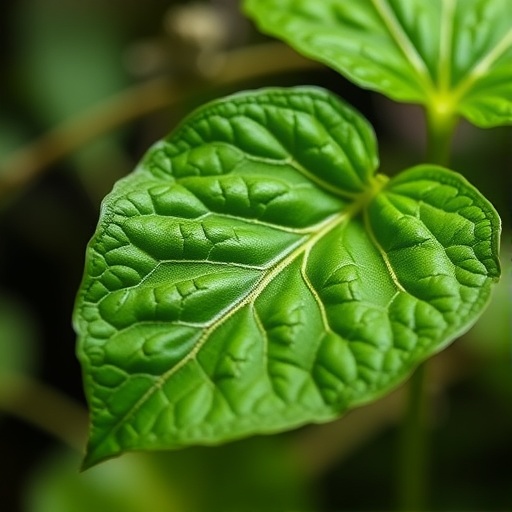
The intricate choreography of leaf senescence—the final act in the life cycle of a leaf—has long fascinated plant biologists, with its crucial role in reallocating nutrients to reproductive organs, thus enhancing overall plant fitness. Central to this process is the transition from chloroplast biogenesis to degeneration, a pivotal juncture that dictates when a leaf stops functioning as a photosynthetic powerhouse and begins its orderly dismantlement. Despite its significance, the molecular underpinnings that precisely time this transition through crosstalk between the chloroplast and the nucleus have remained elusive. Now, groundbreaking research from Kang, Lee, Kim, and colleagues brings clarity to this complex biological ballet by uncovering a novel long noncoding RNA (lncRNA) named CHLORELLA that orchestrates chloroplast function and leaf aging in Arabidopsis thaliana.
Leaf senescence is an intricately regulated process, balancing the maintenance of photosynthetic capacity during a leaf’s productive phase with the eventual need to recycle valuable nutrients. Chloroplasts—the cellular organelles responsible for photosynthesis—are not static entities; their functional state shifts dynamically as leaves mature. This developmental transition involves a decrease in photosynthetic gene expression, followed by chloroplast degradation. The timing of this shift is critical because premature senescence can stunt plant growth, while delayed senescence might impede nutrient reallocation. However, how plants monitor and trigger this chloroplast functional transition remained a black box until the current study revealed CHLORELLA as a key regulatory player bridging nuclear and chloroplast genomes.
CHLORELLA, a long noncoding RNA, emerged from transcriptomic analyses as being tightly co-expressed with an array of chloroplast-associated genes during leaf development. Unlike protein-coding genes, lncRNAs do not encode proteins but exert regulatory functions through diverse mechanisms including molecular scaffolding and RNA-RNA interactions. Fascinatingly, CHLORELLA transcripts are not confined to the nucleus or cytoplasm but actively transported into chloroplasts, marking a rare example of RNA trafficking into plastids. This translocation allows CHLORELLA to engage directly with components of the plastid-encoded RNA polymerase (PEP) complex, a crucial machinery responsible for transcribing photosynthesis-related genes within chloroplasts.
Functional experimentation provided compelling evidence that CHLORELLA plays an indispensable role in maintaining chloroplast function. Arabidopsis mutants lacking CHLORELLA exhibited precocious leaf senescence characterized by early chlorophyll loss and diminished photosynthetic efficiency. This phenotype was accompanied by a stark downregulation of genes encoding the PEP complex and photosystem components, underscoring the lncRNA’s function in sustaining plastid gene expression. The loss of CHLORELLA impairs the accumulation of the PEP complex, effectively throttling chloroplast transcription and triggering an early onset of senescence signaling cascades.
A pivotal discovery of the study lies in the dynamic expression pattern of CHLORELLA across leaf lifespan. During early leaf development, CHLORELLA levels are high, correlating with robust chloroplast biogenesis and photosynthetic activity. However, as leaves age, CHLORELLA expression steadily declines, precipitating a reduction in PEP complex abundance and a subsequent drop in plastid-encoded gene transcription. This temporal downregulation of CHLORELLA may thus represent a molecular switch that initiates the functional transition of chloroplasts from biogenesis to degeneration, effectively setting the stage for the commencement of senescence.
Delving into upstream regulatory controls, the researchers identified GOLDEN2-LIKE1 (GLK1) and GOLDEN2-LIKE2 (GLK2) transcription factors as master activators of CHLORELLA expression. GLK1 and GLK2 are well-documented orchestrators of chloroplast development, governing nuclear-encoded genes essential for photosynthesis. Their direct activation of CHLORELLA places this lncRNA at a nexus between nuclear and chloroplast regulatory networks, linking chloroplast development with aging signals via anterograde signaling—the directional communication from nucleus to chloroplast. This discovery elucidates a finely tuned feedback loop whereby GLK transcription factors promote chloroplast function maintenance through CHLORELLA, which in turn sustains the transcriptional output of plastid genomes.
From a mechanistic standpoint, CHLORELLA embodies a novel anterograde signaling molecule that transcends traditional protein-mediated pathways. Its localization to chloroplasts and facilitation of PEP complex formation positions it as a vital RNA-based mediator ensuring chloroplast transcriptional competence throughout leaf maturation. This paradigm-shifting identification of a chloroplast-targeted lncRNA expands the landscape of organellar gene regulation beyond protein factors, revealing that RNA molecules themselves can serve as functional effectors within chloroplasts.
The biological implications of CHLORELLA-mediated regulation are profound. By governing the timing of chloroplast functional decline, CHLORELLA enables plants to optimize the balance between sustaining photosynthetic output and initiating nutrient remobilization through senescence. Such an evolutionary adaptation likely confers a selective advantage by fine-tuning leaf lifespan relative to environmental cues and developmental stages. Furthermore, perturbations in CHLORELLA expression or its regulatory circuitry could underpin variations in senescence timing across plant species, offering exciting avenues for crop improvement via genetic manipulation of leaf longevity and yield.
Beyond its fundamental biological significance, this discovery holds translational promise in agricultural biotechnology. Manipulating CHLORELLA levels or modulating GLK transcription factor activity could serve as strategies to delay senescence, extending photosynthetic capacity and potentially boosting crop biomass and productivity. Conversely, controlled acceleration of senescence could improve nutrient remobilization efficiency in breeding schemes aimed at specific agricultural objectives. The identification of CHLORELLA thus opens new frontiers for engineering plant developmental programs via RNA-centric approaches.
In summary, the study by Kang et al. provides a comprehensive characterization of CHLORELLA, a long noncoding RNA that mediates the functional transition of chloroplasts during leaf aging through anterograde signaling. This work not only unveils a critical regulatory layer governing leaf senescence timing but also highlights a profound role for lncRNAs within plastids, challenging existing paradigms of organellar gene regulation. By integrating nuclear transcriptional control with chloroplast gene expression via an RNA intermediary, plants accomplish a sophisticated coordination of developmental and metabolic states critical for survival and reproduction.
As the field of plant molecular biology advances, discoveries like CHLORELLA underscore the complexity and versatility of RNA molecules beyond their classical roles in protein synthesis. The expanding repertoire of lncRNAs and their emerging functions broadens our understanding of genetic regulation in plants and promises novel biotechnological applications. Future investigations will undoubtedly explore the broader prevalence of chloroplast-targeted lncRNAs across diverse plant taxa and their potential interactions with other organellar components.
The identification of CHLORELLA adds to the growing appreciation that cellular communication extends well beyond protein-centric views, revealing that RNA trafficking and function within organelles is a vital aspect of cellular homeostasis and development. Unlocking these RNA-based signaling pathways offers exciting prospects not only for fundamental plant science but also for innovative strategies to improve crop resilience, productivity, and resource use efficiency under changing climatic conditions. This work serves as a testament to the power of integrative approaches combining transcriptomics, genetics, and molecular biology to unravel the mysteries of plant life.
In the broader context of plant senescence research, the findings provide a missing link connecting nuclear transcriptional networks to chloroplast functional shifts—a key determinant of leaf lifespan and plant fitness. The elucidation of CHLORELLA’s role emphasizes the delicate balance plants maintain between maintaining photosynthetic capacity and preparing for orderly senescence. As plants manage this trade-off efficiently, the molecular regulators they employ become invaluable targets for crop improvement initiatives aiming to enhance yield sustainability.
Ultimately, the discovery of CHLORELLA enriches our conceptual understanding of how plants integrate developmental cues and environmental signals to ensure lifecycle progression. By highlighting the importance of long noncoding RNAs as functional mediators within chloroplasts, this research breaks new ground and paves the way for future explorations into RNA-driven anterograde signaling mechanisms that underpin plant development and adaptation. The implications for plant biology and agriculture are vast, promising transformative advances through the manipulation of these elegant RNA regulatory networks.
Cite Scienmag News
Beatrice Stafford. (October 10, 2025). Chloroplast lncRNA Drives Leaf Ageing Function Change. Scienmag. https://scienmag.com/chloroplast-lncrna-drives-leaf-ageing-function-change/
Beatrice Stafford. "Chloroplast lncRNA Drives Leaf Ageing Function Change." Scienmag, 10 October 2025, https://scienmag.com/chloroplast-lncrna-drives-leaf-ageing-function-change/. Accessed 4 September 2026.
Beatrice Stafford. "Chloroplast lncRNA Drives Leaf Ageing Function Change." Scienmag. October 10, 2025. https://scienmag.com/chloroplast-lncrna-drives-leaf-ageing-function-change/


