


Hepatocellular carcinoma (HCC) is one of the leading causes of cancer mortality worldwide. Patients diagnosed with HCC face low survival rates, around 10% surviving for five years, often experience cancer recurrence and lack effective anti-cancer drugs. Given the liver’s vital role in metabolism, HCC treatment aims to prevent tumors while preserving liver function.

Credit: Chinese Medical Journal
Hepatocellular carcinoma (HCC) is one of the leading causes of cancer mortality worldwide. Patients diagnosed with HCC face low survival rates, around 10% surviving for five years, often experience cancer recurrence and lack effective anti-cancer drugs. Given the liver’s vital role in metabolism, HCC treatment aims to prevent tumors while preserving liver function.
Since cancer-driving genes for HCC remain unidentified, the inhibition mechanisms of most targeted therapies exacerbate liver damage through their anti-tumor activity. When liver function deteriorates significantly, patients may be forced to discontinue or reduce drug dosage, leading to drug resistance and treatment failure. Immunotherapy offers an alternate route that circumvents liver damage as it regulates the body’s immune systems to control cancer and prevent immune evasion. Additionally, immunotherapy has milder side effects compared to targeted drugs and chemotherapy.
Since 2018, immune checkpoint inhibitors (ICIs) have been used widely for negating tumor cells by removing the blockade of immune checkpoints in cancer. Currently, combination therapies–leveraging ICIs, targeted drugs, and local treatment–are undergoing clinical trials and are viewed as promising therapeutic strategy for HCC. Other treatments being evaluated include adoptive cell therapies (ACTs), tumor vaccines, oncolytic viruses (OVs), and cytokine therapy.
Given the rapid advances in HCC immunotherapy, researchers from Capital Medical University, China, have now reviewed the latest research literature. The review, headed by Professor Jun Lu, is scheduled was published online on 7 June 2024 in the Chinese Medical Journal. “This article provides a concise summary of ICIs and their combination approaches that have been applied in clinical practice, as well as ACTs and other immunotherapies,” explains Prof. Lu.
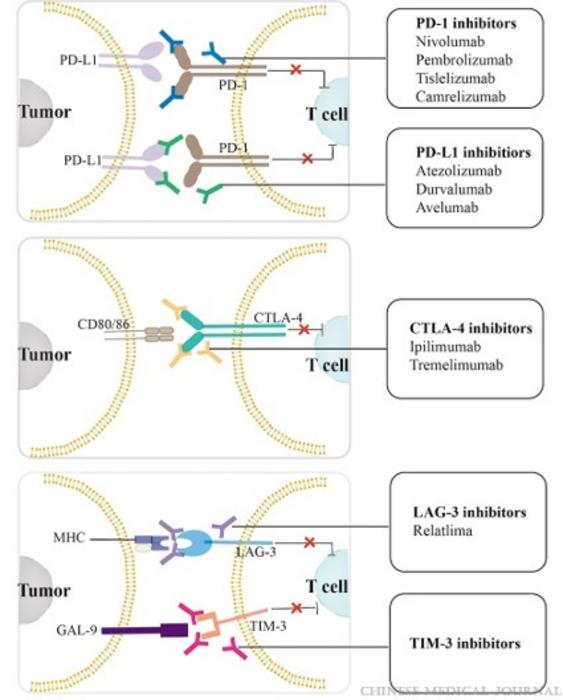
The authors open by discussing ICIs. These drugs counter the inhibition of T-cell activation and prevent tumor cells from escaping immune surveillance. ICIs promote T-cell activation and proliferation and enable cytotoxic T-cell-mediated tumor cell destruction. Programmed cell death-1/programmed cell death-ligand-1 and cytotoxic T-lymphocyte-associated antigen 4-inhibitors are the most extensively clinically tested. More recent ICIs being evaluated target the suppression of T-cell immunoglobulin and mucin domain 3 and lymphocyte activation gene 3 (both inhibitory receptors) expressed by effector lymphocytes. Additionally, therapy with dual ICIs is also a viable option, as reduced efficiency and drug resistance can be drawbacks of monotherapy.
The subsequent discussion delves into two adoptive cell therapy (ACT) approaches, both techniques involving proliferation of immune cells outside the human body and then reintroducing them into a patient. Tumor-infiltrating lymphocytes, natural killer (NK) cells, invariant NK cells (invariant natural killer T cells), and cytokine-induced killer cells have been the focus when genetically unmodified immune cells serve as effector cells. However, when ACT leverages genetically modified cells, the repertoire of effector cells includes T-cell receptor-engineered T-cells, chimeric antigen receptor T cells, and chimeric antigen receptor NK cells. Genetically modified T cells are becoming the focal point of ACT with an increasing capacity to obtain, engineer, and proliferate cells in laboratories.
The review’s final section explores tumor vaccines, OVs, cytokine therapy, and combination immunotherapy in HCC. Tumor vaccines were studied before ICIs but have seen limited application due to the challenges of tumor evasion and antigen selection. The most studied platforms include dendritic cell (DC) vaccines and peptide vaccines, using amino acid sequences of tumor-associated antigens (TAAs). DC vaccines involve stimulating dendritic cells (cells activating immune response by presenting antigens to T cells) with proteins or nucleic acids obtained from tumor lysates before being administered to a patient.
OVs induce cell lysis within tumor cells, triggering the release of TAAs and other signaling molecules into the tumor microenvironment (TME). This process activates the host’s immune system, bolstering anti-tumor activity. Additionally, OVs limit tumor proliferation by disrupting blood supply. Cytokines are a target for immunotherapy as they influence the development of HCC. Cytokine inhibitors limiting angiogenesis have been studied, and inhibitors targeting interleukin (IL)-6 and IL-10 (immune response inhibitors) are being evaluated.
Combining immunotherapy strategies holds significant promise in leveraging diverse anti-tumor mechanisms within the complex TME, with its intricate network of immune pathways and defective immune cell types. “Future liver cancer immunotherapy will target inhibitory factors, reshape the TME, identify specific efficacy markers, and use immune checkpoint modulation and cellular immunotherapy.” concludes Prof. Lu.
***
Reference
Journal
Chinese Medical Journal
Method of Research
Literature review
Subject of Research
Not applicable
Article Title
Immunotherapy for Hepatocellular Carcinoma
Article Publication Date
7-Jun-2024
COI Statement
None
Cite Scienmag News
Nathaniel Bowman. (July 17, 2024). Chinese Medical Journal Review explores immunotherapy strategies for liver cancer. Scienmag. https://scienmag.com/chinese-medical-journal-review-explores-immunotherapy-strategies-for-liver-cancer/
Nathaniel Bowman. "Chinese Medical Journal Review explores immunotherapy strategies for liver cancer." Scienmag, 17 July 2024, https://scienmag.com/chinese-medical-journal-review-explores-immunotherapy-strategies-for-liver-cancer/. Accessed 4 September 2026.
Nathaniel Bowman. "Chinese Medical Journal Review explores immunotherapy strategies for liver cancer." Scienmag. July 17, 2024. https://scienmag.com/chinese-medical-journal-review-explores-immunotherapy-strategies-for-liver-cancer/

