


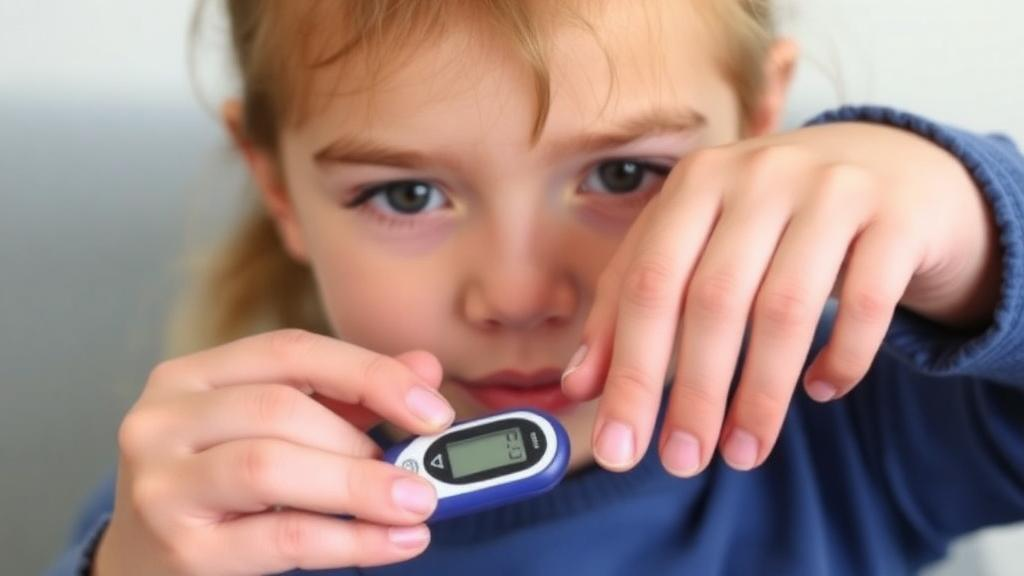
Type 1 diabetes is one of the most common chronic diseases of childhood, yet a sweeping new analysis suggests that doctors still miss it, delay it, or label it as something else far more often than most parents would ever suspect. A scoping review published in BMC Pediatrics by an international team led by researchers from the Luxembourg Institute of Health, Aristotle University of Thessaloniki, the University of Naples Federico II, and Centre Hospitalier de Luxembourg has pulled together the global evidence on diagnostic errors in paediatric diabetes, and the numbers are sobering. Depending on the study, between roughly 14 and nearly 99 percent of children with new-onset type 1 diabetes experienced some form of delayed diagnosis, and the first healthcare contact failed to catch the disease in up to 72 percent of cases among children who already had diabetic ketoacidosis.
The review, conducted according to the PRISMA-ScR guidelines for scoping reviews, screened 1,936 records and ultimately included 27 studies that examined children and adolescents whose diagnosis was delayed, missed, or changed from one type of diabetes to another. The researchers used a population-concept-context framework to decide which studies qualified, focusing on three distinct scenarios: children whose type 1 diabetes diagnosis came late, children whose initial diagnosis was wrong at the first medical encounter, and children whose diabetes was initially classified as a different type altogether. This structure allowed the team to separate the different kinds of diagnostic failure that can occur on the long road from first symptoms to correct treatment.
The technical picture that emerges is one of striking heterogeneity. For newly diagnosed type 1 diabetes, the frequency of delayed diagnosis ranged from 14.1 to 46.6 percent in studies that did not stratify results by ketoacidosis status. When the analysis separated children by whether they had developed diabetic ketoacidosis, the most dangerous acute complication of the disease, the ranges diverged sharply: 55.0 to 58.7 percent among children without ketoacidosis, and a staggering 43.0 to 98.1 percent among those with it. In other words, children who ended up in the most life-threatening state were often those whose diagnosis had been missed the longest, allowing insulin deficiency to progress unchecked until the body began breaking down fat for fuel and accumulating acidic ketones in the blood.
Missed diagnosis at the first healthcare contact followed a similar pattern. Across studies without stratification by ketoacidosis status, 16.0 to 38.7 percent of children were sent home or otherwise misdiagnosed at their initial encounter. Among children who did not develop ketoacidosis, the range was 5.0 to 34.8 percent, while among those who did, it spanned from 0.6 to as high as 72.0 percent. The enormous variability, the authors stress, reflects real differences in populations, healthcare settings, definitions of delay, and the methods used to ascertain diagnostic error, rather than a single universal failure rate. A retrospective chart review in one country may count delay differently than a prospective cohort in another, which makes direct comparison difficult even when the underlying clinical problem is the same.
Beyond delays in recognizing type 1 diabetes itself, the review also quantified how often children are assigned the wrong type of diabetes. Misclassification between type 1 and type 2 diabetes occurred in 1.4 to 22.7 percent of cases across the included studies. This matters because the two diseases demand fundamentally different management: type 1 diabetes requires immediate and lifelong insulin replacement, while type 2 diabetes in adolescents may initially be managed with lifestyle changes and oral agents. A child with type 1 diabetes mistakenly treated as type 2 can deteriorate rapidly, and the review found that misdiagnosis was indeed associated with errors in management and an increased risk of adverse events.
The review also documented rarer but clinically important diagnostic revisions. In a population of patients with atypical presentations of type 1 diabetes, 11.6 percent were subsequently reclassified as having maturity-onset diabetes of the young, a monogenic form of diabetes caused by mutations in single genes that affect insulin-producing beta cells. In a cohort of patients initially diagnosed with type 1 diabetes, 4.58 percent were ultimately found to have Wolfram syndrome, a rare genetic disorder that combines diabetes with optic atrophy, deafness, and other neurological features. These figures underscore why the studies that addressed diabetes classification relied on diagnostic protocols and algorithms, and performed genetic testing, to arrive at the correct label. Monogenic diabetes, in particular, can masquerade as type 1 diabetes for years, and identifying it changes prognosis, family counseling, and sometimes treatment entirely.
So where do the errors actually happen? The review identified the most frequent mistakes made by healthcare professionals as the omission or misinterpretation of clinical symptoms and improper handling of laboratory examinations. The classic warning signs of type 1 diabetes in children, including excessive thirst, frequent urination, unexplained weight loss, and fatigue, can be subtle in their early stages and easily attributed to more benign causes such as urinary tract infections, viral illnesses, or behavioral changes. Laboratory findings can compound the confusion: a mildly elevated blood glucose may be dismissed as a laboratory artifact or a stress response, and glycosylated haemoglobin values may not yet reflect the rapid metabolic deterioration of new-onset disease.
The consequences of these errors are not abstract. Diabetic ketoacidosis at diagnosis is associated with longer hospital stays, admission to paediatric intensive care units, and potential long-term effects on the developing brain, since severe ketosis and cerebral edema can leave lasting neurological damage. Children who are misdiagnosed with type 2 diabetes and started on inappropriate therapy may experience worsening hyperglycemia and a more abrupt, more dangerous onset of insulin dependence. The review’s finding that misdiagnosis was linked to management errors and adverse events gives quantitative weight to what paediatric endocrinologists have long argued: the window between first symptoms and correct diagnosis is a critical period in which the entire trajectory of the disease can be shaped.
The authors are careful about the limits of their evidence. Because the included studies differed so widely in populations, settings, definitions, and ascertainment methods, the reported frequencies of missed recognition, diagnostic delay, and misclassification vary markedly, and no single figure can be treated as a universal benchmark. A scoping review, by design, maps the breadth of existing literature rather than pooling it into a single estimate, and the 27 included studies represent a heterogeneous mix of prospective cohorts, retrospective cohorts, and cross-sectional designs from different healthcare systems. What the review does establish is that these diagnostic failures are not rare curiosities but recurring features of paediatric diabetes care across multiple countries and settings.
The practical implications are clear. Raising awareness of the classic symptom cluster among primary care providers, parents, and school health staff could shorten the delay between first symptoms and first test. Simple protocols, such as checking blood glucose in any child presenting with unexplained thirst, urination, or weight loss, could catch cases before ketoacidosis develops. And for children whose diabetes does not behave as expected, structured diagnostic algorithms and access to genetic testing for monogenic forms such as maturity-onset diabetes of the young and Wolfram syndrome could prevent years of misdirected treatment. As the incidence of type 1 diabetes in children continues to rise worldwide, the review serves as both a warning and a roadmap: the tools for earlier, more accurate diagnosis already exist, and the evidence now shows exactly how much is at stake when they are not used.
Subject of Research: Delayed diagnosis and misdiagnosis of type 1 diabetes in children and adolescents
Article Title: Delayed diagnosis and misdiagnosis of type 1 diabetes in children and adolescents: a scoping review
Article References: Giza, S., Fedi, L., Schierloh, U., Fagherazzi, G., de Beaufort, C., & Aguayo, G. A. (2026). Delayed diagnosis and misdiagnosis of type 1 diabetes in children and adolescents: a scoping review. BMC Pediatrics. https://doi.org/10.1186/s12887-026-07808-0
Image Credits: AI Generated
DOI: 10.1186/s12887-026-07808-0
Keywords: type 1 diabetes, children, adolescents, delayed diagnosis, misdiagnosis, diabetic ketoacidosis, misclassification, MODY, Wolfram syndrome, scoping review, paediatric care, diagnostic errors
Cite Scienmag News
Ophelia Keating. (October 12, 2026). Children With Type 1 Diabetes Are Too Often Misdiagnosed, Major Review Finds. Scienmag. https://scienmag.com/children-with-type-1-diabetes-are-too-often-misdiagnosed-major-review-finds/
Ophelia Keating. "Children With Type 1 Diabetes Are Too Often Misdiagnosed, Major Review Finds." Scienmag, 12 October 2026, https://scienmag.com/children-with-type-1-diabetes-are-too-often-misdiagnosed-major-review-finds/. Accessed 12 October 2026.
Ophelia Keating. "Children With Type 1 Diabetes Are Too Often Misdiagnosed, Major Review Finds." Scienmag. October 12, 2026. https://scienmag.com/children-with-type-1-diabetes-are-too-often-misdiagnosed-major-review-finds/


