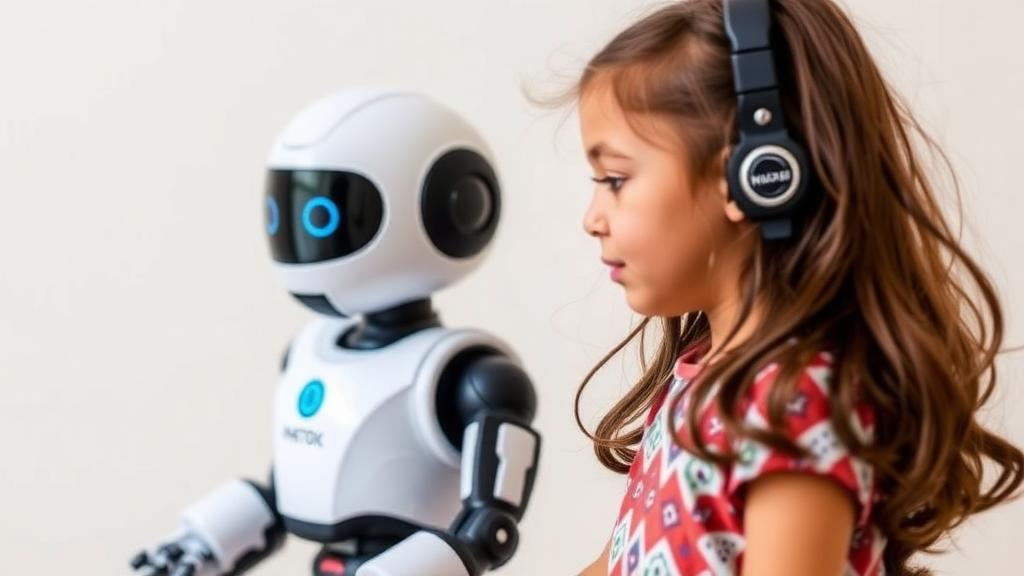
In rehabilitation clinics across Italy, a quiet role reversal is about to unfold. Instead of a humanoid robot tutoring a child, the child will sit in the teacher’s chair, guiding a robot named Pepper or NAO through the task of assembling scrambled picture stories into coherent narratives. This inversion is the core of the Learning by Teaching paradigm, and a new multicenter randomized controlled trial published in Frontiers in Digital Health is set to test whether it can strengthen planning abilities in children aged 7 to 16 with neuromotor impairments such as cerebral palsy and developmental coordination disorder.
The trial, registered as NCT06797050 and led by researchers at IRCCS Fondazione Stella Maris in Pisa together with the University of Florence and two additional Italian research hospitals, will enroll 80 children randomly assigned to either a social robot training program or a control group continuing standard care. The design is a waitlist randomized controlled trial, meaning the control group receives the same training after a waiting period, an ethically motivated arrangement that ensures no child is denied access to the experimental intervention. Assessments occur at baseline, after the intervention or control period, and again three to four months later.
The scientific rationale rests on a well-documented clinical reality. Children with neuromotor disorders frequently show intertwined difficulties in both motor planning and cognitive planning. Motor planning encompasses the anticipation of goals, the selection and temporal organization of movement sequences, preparation for execution, and online monitoring of outcomes, including components such as anticipatory control, motor programming, and motor imagery. These deficits ripple outward, compromising executive functions like working memory, cognitive flexibility, and inhibitory control, which in turn undermine academic skills, particularly reading comprehension, a multidimensional ability that integrates decoding, inferential reasoning, attention, and metacognitive self-regulation.
The intervention itself is deceptively simple in appearance but carefully engineered underneath. Over 20 to 25 sessions delivered two to three times per week, each lasting roughly an hour, children teach the robot to reorder picture-based stories displayed on a tablet interface. Complexity escalates along three dimensions: the number of images grows from three to seven, the required reasoning deepens from temporal to causal and inferential logic, and the number of characters and locations multiplies. A custom algorithm adapts the sequence of trials to each child’s performance, providing facilitations when errors occur, a structure consistent with principles from gamified learning environments where adaptive progression helps sustain engagement.
The story materials were developed with deliberate inclusivity. The clinical team at Stella Maris created a narrative script featuring characters from diverse ethnic backgrounds and with different types of disabilities, focusing on everyday activities that require specific motor sequences. Professional designers produced the graphics under clinical supervision, and each picture comes with a verbal description the child can replay on demand. Once a story is reordered, the child can listen to the full sequence before confirming the selection, adding a layer of self-monitoring to the task.
Two humanoid platforms from SoftBank Robotics and United Robotics Group will share the workload. Pepper stands 120 centimeters tall with 20 motors and a chest-mounted touchscreen, while NAO measures 57.4 centimeters with 25 degrees of freedom and relies on an external tablet. Both are programmable through the manufacturer’s Choreographe software and Python, and the University of Florence has built custom user interfaces, one for the child on the robot’s tablet and one for the therapist on a computer. Although the two platforms differ, the intervention protocol, session structure, and therapist-mediated procedures are standardized across centers, with robot type treated as a potential covariate in the statistical analysis.
What distinguishes this protocol most sharply from prior work is its multimodal measurement of engagement, a construct the authors acknowledge remains complex and methodologically contested. Emotional engagement will be captured through heart rate recorded by a wrist-worn Fitbit, expressed as a ratio relative to a three-minute pre-interaction baseline, and through facial action units analyzed with the OpenFace toolkit. Cognitive engagement will be estimated from eye-gazing metrics extracted offline using tools such as DeepGaze or Gaze360, tracking the proportion of attention directed to task-relevant stimuli, alongside gaze entropy, blinking rate as an index of cognitive load, and eyebrow and head-pose dynamics. Behavioral engagement will be derived from game logs, including error counts, replay requests, and task durations, with audio analyzed through OpenSmile. Therapists will additionally complete observational checklists after each session.
The primary outcomes are planning abilities measured through the Picture Arrangement subtest of the WISC-III and an ad hoc motor planning test developed at Stella Maris, in which children imitate short sequences of goal-directed actions presented through different model modalities, scored for execution and sequential accuracy. Secondary outcomes span a broad cognitive territory: executive functions via the Tower of London and NEPSY-II inhibition and sorting subtests, visuo-spatial memory through the Corsi block-tapping task, sustained attention on the Leiter-3, narrative production in a freely invented story task coded for structural complexity and psychological lexicon, visual-perceptual skills on the TVPS-4, and reading comprehension with standardized Italian MT test batteries. Parent questionnaires including the BRIEF-2 and ABILHAND-Kids will capture everyday functioning.
The statistical plan is appropriately cautious for a novel intervention. The a priori sample size of 77, rounded to 80, was calculated from paired-samples assumptions, and the authors candidly note it does not formally power the primary between-group comparison. Effects will therefore be reported as estimates with 95 percent confidence intervals rather than as definitive confirmations. Analyses follow the intention-to-treat principle using linear mixed-effects models with group, time, and their interaction as fixed effects, supplemented by per-protocol sensitivity analyses. The Holm-Bonferroni procedure will control for multiple comparisons, and exploratory mediation analyses will test whether engagement predicts or mediates intervention gains, an explicitly underpowered but conceptually important question.
The authors are forthright about limitations: the structured clinical setting may not generalize to daily life, allocation will not be concealed, there is no active technology-matched control condition to isolate the robot’s social presence from the task itself, and the ad hoc motor planning measure has not yet established inter-rater reliability. Yet the trial’s longitudinal, multi-session structure addresses a genuine gap, since most prior robot studies relied on single sessions or small single-case reports. If the children who teach Pepper and NAO show durable gains in planning, executive function, and reading comprehension, the study could establish a template for personalized, engagement-informed rehabilitation, and its sensor-based engagement framework may prove as influential as the intervention itself.
Subject of Research: A randomized controlled trial of social robot-mediated Learning by Teaching intervention for cognitive and motor planning in children with neuromotor impairments
Article Title: A story for Pepper and Nao: applying the learning by teaching paradigm in children with patterns of neuromotor impairment
Article References: Del Lucchese, B., Di Lieto, M. C., Scrocco, A., Matteucci, E., Fiorini, L., Pescini, E., Beani, E., Cotardo, A., Vanni, E., Conti, E., Menici, V., Camuncoli, F., Mangani, G., Maselli, M. V., Adelucci, E., Pani, J., Cavallo, F., Pecini, C., Diella, E., … Sgandurra, G. (2026). A story for Pepper and Nao: applying the learning by teaching paradigm in children with patterns of neuromotor impairment. Frontiers in Digital Health, 8, Article 1929794. https://doi.org/10.3389/fdgth.2026.1929794
Image Credits: AI Generated
DOI: 10.3389/fdgth.2026.1929794
Keywords: social robots, learning by teaching, neuromotor impairment, cerebral palsy, developmental coordination disorder, motor planning, executive functions, engagement, rehabilitation, randomized controlled trial, Pepper robot, NAO robot
Cite Scienmag News
Denise Maddox. (October 16, 2026). Children as Robot Teachers: Italian Trial Puts Pepper and NAO to Work in Neuromotor Rehabilitation. Scienmag. https://scienmag.com/children-as-robot-teachers-italian-trial-puts-pepper-and-nao-to-work-in-neuromotor-rehabilitation/
Denise Maddox. "Children as Robot Teachers: Italian Trial Puts Pepper and NAO to Work in Neuromotor Rehabilitation." Scienmag, 16 October 2026, https://scienmag.com/children-as-robot-teachers-italian-trial-puts-pepper-and-nao-to-work-in-neuromotor-rehabilitation/. Accessed 16 October 2026.
Denise Maddox. "Children as Robot Teachers: Italian Trial Puts Pepper and NAO to Work in Neuromotor Rehabilitation." Scienmag. October 16, 2026. https://scienmag.com/children-as-robot-teachers-italian-trial-puts-pepper-and-nao-to-work-in-neuromotor-rehabilitation/