


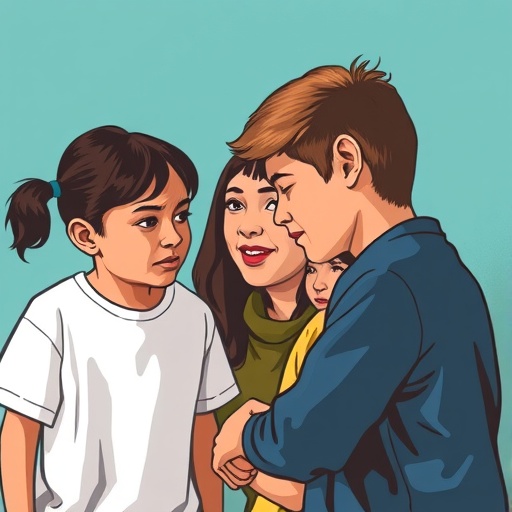
In recent years, the field of psychology has increasingly recognized the profound impact that early life experiences have on mental health outcomes in later years, particularly during adolescence. A groundbreaking study by Corkish, Batterham, Maston, and colleagues examines this connection, focusing specifically on the concept of Adverse Childhood Experiences (ACEs) and their link to mental health symptoms during adolescent development. This study not only sheds light on how these early adverse experiences shape mental health pathways but also emphasizes the critical role that peer interactions play in this dynamic.
Adverse Childhood Experiences encompass a range of traumatic events that individuals might face during their formative years, including neglect, physical or emotional abuse, household dysfunction, and the loss of a parent. The study highlights the increasing evidence that these experiences can lead to a cascade of mental health challenges, such as depression, anxiety, and behavioral problems. According to the findings, approximately one in four adolescents report having experienced ACEs, underscoring the urgency of addressing these issues within our societies.
The researchers employed a robust methodology to gather their data. They utilized a mixed-methods approach, combining quantitative surveys with qualitative interviews to capture a comprehensive understanding of the adolescents’ experiences. This dual strategy allowed the team to triangulate their findings and bolster the reliability of their conclusions. Importantly, the study incorporated a diverse sample across various demographics, recognizing that the impact of ACEs can vary significantly based on contextual and individual factors.
One of the critical revelations of the study is the significant influence of peer interactions on the mental health outcomes of adolescents who have experienced ACEs. The findings illustrate that supportive friendships and social networks can act as protective factors, mitigating the psychological toll of adverse experiences. Conversely, negative peer interactions, characterized by bullying or social exclusion, can exacerbate mental health issues, creating a cyclic pattern of distress. The study calls attention to the need for interventions that foster positive peer relationships within educational and community settings.
Adding nuance to the findings, the researchers also identified the role of resilience in adolescents. Many participants in the study reported that despite having faced significant adversity, they managed to thrive due to supportive relationships and coping mechanisms. This observation challenges the deterministic view often associated with ACEs, suggesting instead that adolescents possess an innate capacity for resilience. Thus, fostering resilience can be as crucial as addressing the adverse experiences themselves when it comes to promoting mental health.
The implications of the study extend beyond individual well-being; they call into question the broader societal impacts of ACEs. Public health officials and policymakers can take these insights to formulate more informed strategies addressing mental health in adolescents. By recognizing that peer interactions and community support are vital components of mental health outcomes, stakeholders can develop frameworks that prioritize preventive measures and support systems within schools and community organizations.
Educators, in particular, play a pivotal role in facilitating positive peer interactions. The study suggests that schools should implement programs that promote social-emotional learning, which can help students develop empathy, conflict resolution skills, and the ability to form supportive relationships. The need for such educational programs is further accentuated by the rise in mental health issues among adolescents in recent years, a trend exacerbated by the COVID-19 pandemic.
Moreover, the research highlights the importance of early intervention. By identifying at-risk adolescents who have experienced ACEs, professionals can provide targeted support that encourages healthy peer interactions and fosters resilience. Programs that focus on building social skills and providing counseling can be instrumental in changing the trajectory of these young individuals’ lives.
Ultimately, addressing the mental health challenges stemming from ACEs requires a multi-faceted approach. It is not solely about mitigating the effects of adverse experiences but also about enhancing protective factors that can lead to improved outcomes. Community resilience, supportive friendships, and access to mental health resources can significantly influence how adolescents manage their mental health amidst adverse circumstances.
The findings from Corkish et al. serve as a rallying call for increased awareness around Adverse Childhood Experiences and their far-reaching effects on mental health. It is crucial for society to recognize these experiences as not merely childhood hurdles but as significant determinants of future well-being. As the conversation around mental health evolves, it is imperative to integrate these insights into both clinical practices and public policy.
In closing, the body of research surrounding ACEs and adolescent mental health continues to grow, and studies like this one are at the forefront of blending scientific inquiry with real-world applications. By addressing both the individual experiences of adolescents and the community contexts in which they exist, we can create a more supportive environment that champions mental health for the next generation.
The complexities surrounding Adverse Childhood Experiences and their influence on adolescent mental health underscore the need for comprehensive strategies that consider the intricate web of social interactions. As researchers continue to unpack these dynamics, it is essential for scholars, practitioners, and policymakers to work collaboratively to forge a brighter, healthier future for all adolescents.
Corkish, B., Batterham, P.J., Maston, K. et al. Adverse Childhood Experiences and Adolescent Mental Health Symptoms: The Role of Peer Interactions. Journ Child Adol Trauma (2025). https://doi.org/10.1007/s40653-025-00756-4
Cite Scienmag News
Glenn Wilkins. (October 16, 2025). Childhood Trauma and Teen Mental Health: Peer Influence. Scienmag. https://scienmag.com/childhood-trauma-and-teen-mental-health-peer-influence/
Glenn Wilkins. "Childhood Trauma and Teen Mental Health: Peer Influence." Scienmag, 16 October 2025, https://scienmag.com/childhood-trauma-and-teen-mental-health-peer-influence/. Accessed 4 September 2026.
Glenn Wilkins. "Childhood Trauma and Teen Mental Health: Peer Influence." Scienmag. October 16, 2025. https://scienmag.com/childhood-trauma-and-teen-mental-health-peer-influence/


