


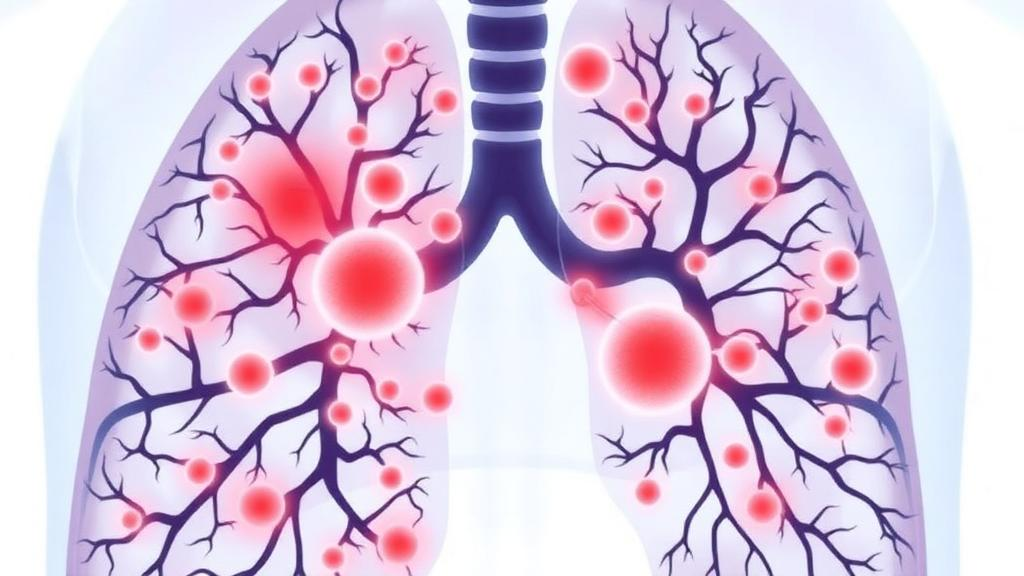
For more than two centuries, forensic pathologists have puzzled over a striking autopsy finding: clots in the heart and large vessels that look like yellow chicken fat, dense with lipids and clearly different from ordinary postmortem blood clot. The traditional explanation has been procedural rather than biological. Chicken-fat clots, the textbook argument goes, form when death is slow, because a prolonged agonal period allows red cells to settle away from the plasma, leaving behind a pale, fatty-appearing coagulum. A new retrospective autopsy study from Italy now suggests that something more active may be going on inside the dying circulation. The research, published in the International Journal of Legal Medicine, reports that the presence of chicken-fat clots is strongly associated with an increased density of neutrophils packed inside the small blood vessels of the lungs, pointing toward a possible link with systemic inflammation rather than slow death alone.
The study, led by Simona Nicolì and Biagio Solarino of the Section of Legal Medicine at the University of Bari, together with colleagues in Rome and Bari, screened 152 medico-legal autopsies performed between November 2020 and November 2024. Of these, 122 cases met the inclusion criteria and formed the final cohort. The researchers reviewed autopsy reports alongside whatever clinical documentation was available, including records of anticoagulant and antiplatelet therapy, vasoactive amines, corticosteroids, ongoing infections, and laboratory measurements such as total leukocyte count, neutrophil percentage, and absolute neutrophil count. Because premortem laboratory data were frequently unavailable, particularly in traumatic deaths, the team turned to a different strategy: they analyzed lung tissue samples from all 122 decedents directly.
The technical core of the study lies in digital pathology. Rather than eyeballing histological slides and grading neutrophil presence subjectively, the investigators scanned whole-slide images of lung tissue and quantified pulmonary intravascular neutrophil density using QuPath, an open-source digital pathology platform widely used for quantitative image analysis. This approach allowed the team to count neutrophils within vascular spaces per unit area, expressed as neutrophils per square millimeter, and to treat that density as a continuous variable amenable to statistical testing. The association between intravascular neutrophil density and the presence of chicken-fat clots was then analyzed using receiver operating characteristic curves, chi-squared tests, and odds ratios, the standard toolkit for evaluating diagnostic discrimination and association strength in retrospective cohorts.
The results were unambiguous. Chicken-fat clots were present in 34 of the 122 cases, a prevalence of 27.9 percent. Among the CFC-positive cases, septic shock represented the largest cause-of-death group, accounting for 29.4 percent of that subset, a distribution that itself hints at an inflammatory contribution. When the researchers compared lung tissue from cases with and without chicken-fat clots, they found that increased pulmonary intravascular neutrophil density was significantly associated with CFC presence, with an odds ratio of 21.0 and a p-value below 0.001. In practical terms, cases with high intravascular neutrophil density in the lungs had roughly twenty-one times the odds of showing chicken-fat clots compared with cases of low density.
The quantitative analysis went further. A threshold of 2286 neutrophils per square millimeter showed good discrimination for the presence of chicken-fat clots, with an area under the ROC curve of 0.840. An AUC of 0.840 sits well above the 0.5 that would indicate random guessing and approaches the range generally considered indicative of good diagnostic performance. This means that a single histological measurement, neutrophil density inside pulmonary vessels, could separate CFC-positive from CFC-negative cases with reasonable accuracy in this cohort. Notably, no significant associations were identified between chicken-fat clots and anticoagulants, antiplatelet agents, or the other evaluated blood parameters, suggesting that the clot morphology is not simply an artifact of antemortem medication or routine hematological variation.
Why would neutrophils matter for postmortem clot appearance? The answer may lie in what immunologists have learned about thrombosis as an innate immune effector. Neutrophils are the first responders of the immune system, and in sepsis and systemic inflammation they accumulate in microvascular beds, where they can release neutrophil extracellular traps, web-like structures of DNA studded with antimicrobial proteins. These traps are known to promote deep vein thrombosis in experimental models, and thrombosis is increasingly understood as an intravascular arm of innate immunity rather than a purely hemodynamic phenomenon. If neutrophils and their traps participate in the formation of intravascular coagula during the final hours of life, then the lipid-rich chicken-fat clot may carry an immunological signature that reflects the inflammatory state of the decedent, not merely the tempo of dying.
The authors are careful to frame what the study does and does not establish. Their conclusion states that chicken-fat clots were associated with increased pulmonary intravascular neutrophil density in this retrospective autopsy cohort, suggesting a possible relationship with systemic inflammatory or neutrophil-mediated processes. But they explicitly caution that these findings do not establish pulmonary intravascular neutrophil density as a validated marker of antemortem neutrophilia. Nor do they exclude the contribution of agonal duration or postmortem processes to CFC formation. The traditional slow-death concept, in other words, is not overturned; it is complemented. Further studies incorporating well-defined agonal timing and closely timed premortem laboratory data are needed to clarify the biological and temporal determinants of chicken-fat clot formation.
The methodological choices reveal why the team avoided relying on clinical blood counts. In forensic cohorts, particularly those dominated by traumatic deaths, decedents often arrive without any recent laboratory workup, so antemortem neutrophil counts are simply unavailable. By measuring neutrophil density directly in lung tissue, the investigators sidestepped this data gap, but they also introduced a new interpretive question: does intravascular neutrophil density in pulmonary vessels reflect antemortem neutrophilia, agonal neutrophil trapping, or postmortem cellular redistribution? Previous forensic work has explored small vessel neutrophils as a marker for sepsis at autopsy, and the present study extends that quantitative logic to clot morphology, but the temporal ambiguity remains an acknowledged limitation.
The historical arc of this research question is long. Giovanni Battista Morgagni, the eighteenth-century father of pathologic anatomy, described cadaveric clots of varying appearance, and forensic textbooks from Saukko and Knight onward have treated chicken-fat clots as a recognized agonal phenomenon. Japanese investigators in the 1980s linked postmortem fibrinolysis and plasma catecholamine levels to the fluidity of cadaveric blood after sudden death, and German researchers in 1988 examined the roles of coagulation, fibrinogenolysis, and fibrinolysis in the development of fluid and clotted cadaver plasma. More recently, a 2023 immunohistochemical study investigated the formation mechanism of chicken-fat clots, and a 2025 systematic review of cadaver clots by members of the same Bari group consolidated the literature. The new study adds a quantitative, neutrophil-centered dimension to this accumulating body of work.
For forensic practice, the implications are intriguing but preliminary. If a threshold of 2286 neutrophils per square millimeter in pulmonary vessels can be replicated in larger cohorts with well-characterized agonal timing, digital pathology could offer pathologists an objective histological parameter that correlates with a recognizable gross finding, potentially sharpening the interpretation of autopsy coagula in cases of septic shock and other inflammatory deaths. The association with septic shock as the leading cause of death among CFC-positive cases fits coherently with the neutrophil hypothesis, since sepsis drives both neutrophil mobilization and microvascular neutrophil accumulation. What the study ultimately delivers is a measurable bridge between a centuries-old gross observation and a modern immunological framework, and it sets the stage for the prospective studies that will determine whether the chicken-fat clot can graduate from descriptive curiosity to informative forensic marker.
Subject of Research: Chicken-fat clots linked to neutrophil buildup in lung vessels, autopsy study finds
Article Title: Chicken-fat clots and pulmonary intravascular neutrophil density: a retrospective autopsy study
Article References: Nicolì, S., Ambrosi, L., Mercuri, G., Oliva, A., Ferorelli, D., Ingravallo, G., & Solarino, B. (2026). Chicken-fat clots and pulmonary intravascular neutrophil density: a retrospective autopsy study. International Journal of Legal Medicine. https://doi.org/10.1007/s00414-026-04048-w
Image Credits: AI Generated
DOI: 10.1007/s00414-026-04048-w
Keywords: Chicken-fat, clots, pulmonary, intravascular, neutrophil, density, retrospective, autopsy, scientific research
Cite Scienmag News
Ophelia Keating. (October 19, 2026). Chicken-fat clots linked to neutrophil buildup in lung vessels, autopsy study finds. Scienmag. https://scienmag.com/chicken-fat-clots-linked-to-neutrophil-buildup-in-lung-vessels-autopsy-study-finds/
Ophelia Keating. "Chicken-fat clots linked to neutrophil buildup in lung vessels, autopsy study finds." Scienmag, 19 October 2026, https://scienmag.com/chicken-fat-clots-linked-to-neutrophil-buildup-in-lung-vessels-autopsy-study-finds/. Accessed 19 October 2026.
Ophelia Keating. "Chicken-fat clots linked to neutrophil buildup in lung vessels, autopsy study finds." Scienmag. October 19, 2026. https://scienmag.com/chicken-fat-clots-linked-to-neutrophil-buildup-in-lung-vessels-autopsy-study-finds/


