


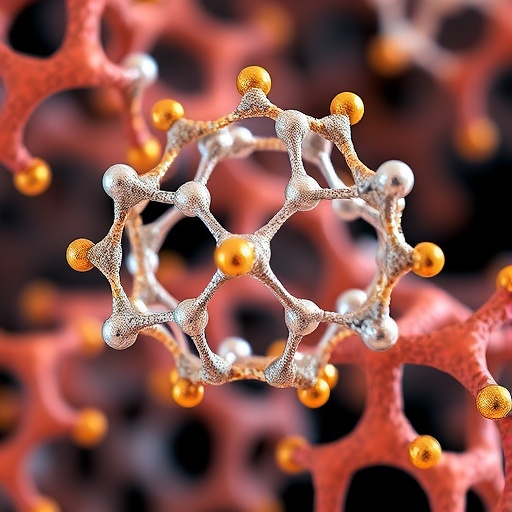
Helical carbon nanotubes (HCNTs) bring an inherently coiled geometry that sets them apart from conventional straight carbon nanotubes. While straight CNTs are well studied, HCNTs have remained comparatively underexplored in terms of functionalization routes and how those surface changes translate into real composite performance. Their spiral structure can mechanically entangle within host matrices, potentially increasing interlocking with solidified resins and with microfiber reinforcements. This geometric “lock-in” is expected to elevate mechanical, thermal, electrical, and magnetic properties in fiber-reinforced composites.
To convert HCNTs’ structural advantages into consistently high-performance materials, chemical treatment is often required. Proper functionalization can strengthen molecular interactions between nanotube surfaces and resin chains, improve bonding effectiveness, and enable more uniform dispersion in the host. Without such surface engineering, HCNTs may aggregate, leading to uneven microstructures and reduced composite efficiency.
Recently, researchers used a reflux-based chemical functionalization strategy employing a low-molarity nitric acid solution. They systematically varied reflux time and temperature to determine how processing conditions affect surface modification and dispersion homogeneity. This approach targets atomic-scale alterations on the HCNT surface while aiming to preserve the functional structure needed for composite reinforcement.
Multiple characterization tools were used to verify treatment outcomes. Scanning electron microscopy provided morphological evidence of surface changes, while FTIR spectroscopy was used to detect functional groups introduced by the acid treatment. X-ray diffraction and Raman spectroscopy together helped reveal structural evolution and defect formation induced by reflux conditions.
The results showed that reflux time and temperature were particularly influential for atomic-level structural modification. Most treated samples exhibited improved dispersion behavior, indicating that surface chemistry changes helped reduce aggregation and promoted a more stable suspension. Raman data further supported these improvements through increased values in the I_D/I_G ratio, consistent with enhanced defect-related features that often correlate with improved interfacial activity.
FTIR spectral shifts confirmed chemical transformations consistent with nitric acid–driven functionalization. Notably, an exception emerged: the HCNTs exposed to higher temperatures for longer durations did not show the same dispersion and performance gains, suggesting over-treatment can undermine dispersibility or alter structural integrity.
Overall, the study reports a practical route to produce functionalized helical carbon nanotubes (FHCNTs) optimized for nanocomposite structural applications. By tuning reflux parameters, the work links processing chemistry to measurable physicochemical indicators—dispersion stability and spectroscopic fingerprints—offering a pathway to more reliable, high-performance composite materials.
Importantly, this reflux optimization emphasizes a central principle in nanocomposite design: geometry provides a structural advantage, but surface chemistry determines whether that advantage survives processing and translates into uniform reinforcement throughout the matrix.
- Helical carbon nanotubes
- Reflux functionalization
- Nitric acid
- Dispersion homogeneity
- Raman I_D/I_G ratio
- FTIR surface chemistry
- Nanocomposites
News Publication Date: 20-May-2026
Web References: https://journal.hep.com.cn/foms/EN/10.1007/s11706-026-0767-y
References: 10.1007/s11706-026-0767-ya
Cite Scienmag News
Bethany Barker. (July 17, 2026). Chemical Functionalization Enables High-Performance Structural Nanocomposites Using Helical Carbon Nanotubes. Scienmag. https://scienmag.com/chemical-functionalization-enables-high-performance-structural-nanocomposites-using-helical-carbon-nanotubes/
Bethany Barker. "Chemical Functionalization Enables High-Performance Structural Nanocomposites Using Helical Carbon Nanotubes." Scienmag, 17 July 2026, https://scienmag.com/chemical-functionalization-enables-high-performance-structural-nanocomposites-using-helical-carbon-nanotubes/. Accessed 3 September 2026.
Bethany Barker. "Chemical Functionalization Enables High-Performance Structural Nanocomposites Using Helical Carbon Nanotubes." Scienmag. July 17, 2026. https://scienmag.com/chemical-functionalization-enables-high-performance-structural-nanocomposites-using-helical-carbon-nanotubes/


