

Friday, October 23, 2026
Science
No Result
View All Result
  • Login
  • HOME
  • SCIENCE NEWS
  • CONTACT US
  • HOME
  • SCIENCE NEWS
  • CONTACT US
No Result
View All Result
Scienmag
No Result
View All Result
Home Science News Earth Science

Chang’e-6 Moon Soil Reveals 500-Million-Year Cosmic-Ray Exposure History

October 23, 2026
in Earth Science
Violet Maxwell
By Violet Maxwell Scienmag Editorial Profile - Natural Hazards
Reading Time: 2 mins read
0
Chang’e-6 Moon Soil Reveals 500-Million-Year Cosmic-Ray Exposure History

Chang'e-6 Moon Soil Reveals 500-Million-Year Cosmic-Ray Exposure History

65
SHARES
587
VIEWS
Share on FacebookShare on Twitter
ADVERTISEMENT

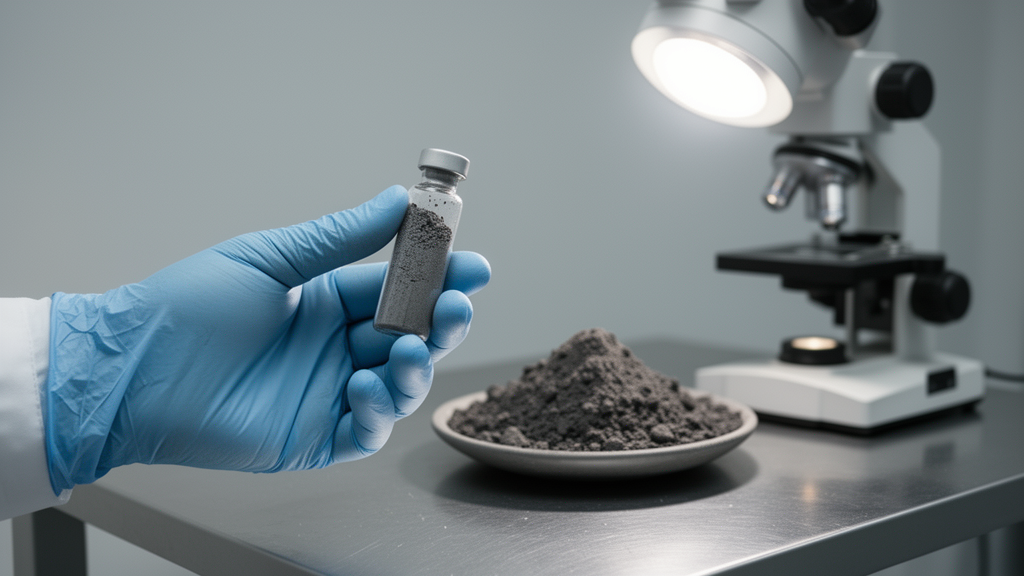
Fragments of rock carried back from the Moon's far side by China's Chang'e-6 mission have yielded new clues about how the giant South Pole-Aitken basin shuffled material across the lunar surface. By measuring cosmogenic isotopes of samarium, hafnium, and chromium in the returned soil and individual rock clasts, researchers determined that the Chang'e-6 soil has an average cosmic-ray exposure age of roughly 500 million years, indicating when its constituent material was excavated at the sampling site. Most of the low-titanium basaltic clasts in the sample set showed prolonged exposure histories similar to the host soil, suggesting they were dug up in the same excavation event.

However, two basaltic clasts stood out: they were excavated more recently, meaning their material traveled to the sampling site through a different or later impact process. The team then turned to the KREEP-bearing clasts. These clasts fell into two distinct compositional groups, and their cosmic-ray exposure ages did not overlap, pointing to separate excavation histories rather than a single provenance event.

In other words, the KREEP materials at the Chang'e-6 site arrived through more than one route. By comparing the clast compositions with remote-sensing observations of the lunar surface, the researchers identified candidate source regions: the magnesium-rich pyroxene annulus surrounding the basin for one compositional group, and buried basalt plains known as cryptomare for the other. Ejecta transport within and beyond the South Pole-Aitken basin therefore appears to have delivered geochemically distinct material to the far-side sampling location from multiple destinations.

The broader significance lies in the distribution of KREEP material. The study, published in Nature Communications as an open-access article, is based on Chang'e-6 samples from the South Pole-Aitken basin, though the authors note that effects of impact and space weathering on the lunar farside remain only partially constrained.

Subject of Research: Cosmic-ray exposure ages and ejecta provenance of Chang'e-6 samples from the South Pole-Aitken basin

Article Title: Cosmogenic isotopic evidence from Chang’e-6 clasts for excavation history and ejecta provenance in the South Pole-Aitken basin

Article References: Zhou, M., Zhang, Y., Chen, J., Luo, R., Wang, Z., Zuo, Z., Chen, D., Chen, K., Liu, K., Shen, J., Liu, B., & Qin, L. (2026). Cosmogenic isotopic evidence from Chang’e-6 clasts for excavation history and ejecta provenance in the South Pole-Aitken basin. Nature Communications. https://doi.org/10.1038/s41467-026-78270-w

Image Credits: AI Generated

DOI: 10.1038/s41467-026-78270-w

Keywords: Chang'e-6, Moon, South Pole-Aitken basin, cosmic-ray exposure, cosmogenic isotopes, KREEP, lunar far side, ejecta, cryptomare, impact excavation, space weathering, Nature Communications

Cite Scienmag News

Violet Maxwell. (October 23, 2026). Chang’e-6 Moon Soil Reveals 500-Million-Year Cosmic-Ray Exposure History. Scienmag. https://scienmag.com/change-6-moon-soil-reveals-500-million-year-cosmic-ray-exposure-history/

Violet Maxwell. "Chang’e-6 Moon Soil Reveals 500-Million-Year Cosmic-Ray Exposure History." Scienmag, 23 October 2026, https://scienmag.com/change-6-moon-soil-reveals-500-million-year-cosmic-ray-exposure-history/. Accessed 23 October 2026.

Violet Maxwell. "Chang’e-6 Moon Soil Reveals 500-Million-Year Cosmic-Ray Exposure History." Scienmag. October 23, 2026. https://scienmag.com/change-6-moon-soil-reveals-500-million-year-cosmic-ray-exposure-history/


Tags: Chang'e-6Chang'e-6 lunar soil cosmic-ray exposure historycosmic-ray exposurecosmogenic isotope analysis in lunar rockscosmogenic isotopescryptomareejectaextraterrestrial cosmic-ray exposure datingimpact excavationKREEPKREEP-bearing lunar rock provenancelunar basaltic clast excavation timelinelunar far sidelunar impact event chronologylunar regolith formation and evolutionlunar sample return mission insightslunar surface material redistributionlunar surface stratigraphy and material mixingMoonNature Communications.remote sensing of lunar surface compositionSouth Pole-Aitken basinSouth Pole-Aitken basin impact processesspace weathering
Share26Tweet16
Previous Post

Specialist nurses describe how clinical leadership shapes everyday hospital practice

Next Post

Discrimination Strongly Tied to Distress Among Bedouin Women in Study

Related Posts

Birdsong and Water: Why Quieter Cities Are Not Necessarily More Comfortable
Earth Science

Birdsong and Water: Why Quieter Cities Are Not Necessarily More Comfortable

October 23, 2026
Philippine Barako Coffee Farmers Flag Shrinking Farms and Price Instability in New Survey
Earth Science

Philippine Barako Coffee Farmers Flag Shrinking Farms and Price Instability in New Survey

October 23, 2026
Micro- and Nanoplastics Research Surges but Stays Rooted in Environmental Toxicology
Earth Science

Micro- and Nanoplastics Research Surges but Stays Rooted in Environmental Toxicology

October 23, 2026
Hidden Flood Risk: How Realistic Storm Patterns Nearly Doubled Damage Estimates in Louisiana
Climate

Hidden Flood Risk: How Realistic Storm Patterns Nearly Doubled Damage Estimates in Louisiana

October 23, 2026
Climate Change Could Wipe Out Most Suitable Cashew Habitat in Brazil’s Caatinga
Earth Science

Climate Change Could Wipe Out Most Suitable Cashew Habitat in Brazil’s Caatinga

October 23, 2026
Lake mud reveals 25,000 years of climate and shepherds shaping the Pyrenees
Biology

Lake mud reveals 25,000 years of climate and shepherds shaping the Pyrenees

October 23, 2026
Next Post
Discrimination Strongly Tied to Distress Among Bedouin Women in Study

Discrimination Strongly Tied to Distress Among Bedouin Women in Study

  • Mothers who receive childcare support from maternal grandparents show more optimized

    Mothers who receive childcare support from maternal grandparents show more parental warmth, finds NTU Singapore study

    27656 shares
    Share 11059 Tweet 6912
  • University of Seville Breaks 120-Year-Old Mystery, Revises a Key Einstein Concept

    1061 shares
    Share 424 Tweet 265
  • Bee body mass, pathogens and local climate influence heat tolerance

    682 shares
    Share 273 Tweet 171
  • Researchers record first-ever images and data of a shark experiencing a boat strike

    546 shares
    Share 218 Tweet 137
  • Groundbreaking Clinical Trial Reveals Lubiprostone Enhances Kidney Function

    531 shares
    Share 212 Tweet 133
Science

Embark on a thrilling journey of discovery with Scienmag.com—your ultimate source for cutting-edge breakthroughs. Immerse yourself in a world where curiosity knows no limits and tomorrow’s possibilities become today’s reality!

RECENT NEWS

  • Discrimination Strongly Tied to Distress Among Bedouin Women in Study
  • Chang’e-6 Moon Soil Reveals 500-Million-Year Cosmic-Ray Exposure History
  • Specialist nurses describe how clinical leadership shapes everyday hospital practice
  • Negative Voltage Unlocks Energy-Efficient 2D Memory and In-Memory Computing

Categories

  • Agriculture
  • Anthropology
  • Archaeology
  • Athmospheric
  • Biology
  • Biotechnology
  • Blog
  • Bussines
  • Cancer
  • Chemistry
  • Climate
  • Earth Science
  • Editorial Policy
  • Marine
  • Mathematics
  • Medicine
  • Pediatry
  • Policy
  • Psychology & Psychiatry
  • Science Education
  • Science News
  • Social Science
  • Space
  • Technology and Engineering

Subscribe to Blog via Email

Enter your email address to subscribe to this blog and receive notifications of new posts by email.

Join 5,151 other subscribers

© 2025 Scienmag - Science Magazine

Welcome Back!

Login to your account below

Forgotten Password?

Retrieve your password

Please enter your username or email address to reset your password.

Log In
No Result
View All Result
  • HOME
  • SCIENCE NEWS
  • CONTACT US

© 2025 Scienmag - Science Magazine

Discover more from Science

Subscribe now to keep reading and get access to the full archive.

Continue reading