


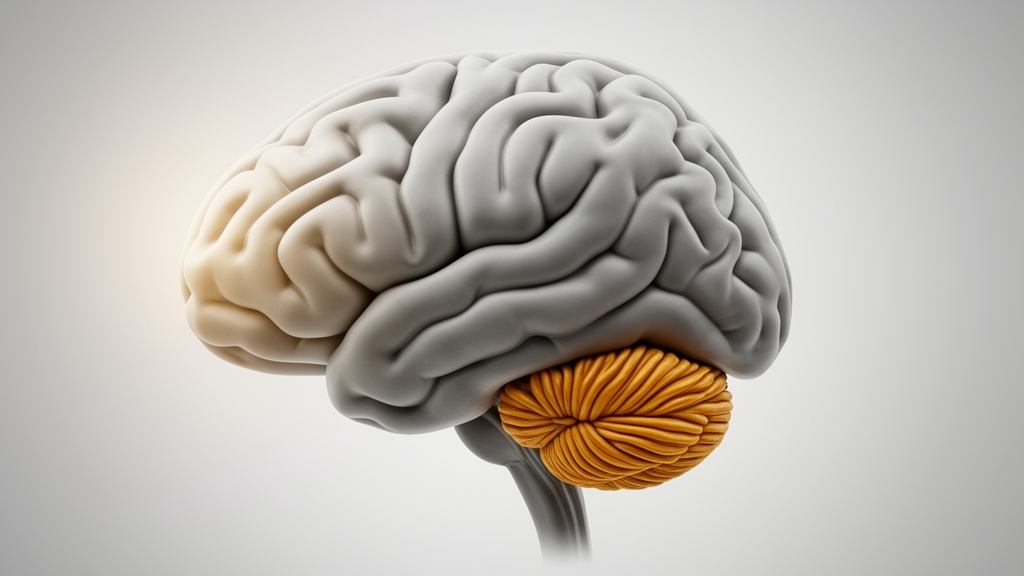
Researchers from Istanbul University and Rutgers University have published a study demonstrating that patients with hereditary cerebellar degeneration exhibit significant deficits in inhibitory control and the acquisition of feedback-based stimulus-response associations. The study, published in Frontiers in Psychology, investigated the structural correlates of these cognitive impairments by comparing 27 patients with genetically confirmed autosomal recessive or autosomal dominant cerebellar ataxias against 28 age-, sex-, and education-matched healthy controls. The findings suggest that the cognitive consequences of cerebellar disease are not limited to the cerebellum itself but involve a distributed network of subcortical structures, including the striatum and hippocampus, which play distinct roles in learning and cognitive control.
The investigation utilized the Stroop test to evaluate inhibitory control and the Concurrent Discrimination and Transfer Task (CDTT) to assess feedback-based associative learning. The CDTT consists of two phases: an acquisition phase where participants learn stimulus-response pairs through trial-by-trial feedback, and a transfer phase where these associations are applied to novel stimulus combinations. Patients with cerebellar degeneration showed significantly longer interference times and more errors on the Stroop test, indicating impaired inhibitory control. Furthermore, these patients required more trials to reach the acquisition criterion and made more errors during the learning phase of the CDTT compared to healthy controls, highlighting a specific difficulty in forming new associations through external feedback.
Structural magnetic resonance imaging revealed marked bilateral atrophy of the cerebellar cortex in the patient group, confirming the primary neurological pathology. Beyond the cerebellum, the study identified significant volume reduction in the right caudate nucleus, a key component of the basal ganglia involved in motor control and learning. While the left caudate and left putamen also showed marginally smaller volumes, these differences did not survive statistical correction for multiple comparisons. The hippocampal volumes, however, did not differ significantly between the patient and control groups, suggesting that the observed cognitive deficits are not simply a result of widespread hippocampal atrophy in this specific cohort.
In healthy controls, the number of errors made during the acquisition phase of the CDTT was negatively correlated with the volumes of both the left and right cerebellar cortices. This finding supports the hypothesis that the cerebellum contributes to efficient feedback-based learning by facilitating the formation of predictive models that link environmental cues, responses, and outcomes. In contrast, in patients with cerebellar degeneration, acquisition performance was not correlated with cerebellar volumes. Instead, the number of trials required to reach the acquisition criterion was negatively correlated with right hippocampal volume, and the acquisition error rate was negatively correlated with the volumes of the right putamen and both the left and right hippocampi.
The dissociation between the structural atrophy and the behavioral correlates is a critical aspect of the study’s findings. Although patients showed significant volume loss in the right caudate, their acquisition performance was associated with the right putamen and hippocampal volumes, neither of which showed significant between-group volume reductions. This suggests that the impaired acquisition of stimulus-response associations cannot be explained solely by the volume loss in the most atrophied structures. Rather, the findings point to a complex interplay where relatively preserved extra-cerebellar structures may be related to individual differences in cognitive performance in the context of cerebellar degeneration.
Follow-up analysis of covariance revealed a significant interaction between group and right hippocampal volume for the number of acquisition trials. This indicates that the relationship between right hippocampal volume and acquisition speed differed significantly between patients and healthy controls. In healthy individuals, the cerebellum appears to be the primary structural correlate of learning efficiency, whereas in patients, the hippocampus and putamen become more prominent correlates of performance. This shift may reflect a reorganization of learning networks, where the hippocampus contributes more strongly to learning by encoding associative representations to partially compensate for striatal or cerebellar deficits, although structural MRI alone cannot confirm functional compensation.
The study also examined the relationship between cognitive performance and clinical variables such as disease duration and motor symptom severity, as measured by the International Cooperative Ataxia Rating Scale. Neither cognitive performance nor regional brain volumes were significantly associated with these clinical variables, suggesting that the observed cognitive and structural differences are not simply a function of how long the disease has been present or the severity of the motor ataxia. This independence from motor severity underscores that the cognitive deficits in cerebellar degeneration are distinct from the motor symptoms and may involve separate neural mechanisms or pathways.
The authors note several limitations, including the genetic heterogeneity of the patient cohort, which comprised different subtypes of hereditary ataxia. This heterogeneity may have contributed to variability in the observed brain-behavior relationships. Additionally, the neuroimaging analysis was restricted to a predefined set of regions of interest, meaning that contributions from other cortical or subcortical areas cannot be excluded. The transfer performance analysis was limited to participants who successfully reached the acquisition criterion, which excluded a larger proportion of patients than controls, so the finding of preserved transfer applies only to this selected subgroup.
These findings support a distributed systems account of cognitive dysfunction in cerebellar degeneration, highlighting that the cerebellum does not operate in isolation but as part of a broader network involving the striatum and hippocampus. The results suggest that while the cerebellum is crucial for efficient feedback-based learning in healthy individuals, its degeneration leads to a reliance on other subcortical structures, with the right hippocampus playing a particularly notable role in modulating acquisition speed. Future longitudinal studies combining structural and functional imaging will be necessary to determine whether these structural differences are accompanied by altered functional engagement of these networks over the course of the disease.
In conclusion, the study provides direct evidence that cerebellar degeneration impairs both inhibitory control and the incremental acquisition of feedback-based stimulus-response associations. The identification of differential associations between cerebellar, striatal, and hippocampal volumes and learning performance in patients versus healthy controls underscores the complexity of the neural basis of cognitive dysfunction in cerebellar disease. By demonstrating that the structural correlates of learning shift from the cerebellum to the hippocampus and putamen in the context of cerebellar degeneration, the research emphasizes the importance of considering extra-cerebellar structures when investigating the cognitive impacts of cerebellar pathology.
Subject of Research: Neuropsychological and structural correlates of cognitive control and associative learning in cerebellar degeneration
Article Title: Subcortical contributions to associative learning and cognitive control in cerebellar degeneration
Article References: Ulasoglu-Yildiz, C., Hari, E., Nair, N. D., Ari, R. D., Yildirim, K., Gluck, M. A., Demiralp, T., & Gurvit, H. (2026). Subcortical contributions to associative learning and cognitive control in cerebellar degeneration. Frontiers in Psychology, 17, Article 1976703. https://doi.org/10.3389/fpsyg.2026.1976703
Image Credits: AI Generated
DOI: 10.3389/fpsyg.2026.1976703
Keywords: cerebellar degeneration, associative learning, inhibitory control, hippocampus, striatum, neuroimaging, cognitive dysfunction, stimulus-response learning, Subcortical, contributions, associative, learning
Cite Scienmag News
Colin Clarke. (October 27, 2026). Cerebellar Degeneration Impairs Feedback-Based Learning and Control. Scienmag. https://scienmag.com/cerebellar-degeneration-impairs-feedback-based-learning-and-control/
Colin Clarke. "Cerebellar Degeneration Impairs Feedback-Based Learning and Control." Scienmag, 27 October 2026, https://scienmag.com/cerebellar-degeneration-impairs-feedback-based-learning-and-control/. Accessed 27 October 2026.
Colin Clarke. "Cerebellar Degeneration Impairs Feedback-Based Learning and Control." Scienmag. October 27, 2026. https://scienmag.com/cerebellar-degeneration-impairs-feedback-based-learning-and-control/


