


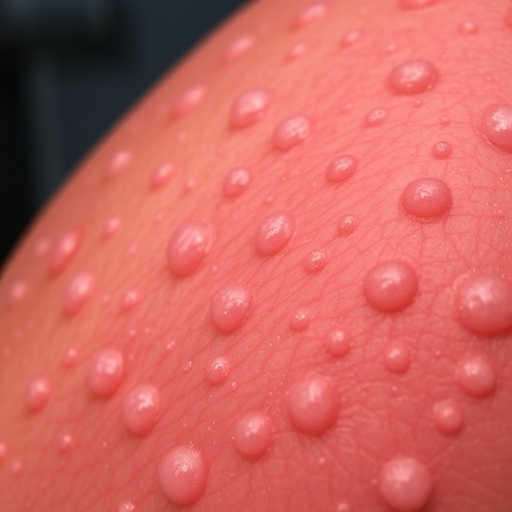
In recent years, a health concern that has largely flown under the global radar is rapidly gaining traction in northern Europe, particularly in Norway. Cercarial dermatitis, often colloquially dubbed “swimmer’s itch,” is emerging as a pressing zoonotic disease with significant implications for public health and ecological balance. Research published in Acta Parasitologica by Soleng, Gundersen, and Lindstedt in 2025 sheds light on how this parasitic skin condition is evolving beyond its traditional boundaries and becoming a notable threat to humans interacting with freshwater bodies. The findings underscore the urgent need for heightened awareness, improved diagnostic techniques, and integrative control measures to mitigate its growing impact.
Cercarial dermatitis is caused by the accidental penetration of human skin by cercariae—the larval forms—of certain trematode parasites, primarily those belonging to the family Schistosomatidae. These parasites’ life cycle customarily involves birds as definitive hosts and freshwater snails as intermediate hosts, where larval development occurs. When humans, instead of the correct avian hosts, come into contact with freshwater contaminated with these larvae, the cercariae mistakenly penetrate human skin, triggering intense allergic and inflammatory responses. The research highlights that while the condition is not generally life-threatening, its discomfort, frequency of outbreaks, and potential to cause secondary infections emphasize its growing clinical relevance.
Underpinning the increase in cercarial dermatitis cases in Norway is a complex interplay of ecological and environmental shifts that favor the proliferation of parasite-host cycles. Climate change, with rising temperatures and altered precipitation patterns, has significantly influenced freshwater ecosystems, extending the breeding season and populations of snail hosts. Moreover, changes in migratory bird patterns, some driven by habitat modifications and climate pressures, further affect the transmission dynamics of these parasites. The authors detail how these ecological changes have accelerated the exposure risk for humans engaged in recreational water activities, fishing, and other freshwater contact, painting a multifactorial picture behind this disease’s emergent status.
The epidemiological data presented indicate that the incidence of cercarial dermatitis in Norway has grown sharply over the last decade, with summer months—when swimming and water-related leisure activities peak—marking the highest case counts. The spatial distribution of cases aligns closely with lakes and water bodies harboring infected snail populations. Notably, this expansion isn’t uniform; certain regions display hotspots with recurrent outbreaks, signaling localized ecological niches where snail and bird hosts coexist at densities that favor sustained parasite transmission. The study’s geographic mapping underlines these patterns, emphasizing the need for targeted surveillance and public health interventions in vulnerable areas.
Diagnosing cercarial dermatitis remains a clinical challenge due to its nonspecific symptoms and similarity to other dermatological conditions. The skin manifestations typically appear as itchy, erythematous papules developing within hours of exposure but often resolve spontaneously within days. Misdiagnosis can lead to unnecessary treatments or overlook the zoonotic risk to larger populations. The researchers stress advances in serological tests and molecular diagnostics that enhance specificity, although such tools are not yet widely deployed in routine practice. The urgent call is for heightened clinical suspicion among healthcare providers, especially during peak transmission times, coupled with community education on avoiding infested waters.
From a parasitological standpoint, the research meticulously identifies the primary trematode species implicated in Norwegian cases, including Trichobilharzia and other avian schistosomes. The life cycle of these flukes is dissected in detail: eggs released into water by infected birds hatch miracidia that penetrate freshwater snails, facilitating development into cercariae that eventually emerge to seek new avian hosts. Human infection remains a dead-end in the parasite life cycle but causes immunological reactions contributing to the clinical picture. These insights underline how ecological disruption—even minor—in either host population can dramatically shift disease patterns.
Preventive measures remain the cornerstone of managing this emerging public health issue. The researchers advocate for comprehensive strategies combining ecological management, public education, and health system preparedness. Ecological interventions may include controlling snail populations through habitat modification or biological agents, though such efforts require careful environmental evaluations to avoid unintended consequences. Public education campaigns focus on informing outdoor enthusiasts about peak risk periods and symptoms, encouraging prompt reporting and reduced exposure through protective behaviors. Concurrently, healthcare systems need to be equipped with protocols for accurate diagnosis and symptom management.
Importantly, the article draws attention to the zoonotic interface—the intricate interplay between wildlife reservoirs and human populations that fuels the disease. The dynamic nature of host populations, driven by environmental change and anthropogenic pressure, suggests that cercarial dermatitis may serve as an indicator of broader ecosystem health disruptions. Monitoring protocols incorporating veterinary, wildlife, and human health data—embodied in a One Health approach—are increasingly necessary to anticipate and control outbreaks. This integrative vision emphasizes collaboration across disciplines to safeguard both public health and biodiversity.
The socioeconomic ramifications of increasing cercarial dermatitis incidences also warrant consideration. In Norway, where freshwater recreation constitutes a significant component of leisure and tourism, outbreaks can dampen local economies by reducing visitor numbers and imposing healthcare costs. The associated discomfort and morbidity also impact workforce productivity, especially in regions where fishing and aquaculture are predominant activities. The authors underscore the importance of proactive policies that address these wider impacts through risk communication, infrastructure investments, and health resource allocation.
In terms of research gaps, the study identifies pressing areas requiring further inquiry. These include refining diagnostic tools that are rapid, cost-effective, and applicable in field settings, alongside exploring potential immunological interventions. Understanding the genetics and population dynamics of both snail and parasite species could illuminate susceptibility patterns and facilitate targeted control. Moreover, longitudinal ecological studies tracking climate and biodiversity shifts will be essential for predictive modeling and early warning systems, placing cercarial dermatitis within the larger context of emerging parasitic diseases under global change.
The authors also issue a cautionary note about the potential for cercarial dermatitis to spread beyond its current geographic confines. Given global mobility, tourism, and trade, parasites carried by migratory birds or even inadvertent snail transfers could introduce the condition into new regions. Surveillance networks at both national and international levels are critical in detecting such spread, enabling rapid responses to prevent establishment and outbreaks. Collaborative efforts, including sharing of data and methodologies, are emphasized as pivotal to global health security.
Further dissecting the immunopathology of cercarial dermatitis, the paper elucidates how human immune systems react to the parasite’s invasive larvae. The initial penetration triggers a robust Th2-type hypersensitivity response, characterized by mast cell degranulation, histamine release, and eosinophilic infiltration, leading to the hallmark itching and rash. Repeated exposure can cause sensitization, increasing severity of reactions, and in some cases, secondary bacterial infections due to skin barrier disruption. These insights into host-pathogen interactions pave the way for novel therapeutic approaches aimed at modulating immune responses rather than merely alleviating symptoms.
Technological advances in molecular biology have equipped researchers to gain deeper understanding of the parasites’ genomes and transcriptomes, revealing mechanisms of host specificity and immune evasion. Such molecular insights not only bolster taxonomy and species identification but also open avenues for vaccine development or targeted antiparasitic agents. The Norwegian study calls for leveraging such technologies in field and clinical research to hasten the development of effective countermeasures against cercarial dermatitis.
Lastly, this work catalyzes a broader reflection on the human relationship with natural freshwater ecosystems. As climate change and land-use transformation reshape habitats and wildlife interactions, diseases once confined to wildlife or rural areas increasingly intersect with human populations. Cercarial dermatitis exemplifies this shift, underscoring the imperative to harmonize human activities with ecological stewardship. Sustainable management of freshwater resources, combined with integrated disease surveillance frameworks, will be critical in mitigating risks from this and other emerging zoonoses.
In conclusion, the comprehensive investigation by Soleng et al. not only documents the alarming rise of cercarial dermatitis in Norway but also contextualizes it within a larger narrative of parasitic emergence influenced by global change. By illuminating ecological drivers, clinical challenges, and public health responses, the study provides a critical foundation upon which policies and practices can be built. Addressing this emerging zoonotic threat demands coordinated action encompassing environmental management, research innovation, and community engagement—a challenge that Norway’s experience poignantly exemplifies on the global stage.
Cite Scienmag News
Kristina Jarvis. (August 7, 2025). Cercarial Dermatitis: Norway’s Emerging Zoonotic Threat. Scienmag. https://scienmag.com/cercarial-dermatitis-norways-emerging-zoonotic-threat/
Kristina Jarvis. "Cercarial Dermatitis: Norway’s Emerging Zoonotic Threat." Scienmag, 7 August 2025, https://scienmag.com/cercarial-dermatitis-norways-emerging-zoonotic-threat/. Accessed 4 September 2026.
Kristina Jarvis. "Cercarial Dermatitis: Norway’s Emerging Zoonotic Threat." Scienmag. August 7, 2025. https://scienmag.com/cercarial-dermatitis-norways-emerging-zoonotic-threat/


