


The dataset, described in a data paper in the Biodiversity Data Journal, contains 4,612 specimen records arranged in 6,267 rows, spanning collection dates from 16 September 1891 to 22 January 2026.
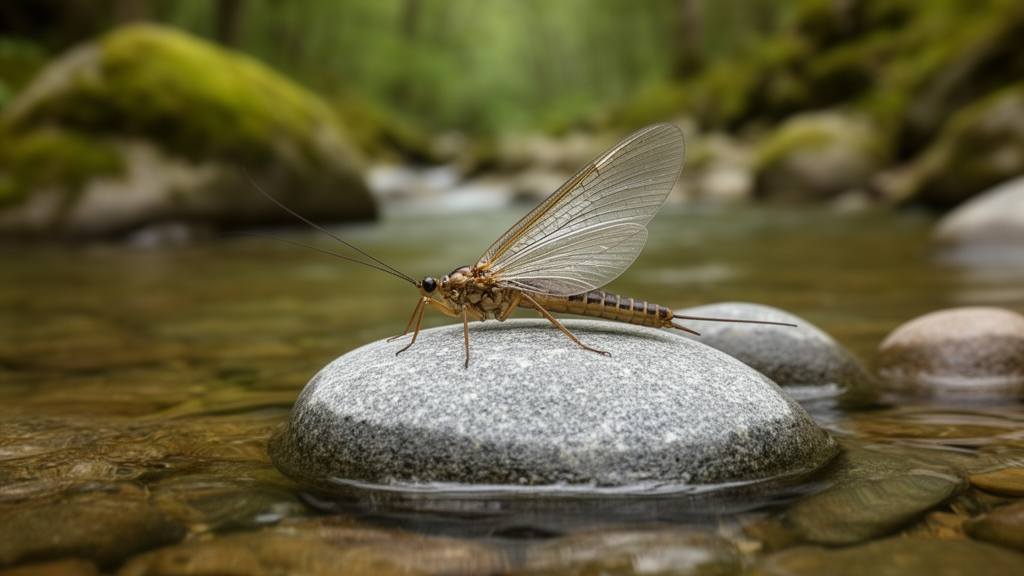
They are hemimetabolous aquatic insects distributed across the globe: five families are restricted exclusively to the Southern Hemisphere, while the other 12 families are at their most diverse in the Holarctic Region. Their nymphs occur in many freshwater ecosystems, including lakes and aquifers, and even in some terrestrial habitats such as caves, although most species inhabit cool or coldwater flowing systems. The order encompasses several functional feeding groups, including shredders, scrapers and predators.
That ecological sensitivity is central to why stoneflies matter beyond entomology. Most species are broadly intolerant of chemical pollution, siltation and elevated water temperature, and as a result they tend to be among the first macroinvertebrate groups to disappear from a degraded stream system. This has long made them valuable indicators of water quality, since nymphs depend on clean water conditions.
West Virginia stands out for stonefly diversity relative to most other US states. Major river drainages such as the Ohio, Kanawha and Potomac watersheds, combined with the bisecting Allegheny Mountains, give the state a high degree of habitat heterogeneity. The state also has a long history of stonefly collection, with noteworthy past collectors including T. H. Frison, O. S. Flint, H. B. N. Hynes, R. W. Baumann, K. W. Stewart, S. M. Clark, M. B. Griffith, D. R. Smith, D. C. Tarter, B. C. Kondratieff and R. F. Kirchner. Despite this intensive collecting effort, no statewide dataset had previously been published, and occurrence datasets supported by voucher specimens were non-existent.
Earlier checklists provide the historical baseline against which the new dataset was assembled. Tarter and Kirchner published an initial state checklist in 1980 tallying 106 species, and Tarter and Nelson improved on that figure in two subsequent checklists that together recorded a total of 140 species. None of those publications included detailed event data; instead, they listed the counties in which specimens were found and the relevant repositories, such as Marshall University, West Virginia University and the US Army Corps of Engineers. Many of those specimens have since been lost, meaning their presence and specific locality often cannot be confirmed without further collecting. Later publications describing new species raised the number of recorded species to 150, but no single resource had brought together detailed specimen data for all known West Virginian species.
The new compilation was led from the Illinois Natural History Survey Insect Collection, which manages its specimen records with the collection management software TaxonWorks. The effort began with 750 unique stonefly records from West Virginia through August 2023. Over the following two years, 3,214 records were added through the digitization of fresh material and specimens borrowed from Brigham Young University, Colorado State University, the United States National Museum and West Virginia University, with additional records shared by other institutions and individual researchers. The authors define a record as the contents of one vial or one pinned specimen, or, for literature sources, all specimens of one species collected during a single collecting event. Records were cleaned using Microsoft Excel and OpenRefine to eliminate duplicates and reduce misspellings, most specimens received catalog numbers from their parent institutions, and records lacking unique identifiers were assigned new UUIDs for searchability.
Geospatial context was added systematically. Five custom fields were joined to the dataset using publicly available shapefiles and TIFF files from the US Environmental Protection Agency and the US Geological Survey: Elevation Join in metres, HUC6, HUC8, Ecoregion Level III and Ecoregion Level IV. The joins were performed with the Spatial Join and Pairwise Intersect tools in ArcGIS Pro. The EPA divides West Virginia into four Level III Ecoregions and fifteen Level IV Ecoregions to account for differences in elevation, landcover and climatic variables, while the USGS has designated nine six-digit hydrologic units overlapping the state, subdivided into 32 HUC8 units. The dataset includes separate columns for these categories to facilitate future geospatial analyses. Only two West Virginian HUC8s are omitted: the Big Sandy and Lower Monongahela watersheds, which currently lack specimen records. All records have been georeferenced, and all but 204 have catalog numbers; the dataset is structured in 72 columns following Darwin Core standards.
Valid name usage was checked against the Plecoptera Species File. Following new collecting and re-examination of preserved specimens, the authors substantiated the presence of three species previously removed from the state list: Alloperla idei, Perlesta placida and Yugus bulbosus. Conversely, 14 species previously recorded from the state were not recovered: Acroneuria perplexa, Perlesta cinctipes, Perlesta frisoni, Perlesta lagoi, Perlesta puttmanni, Perlesta shubuta, Sweltsa onkos and seven Isoperla species. Most of these absences can be accounted for by changes in taxonomic nomenclature. A fifteenth species, Acroneuria kirchneri, was synonymised with Acroneuria kosztarabi and is no longer considered valid.
The authors detail the reasoning behind several of those absences. Perlesta cinctipes is no longer thought to occur east of Illinois, and specimens recorded from Monongalia County probably represented P. armitagei or other Perlesta. Perlesta shubuta is now believed to be confined to the Gulf Coast states from Louisiana to Florida, so Mineral County specimens reported under that name were probably Perlesta ephelida. Sweltsa onkos was split into two species, meaning most specimens previously described as S. onkos in West Virginia would now be considered S. hoffmani. The presence of Isoperla gibbsae rested on a single literature record that could not be corroborated in museums or the field, and a major taxonomic restructuring of the genus Isoperla has rendered many earlier identifications suspect, with older specimens often more accurately assigned to different species such as Isoperla kirchneri or Isoperla pseudosimilis.
The temporal coverage reveals how knowledge of the state’s fauna accumulated. The earliest record was collected at Harpers Ferry in 1891 by an unknown collector. More systematic collecting began in 1930 and continued steadily until the 1990s, with researchers from Marshall University collecting hundreds of records during the 1960s and 1970s; because most of those specimens have not survived, their specimen records were not included in the dataset. Collection activity peaked in the 1990s and then declined until 2017, when researchers from the Illinois Natural History Survey and Western Kentucky University began sampling for species of conservation concern. The dataset also carries conservation weight: the West Virginia Department of Natural Resources lists 11 of the recorded species as Species of Greatest Conservation Need at the state level, and the Northeast Association of Fish and Wildlife Agencies has designated 16 as Regional Species of Greatest Conservation Need, including two of the new state records. The authors note one sampling gap: large stream taxa, including many perlids and some perlodids, are relatively under-represented because insufficient attention has so far been given to collecting adults from those habitats.
Subject of Research: A specimen-based occurrence dataset of stoneflies in West Virginia, USA
Article Title: The stoneflies ( Plecoptera ) of West Virginia: a new occurrence dataset
Article References: Cook, T., DeWalt, R., Grubbs, S., Hogan, P., Hart, L., Clark, S., Baumann, R., Burton, D., & Myers, L. (2026). The stoneflies (Plecoptera) of West Virginia: a new occurrence dataset. Biodiversity Data Journal, 14, Article e185229. https://doi.org/10.3897/bdj.14.e185229
Image Credits: AI Generated
Keywords: stoneflies, Plecoptera, West Virginia, occurrence dataset, biodiversity, aquatic insects, water quality indicators, species conservation, museum specimens, taxonomic revision, Darwin Core Archive, freshwater ecosystems
Cite Scienmag News
Gavin Prescott. (October 27, 2026). Century of Stonefly Records Compiled Into New West Virginia Occurrence Dataset. Scienmag. https://scienmag.com/century-of-stonefly-records-compiled-into-new-west-virginia-occurrence-dataset/
Gavin Prescott. "Century of Stonefly Records Compiled Into New West Virginia Occurrence Dataset." Scienmag, 27 October 2026, https://scienmag.com/century-of-stonefly-records-compiled-into-new-west-virginia-occurrence-dataset/. Accessed 27 October 2026.
Gavin Prescott. "Century of Stonefly Records Compiled Into New West Virginia Occurrence Dataset." Scienmag. October 27, 2026. https://scienmag.com/century-of-stonefly-records-compiled-into-new-west-virginia-occurrence-dataset/


