


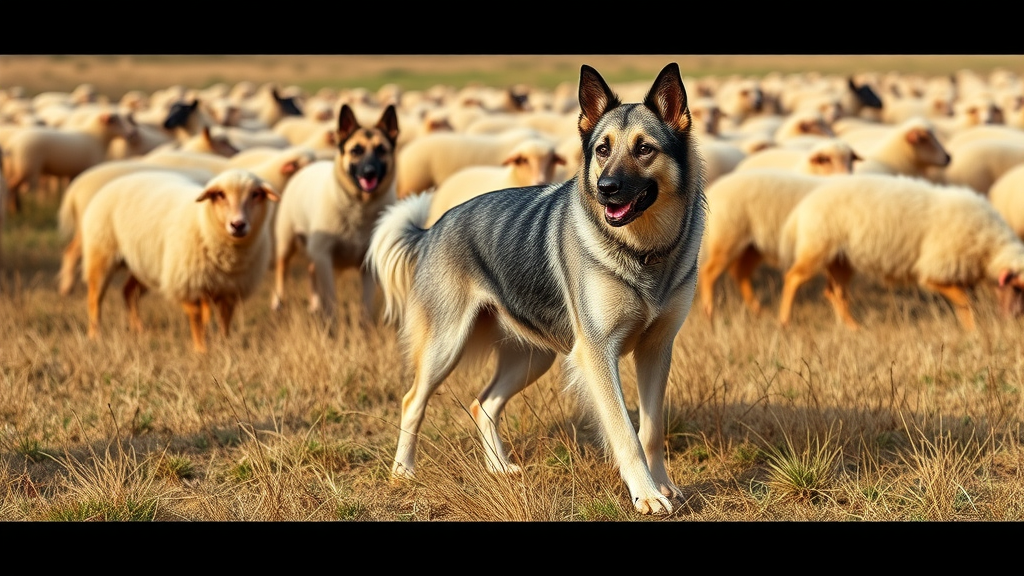
Across the mountains and plateaus of the Iberian Peninsula, generations of shepherds moved their flocks along ancient droving routes, and their dogs moved with them. A new genomic study of 445 Iberian livestock dogs now shows just how deeply that mobile way of life is written into the animals’ DNA. The research, published in BMC Biology, reveals that centuries of pastoralism and seasonal migration preserved remarkably high genetic diversity in these working dogs and blurred the genetic boundaries between breeds that look and behave strikingly different today. The findings offer a vivid example of how human culture, rather than biology alone, can sculpt the genome of a domestic animal.
The team, led by Diogo Coutinho-Lima and Raquel Godinho of the University of Porto’s CIBIO research centre, together with colleagues in Spain, set out to solve a puzzle that has long intrigued canine geneticists. Iberia is home to an impressive array of livestock working dogs, from massive livestock guarding breeds such as the Spanish Mastiff and the Estrela Mountain dog to nimble herding specialists like the Basque, Castilian, Leonese and Galician sheepdogs. These dogs were bred for fundamentally different jobs: guarding dogs protect flocks from predators, while herding dogs control and move them. On the surface, such strong selection for distinct tasks should have driven the two groups apart genetically. Yet when the researchers examined the dogs’ genomes, that is not what they found.
To probe the question, the team assembled an unusually rich dataset. They combined Y-linked and autosomal microsatellite markers, which are short tandem repeats scattered across the genome that are useful for tracking recent ancestry, with genome-wide single nucleotide polymorphism data, or SNPs, which capture variation across hundreds of thousands of positions in the DNA. The 445 sampled Iberian livestock dogs were compared with village dogs, wolves and a global panel of modern dog breeds, allowing the researchers to place the Iberian animals in a worldwide context. Analytical tools included principal component analysis, PHATE and UMAP dimensionality reduction, ADMIXTURE clustering, analysis of molecular variance, fixation index comparisons, haplotype sharing tests, and migration models that infer historical gene flow between populations.
The first major result was reassuring for the health of these breeds: Iberian livestock dogs retain high genetic diversity and generally low levels of inbreeding. Measures such as expected heterozygosity, allelic richness and haplotype diversity were comparatively high, while inbreeding coefficients and signals of homozygosity by descent were modest. This stands in contrast to many modern pedigree breeds, which have often experienced intense bottlenecks and closed studbooks that concentrate harmful recessive variants. The researchers also inferred recent effective population size trajectories, which suggested that these working populations have historically been large enough to avoid the erosion of diversity that plagues many registered breeds.
The second and more surprising finding concerned population structure. Despite the clear behavioural and morphological gulf between guarding and herding dogs, the genome-wide data showed little evidence of differentiation between the two working types. Genetic structure instead tracked breed identity and geography more strongly than function. In other words, a Spanish Mastiff was genetically more similar to nearby herding breeds than its guarding role alone would predict, and the strongest genetic divides followed regional and pedigree lines rather than the split between dogs that guard and dogs that herd. Analysis of molecular variance confirmed that most genetic variation resided within, rather than between, the working types.
The explanation, the authors argue, lies in the traditional pastoral practices of the Iberian Peninsula, above all transhumance. Transhumance is the seasonal movement of livestock between summer pastures in the mountains and winter lowlands, a practice that in Iberia dates back many centuries and once moved enormous flocks along dedicated droving roads called cañadas. Shepherds, flocks and dogs from different regions met regularly along these routes, creating repeated opportunities for dogs to be traded, loaned, mated or simply to travel between communities. Over generations, this mobility acted as a powerful gene flow engine, connecting dog populations across the peninsula and preventing any single region or working type from becoming genetically isolated.
The migration analyses bore this out. The researchers detected widespread signatures of historical gene flow among breeds, including gene flow that crossed the boundary between guarding and herding types. Haplotype sharing tests revealed significant shared ancestry between Iberian livestock dogs and other modern breeds, consistent with a history of exchange rather than isolation. Models of inferred migration events fitted the genetic data better than a strict tree-like divergence history, indicating that the breeds’ relationships are better described as a network of connected populations than as separate branches that split cleanly from a common ancestor.
Importantly, the study does not claim that breed differences are illusory. The data do show genetic structure associated with breed identity, meaning that the recognizable breeds of Iberia are real genetic entities to a meaningful degree. But the pattern suggests that this differentiation is relatively recent, layered on top of a deep background of shared diversity. The authors propose that traditional pastoral mobility maintained long-term genetic connectivity across the peninsula, while more recent breed formation, likely tied to the rise of formal breeding and closed studbooks in the modern era, produced the differentiation we see today. The genomic signature of that history persists even though transhumance has declined dramatically over the past century.
The broader implication is conceptually significant for evolutionary biology and conservation genetics alike. Specialization for distinct working roles, the study concludes, does not necessarily produce strong genome-wide divergence when population connectivity is maintained. Selection can shape behaviour, morphology and temperament without carving the genome into sharply separated clusters, provided that gene flow continues to mix variants across the population. This challenges a common assumption that functional specialization inevitably leads to reproductive isolation or deep genetic splits. It also highlights domestic animals as living archives of human cultural practices: the droving roads of medieval and early modern Iberia are still legible in the SNP patterns of dogs alive today.
For breeders and conservationists, the results carry practical weight. The high diversity and low inbreeding of Iberian livestock dogs suggest that these landraces are valuable reservoirs of genetic variation, both for their own long-term viability and potentially for the health of related breeds worldwide. Preserving the remaining traditional pastoral systems, the authors suggest, is not only a matter of cultural heritage but also of maintaining the ecological and genetic processes that shaped these animals. As wolves return to parts of Iberia and livestock guarding dogs regain practical importance, the dogs that once walked the cañadas may find their ancient jobs, and their ancient genes, newly relevant once more. The study, published open access in BMC Biology under DOI 10.1186/s12915-026-02744-y, stands as a striking reminder that genomes remember where people, and their dogs, have been.
Subject of Research: Population genomics of Iberian livestock guarding and herding dogs and the genetic legacy of historical pastoralism
Article Title: Genomic signatures of historical pastoralism in Iberian livestock dogs
Article References: Coutinho-Lima, D., Meneses-Ribeiro, M., Villegas, B., Alcaraz, L., López-Bao, J. V., Doadrio, I., & Godinho, R. (2026). Genomic signatures of historical pastoralism in Iberian livestock dogs. BMC Biology. https://doi.org/10.1186/s12915-026-02744-y
Image Credits: AI Generated
DOI: 10.1186/s12915-026-02744-y
Keywords: Iberian livestock dogs, population genetics, transhumance, pastoralism, livestock guarding dogs, herding dogs, gene flow, genetic diversity, microsatellites, SNPs, BMC Biology, dog breeds
Cite Scienmag News
Juliet Wilcox. (September 24, 2026). Centuries of Sheep Drives Left Their Mark in the DNA of Iberian Herding Dogs. Scienmag. https://scienmag.com/centuries-of-sheep-drives-left-their-mark-in-the-dna-of-iberian-herding-dogs/
Juliet Wilcox. "Centuries of Sheep Drives Left Their Mark in the DNA of Iberian Herding Dogs." Scienmag, 24 September 2026, https://scienmag.com/centuries-of-sheep-drives-left-their-mark-in-the-dna-of-iberian-herding-dogs/. Accessed 4 October 2026.
Juliet Wilcox. "Centuries of Sheep Drives Left Their Mark in the DNA of Iberian Herding Dogs." Scienmag. September 24, 2026. https://scienmag.com/centuries-of-sheep-drives-left-their-mark-in-the-dna-of-iberian-herding-dogs/


