


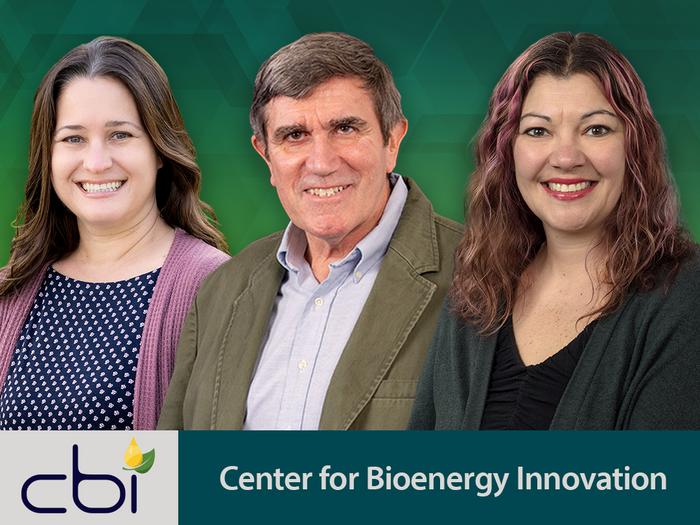
The Department of Energy’s Oak Ridge National Laboratory (ORNL) has announced key leadership promotions within the Center for Bioenergy Innovation (CBI), a DOE Bioenergy Resource Center dedicated to advancing the bioeconomy through cutting-edge biotechnology research and development. Melissa Cregger and Carrie Eckert have been appointed as co-chief science officers, entrusted with spearheading novel scientific strategies to enhance domestic biofuels, chemicals, and material production in alignment with national energy security and sustainability goals.
Melissa Cregger, a senior scientist at ORNL, will lead efforts focusing on the development of resilient, high-yielding, non-food biomass crops. Her extensive research into plant-microbe interactions has been instrumental in understanding and enhancing plant health and growth, particularly in poplar, a key fast-growing tree species widely recognized as a promising bioenergy feedstock. Cregger’s previous work, recognized by a DOE Early Career Award and the Presidential Early Career Award, bridges genomics and ecosystem resilience, paving the way for novel approaches in improving biomass yield under environmental stresses through microbiome engineering.
Carrie Eckert, also a senior scientist at ORNL with expertise in synthetic biology, will oversee strategies aimed at cost-effective and efficient biomass deconstruction and biochemical conversion. Her work harnesses engineered microbial platforms to optimize the production of biofuels and bioproducts, with a strong emphasis on genetic editing techniques, including CRISPR-Cas9 and the innovative Serine recombinase-Assisted Genome Engineering (SAGE) system developed at ORNL. By refining microbial metabolic pathways, Eckert’s research facilitates the biomanufacturing of diverse fuels and chemicals from renewable biomass, fostering sustainable alternatives to fossil-derived products.
Brian Davison, formerly chief science officer for CBI and current chief scientist for biotechnology at ORNL, now serves as industrial liaison for the center. In this capacity, Davison is tasked with bridging research innovations and industrial applications, guiding outreach efforts while continuing to lead pivotal projects like the DOE Solvent Disruption of Biomass and Biomembrane Structures Science Focus Area. His decades-spanning career is marked by seminal achievements in biomass biological conversion, fermentation processes, catalytic upgrading of bioethanol, and economic analyses critical for scaling bioenergy technologies.
The Center for Bioenergy Innovation is part of a network of four DOE Bioenergy Resource Centers (BRCs) that collectively form the scientific backbone for the U.S. bioeconomy. These centers engage over seventeen research partners from national laboratories, academia, and industry, collaborating on innovations that enhance supply chains, energy independence, and rural economic development. Collectively, the BRCs have registered over 1,000 inventions, underscoring their pivotal role in the transition toward biobased manufacturing and renewable resources.
Orchestrating multifaceted research programs, CBI integrates disciplines such as genomics, synthetic and systems biology, and plant sciences. This integration enables comprehensive strategies to optimize feedstock cultivation and conversion. By developing non-food, sustainable biomass, and engineering microbial biocatalysts, the center is pioneering avenues to advance the production of renewable biofuels and biochemicals that can viably compete with traditional petroleum counterparts.
Cregger’s leadership emphasizes the molecular and ecological understanding of plant-microbe interactions that bolster biomass feedstock yield and resilience. Her role focuses on applying state-of-the-art genomics and microbial ecology tools to enhance the robustness of bioenergy crops. This approach underscores the importance of ecosystem engineering in creating sustainable agricultural systems capable of withstanding environmental fluctuations, thereby ensuring consistent feedstock supply.
Eckert’s contributions center on synthetic biology approaches to microbial engineering, essential for the biochemical breakdown of complex plant polymers. Leveraging advanced genetic editing technologies, her research optimizes microbes’ metabolic pathways to efficiently convert lignocellulosic biomass into fuels and chemical precursors. Of particular interest is the development of microbial systems capable of “upcycling” plastics and other waste streams into valuable materials, representing a critical innovation in circular bioeconomy efforts.
Davison plays a crucial role in translating foundational research insights into industrial-relevant applications. His expertise encompasses the fermentation optimization of biomass-derived products, catalytic upgrading technologies, and techno-economic analyses that evaluate viability and scale-up prospects. His stewardship in outreach fosters collaborations across government, academia, and industry, essential to overcoming commercialization barriers and promoting sustainable bio-based industries.
The synergy among CBI’s leadership team reflects a strategic commitment to cross-disciplinary collaboration, integrating plant science, microbiology, synthetic biology, and engineering. This integrated framework supports the development of scalable technologies that address energy security concerns while reducing the environmental impact of transportation fuels and chemical manufacturing. By combining fundamental biological insights with applied engineering, CBI is driving the U.S. toward a resilient and innovative bioeconomy.
CBI’s initiatives represent a microcosm of broader DOE efforts to confront pressing environmental and energy challenges. By focusing on renewable biomass feedstocks and microbial bioconversion technologies, CBI directly addresses climate change mitigation through reduced carbon emissions. Moreover, the center’s work enhances domestic manufacturing capabilities, promoting rural economic revitalization and job creation in biotechnology sectors.
The leadership changes at CBI come at a pivotal moment as the bioeconomy gains prominence within national energy strategies. The appointments of Cregger and Eckert reflect recognition of their outstanding scientific credentials and visionary approaches. Their combined leadership capabilities promise to sustain CBI’s momentum in developing transformative biotechnologies through collaborative networks and innovative research programs.
In conclusion, the Center for Bioenergy Innovation’s leadership transition marks a significant advancement for U.S. bioenergy research. With Cregger and Eckert at the scientific helm and Davison steering industrial engagement, CBI is well-positioned to deliver breakthroughs that enable sustainable production of biofuels, chemicals, and materials. Their collective efforts bolster the nation’s leadership in biotechnology and support DOE’s mission to pioneer solutions that tackle the world’s most urgent energy and environmental challenges.
News Publication Date:
Not specified in the provided content
Web References:
https://energy.gov/science
https://www.ornl.gov/news/wise-tool-modifying-microbes#:~:text=The%20Serine%20recombinase%2DAssisted%20Genome
Cite Scienmag News
Gregory Coleman. (June 9, 2025). Center for Bioenergy Innovation Appoints Cregger and Eckert as Chief Science Officers. Scienmag. https://scienmag.com/center-for-bioenergy-innovation-appoints-cregger-and-eckert-as-chief-science-officers/
Gregory Coleman. "Center for Bioenergy Innovation Appoints Cregger and Eckert as Chief Science Officers." Scienmag, 9 June 2025, https://scienmag.com/center-for-bioenergy-innovation-appoints-cregger-and-eckert-as-chief-science-officers/. Accessed 4 September 2026.
Gregory Coleman. "Center for Bioenergy Innovation Appoints Cregger and Eckert as Chief Science Officers." Scienmag. June 9, 2025. https://scienmag.com/center-for-bioenergy-innovation-appoints-cregger-and-eckert-as-chief-science-officers/


