

Monday, July 27, 2026
Science
No Result
View All Result
  • Login
  • HOME
  • SCIENCE NEWS
  • CONTACT US
  • HOME
  • SCIENCE NEWS
  • CONTACT US
No Result
View All Result
Scienmag
No Result
View All Result
Home Science News Medicine

Cellular Signaling Mechanisms Controlling the Blood-Brain Barrier

July 27, 2026
in Medicine
Reading Time: 2 mins read
0
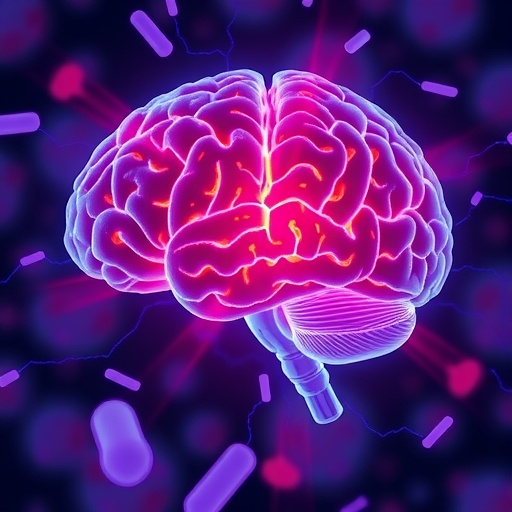
Cellular Signaling Mechanisms Controlling the Blood-Brain Barrier

Cellular Signaling Mechanisms Controlling the Blood-Brain Barrier

65
SHARES
587
VIEWS
Share on FacebookShare on Twitter
ADVERTISEMENT

The blood–brain barrier (BBB) acts as a highly specialized gatekeeper at central nervous system (CNS) capillaries, controlling which molecules can cross from blood to brain. By tightly regulating molecular traffic, the BBB preserves a stable chemical environment that neurons depend on for normal firing, synaptic activity, and long-term brain health.

Yet the BBB is more than a static barrier. Its unique cellular properties limit drug delivery to the CNS, a long-standing obstacle for therapies targeting neurological disease. At the same time, when BBB integrity is compromised, the consequences can ripple across development and contribute to disorders including neurodevelopmental syndromes and neurodegenerative degeneration.

A key theme of the review is how CNS capillary endothelial cells acquire BBB identity. These endothelial cells display distinct molecular features that enforce selectivity and restrict paracellular movement while coordinating transport pathways. Such specialization is not intrinsic alone—signals from neighboring cell types help instruct and stabilize the BBB phenotype.

Pericytes, for example, closely associate with capillaries and provide regulatory cues that influence endothelial behavior, vessel stability, and barrier function. Astrocytes further shape BBB properties through bidirectional communication, including the release of factors that modulate endothelial junctions and transport programs.

The basement membrane extracellular matrix also serves as a structural and signaling platform. By organizing adhesion and presenting molecular cues, it supports endothelial alignment, survival, and the maintenance of tight barrier architecture over time.

The review emphasizes the BBB as dynamic interface shaped by signaling pathways and cell–cell interactions. Molecular regulators coordinate endothelial state changes and barrier tightening or loosening, enabling the system to respond to physiological needs while preserving neuroprotection.

Importantly, BBB research is expanding toward understanding heterogeneity across brain regions, where permeability is not uniform. Such differences can influence both disease vulnerability and the effectiveness of drug delivery strategies.

Finally, the article highlights how technological advances are accelerating BBB biology—improving models, imaging, and experimental control. These tools are helping researchers translate mechanistic insights into therapeutic strategies aimed at modulating BBB function without undermining safety.

In this viral science news update, the message is clear: unlocking the cellular logic of BBB control—endothelial identity, pericyte and astrocyte coordination, and basement membrane signaling—is essential for designing next-generation treatments that reach the brain effectively and precisely.

Subject of Research: Blood–brain barrier (BBB) cellular and signaling mechanisms

Article Title: Cellular and signalling mechanisms that regulate the blood–brain barrier

Article References: Amick, J., Gordon, L. & Gu, C. Cellular and signalling mechanisms that regulate the blood–brain barrier. Nat Rev Mol Cell Biol (2026). https://doi.org/10.1038/s41580-026-01000-z

Image Credits: AI Generated

DOI: 10.1038/s41580-026-01000-z

Keywords: blood–brain barrier, CNS capillary endothelial cells, pericytes, astrocytes, basement membrane, molecular trafficking, vascular permeability, signaling pathways

Tags: astrocyte-endothelial interactionsBBB disruption in neurological disordersBBB molecular featuresblood-brain barrierblood-brain barrier integrityCNS capillary endothelial cellsdrug delivery challenges in CNSendothelial cell specializationextracellular matrix role in BBBmolecular mechanisms of BBB formationneurovascular unit signalingpericyte regulation of BBB
Share26Tweet16
Previous Post

Romiplostim Shows Promise for Chemotherapy-Related Thrombocytopenia in Children

Next Post

CLEAR Builds Auditable Radiology Foundation Model Based on Clinical Concepts

Related Posts

Study Finds Falls Risk Perception Influenced by Multiple Factors in Elderly Hip Fracture Patients
Medicine

Study Finds Falls Risk Perception Influenced by Multiple Factors in Elderly Hip Fracture Patients

July 27, 2026
GC-MS Method Developed and Validated to Measure Ethylene and Diethylene Glycols
Medicine

GC-MS Method Developed and Validated to Measure Ethylene and Diethylene Glycols

July 27, 2026
Lipid-Shelled Nanobubble Ultrasound Agents: Formulation and Activation Study
Medicine

Lipid-Shelled Nanobubble Ultrasound Agents: Formulation and Activation Study

July 27, 2026
Land Degradation Linked to Wider Crop Yield Gaps Across Global Croplands
Medicine

Land Degradation Linked to Wider Crop Yield Gaps Across Global Croplands

July 27, 2026
CLEAR Builds Auditable Radiology Foundation Model Based on Clinical Concepts
Medicine

CLEAR Builds Auditable Radiology Foundation Model Based on Clinical Concepts

July 27, 2026
Long-Term Research Reveals Widespread Lithium Contamination in Western Drinking Water
Medicine

Long-Term Research Reveals Widespread Lithium Contamination in Western Drinking Water

July 27, 2026
Next Post
CLEAR Builds Auditable Radiology Foundation Model Based on Clinical Concepts

CLEAR Builds Auditable Radiology Foundation Model Based on Clinical Concepts

  • Mothers who receive childcare support from maternal grandparents show more

    Mothers who receive childcare support from maternal grandparents show more parental warmth, finds NTU Singapore study

    27656 shares
    Share 11059 Tweet 6912
  • University of Seville Breaks 120-Year-Old Mystery, Revises a Key Einstein Concept

    1061 shares
    Share 424 Tweet 265
  • Bee body mass, pathogens and local climate influence heat tolerance

    682 shares
    Share 273 Tweet 171
  • Researchers record first-ever images and data of a shark experiencing a boat strike

    546 shares
    Share 218 Tweet 137
  • Groundbreaking Clinical Trial Reveals Lubiprostone Enhances Kidney Function

    531 shares
    Share 212 Tweet 133
Science

Embark on a thrilling journey of discovery with Scienmag.com—your ultimate source for cutting-edge breakthroughs. Immerse yourself in a world where curiosity knows no limits and tomorrow’s possibilities become today’s reality!

RECENT NEWS

  • Structural Factors, Not Reconstruction Spending, Drove Depopulation After Japan’s 2011 Disasters
  • Study Finds Falls Risk Perception Influenced by Multiple Factors in Elderly Hip Fracture Patients
  • GC-MS Method Developed and Validated to Measure Ethylene and Diethylene Glycols
  • Neural Network Models Free Recall, Revealing Multiple Memory Strategies

Categories

  • Agriculture
  • Anthropology
  • Archaeology
  • Athmospheric
  • Biology
  • Biotechnology
  • Blog
  • Bussines
  • Cancer
  • Chemistry
  • Climate
  • Earth Science
  • Editorial Policy
  • Marine
  • Mathematics
  • Medicine
  • Pediatry
  • Policy
  • Psychology & Psychiatry
  • Science Education
  • Social Science
  • Space
  • Technology and Engineering

Subscribe to Blog via Email

Enter your email address to subscribe to this blog and receive notifications of new posts by email.

Join 5,146 other subscribers

© 2025 Scienmag - Science Magazine

Welcome Back!

Login to your account below

Forgotten Password?

Retrieve your password

Please enter your username or email address to reset your password.

Log In
No Result
View All Result
  • HOME
  • SCIENCE NEWS
  • CONTACT US

© 2025 Scienmag - Science Magazine

Discover more from Science

Subscribe now to keep reading and get access to the full archive.

Continue reading
