


Deep inside two karstic caves in Costa Rica, ichthyologists have confirmed what speleologists had long reported only anecdotally: cave-dwelling populations of Neotropical catfishes of the genus Rhamdia, documented for the first time with taxonomically verified voucher specimens and comparative DNA sequence data. The surveys, published in the journal Subterranean Biology, uncovered hypogean populations of three epigean species—Rhamdia guatemalensis, Rhamdia laticauda, and Rhamdia nicaraguensis—and produced a finding that has stunned cavefish biologists: two different species of Rhamdia living in the same cave, a case of syntopy never before reported for the genus.
The genus Rhamdia, with 27 currently valid species spread across most of the tropical Americas, is remarkable among Neotropical freshwater fishes for its tendency to colonize subterranean waters and maintain resident cave populations. Mexico’s karstic regions have yielded the bulk of documented cave Rhamdia, including four of the six valid troglobitic species in the genus and at least ten cave-dwelling populations assigned mostly to R. laticauda. Recent research has shown that cave colonization in the group is more geographically widespread than previously thought, but comparable survey efforts have been lacking across the rest of the genus’s distribution. Costa Rica, home to three epigean species of Rhamdia and more than 250 documented caves, had only rare, anecdotal accounts of cave-dwelling populations—photographs and sightings by speleologists, but never taxonomically verified voucher specimens catalogued in ichthyological collections.
That gap matters scientifically. Accurate taxonomic identifications often rely on direct, careful examination of morphological traits, and for populations potentially representing undescribed species, the need for voucher specimens is even more pressing. Vouchers that are tissue-sampled before formalin fixation also allow molecular verification and comparative evolutionary analyses. Historical accounts of hypogean Rhamdia from Costa Rica included reported sightings of cave-dwelling forms of R. guatemalensis at five sites, R. nicaraguensis at one site, and unidentified Rhamdia at four sites, none of which constituted taxonomically authoritative records. Those reports nonetheless offered an important baseline for planning targeted ichthyological surveys.
The research team conducted dedicated surveys in two karstic caves with anecdotal reports of these catfishes: Gabinarraca (also known as Cavernas de Venado) in the province of Alajuela and Corredores in Puntarenas. Gabinarraca, on the Caribbean versant of northwestern Costa Rica about 11 kilometers northwest of the Arenal volcano, is the longest and best-known cave of the Venado karstic system, which developed from Miocene limestone of the Venado Formation and comprises nearly five kilometers of underground passages. Corredores, on the Pacific versant of southern Costa Rica near the border with Panama, is part of the Cerro Corredores karst system, which carries water from the Guaymí River underground through several caves before it emerges into the Corredor River. The karst there develops in Eocene limestones associated with the Fila de Cal Formation.
Both caves are wet, containing active watercourses but not fully flooded, and mostly horizontal, so surveying did not require specialized vertical caving techniques. The team collected fishes using a combination of baited minnow traps and electrofishing, working along the main longitudinal axis of each cave up to the point of maximum penetration, roughly a few hundred meters in both caves. They also sampled epigean Rhamdia from nearby streams and rivers, including the very stream flowing out of Gabinarraca cave. Captured fishes were euthanized with the anesthetic tricaine mesylate, tissue samples were preserved in 96 percent ethanol, and voucher specimens were fixed in formalin and deposited in the Colección Ictiológica del Museo de Zoología de la Universidad de Costa Rica.
The sampling efforts resulted in the discovery of three cave-dwelling populations: R. guatemalensis in Corredores cave (eight specimens), R. laticauda in Gabinarraca cave (six specimens), and R. nicaraguensis, also in Gabinarraca (thirteen specimens). Taxonomic identifications were initially based on external morphology—traits such as pectoral spine serration, interdorsal space, barbel length, and head length—and then corroborated with comparative DNA sequence data. The team generated sequences of two mitochondrial protein-coding genes, cytochrome c oxidase subunit I (COI) and cytochrome b (CYTB), from all cave populations and epigean samples, and broadened the phylogenetic analysis with additional sequences from GenBank and unpublished data, producing matrices of 116 and 126 ingroup terminals representing nine and ten of the eleven valid species in the Middle American clade. Phylogenetic trees were inferred with RAxML-NG under best-fit models of molecular evolution selected with jModelTest2, with clade support estimated from 1000 bootstrap pseudoreplicates.
The phylogenies unambiguously placed the Costa Rican cave populations within the R. guatemalensis clade, in the case of Corredores cave samples, and within the R. laticauda-group clade, in the case of Gabinarraca samples. Notably, R. nicaraguensis was consistently recovered as monophyletic, supporting its taxonomic distinctiveness from R. laticauda, a species the analyses showed to be relentlessly paraphyletic. As expected biogeographically, the hypogean populations always associated most closely with the geographically and hydrologically nearest epigean populations. Samples from Corredores cave are more closely related to epigean R. guatemalensis from Costa Rica and Panama, while the Gabinarraca cave populations are practically genetically identical—p-distances below 0.3 percent—to epigean samples of their respective species from the same Río Frío basin.
Phenotypically, all hypogean populations displayed only partial troglomorphism: moderate loss of body pigmentation resulting in a yellowish coloration in life, contrasting with the dark, melanic phenotype of epigean forms, but without the extreme eye reduction or loss seen in fully cave-adapted species. Only a single specimen of R. guatemalensis from Corredores cave showed a slight, asymmetric eye degeneration. A similar pattern of incomplete troglomorphism has been observed in other cave-dwelling populations of Middle American Rhamdia and has been tentatively attributed to gene flow with epigean lineages or incipient speciation. The genetic near-identity between cave and surface populations, coupled with the incipient troglomorphism, suggests recent cave colonization events or continued gene flow between epigean and hypogean populations—hypotheses that will require genome-wide comparative data to test properly.
The discovery of syntopic hypogean populations of R. laticauda and R. nicaraguensis in Gabinarraca cave is particularly significant. It represents the first taxonomically verified record of a cave-dwelling population of R. nicaraguensis, and the first time cave-dwelling populations from different Rhamdia species have been reported living in syntopy. Around 40 percent of obligate cavefish species co-occur with other such species, though rarely more than two per cave, and roughly half of known instances of syntopy involve species from the same family but mostly different genera. The only other known case of intrageneric syntopy in cavefishes involves viviparous brotulas of the genus Lucifuga in Cuban caves. Coexistence in syntopy is generally assumed to require some type of resource partitioning to minimize competition, especially in oligotrophic cave habitats with simplified food webs, but the mechanisms enabling coexistence of closely related, morphologically similar species remain poorly understood. Gabinarraca now constitutes a new model system for investigating these processes, and future research on diet and microhabitat occupation will be needed to shed light on the ecological mechanisms allowing syntopy of Rhamdia catfishes there.
The Corredores cave population effectively constitutes the fourth taxonomically verified record of a hypogean population of R. guatemalensis, the first three being from Mexican caves in Tabasco and Chiapas, and it appears to be the most depigmented of the four documented to date. The R. laticauda population from Gabinarraca adds to an extensive list of hypogean records for that species, further supporting its status as the quintessential cave colonizer in the genus. The study reinforces the notion that understanding of hypogean Rhamdia diversity remains incomplete and that sustained exploration and taxonomically sound documentation are paramount to advancing knowledge of the diversity and evolution of these Neotropical catfishes. By uncovering and documenting cavefish diversity in Costa Rica’s karstic systems, the researchers hope to open the gates for future research in the region, potentially applying the population genomics approaches that have proven promising in other cavefish complexes such as Astyanax mexicanus and Typhlichthys subterraneus.
Subject of Research: New vouchered and taxonomically verified records of cave-dwelling populations of catfishes of the genus Rhamdia (Siluriformes, Heptapteridae) from Costa Rica
Article Title: New vouchered and taxonomically verified records of cave-dwelling populations of catfishes of the genus Rhamdia ( Siluriformes , Heptapteridae ) from Costa Rica
Article References: Arroyave, J., Angulo, A., Hernández-Ávila, S. G., Buenavad-González, M. A., Rojas-Rodríguez, P., Deleva, S., Ulloa, A., Picq, S., & McMahan, C. D. (2024). New vouchered and taxonomically verified records of cave-dwelling populations of catfishes of the genus Rhamdia (Siluriformes, Heptapteridae) from Costa Rica. Subterranean Biology, 50, 29-52. https://doi.org/10.3897/subtbiol.50.134387
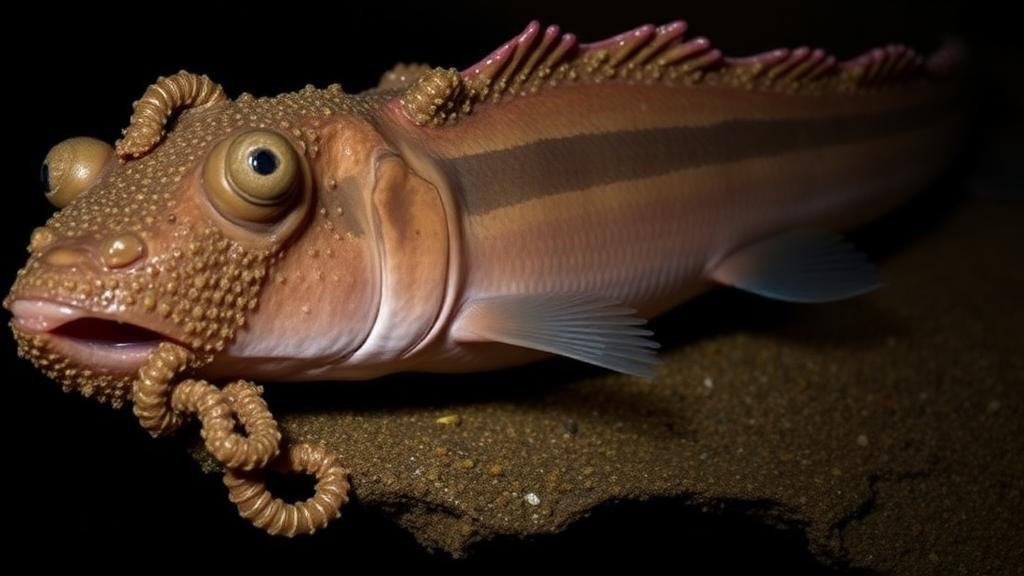
Image Credits: AI Generated
DOI: 10.3897/subtbiol.50.134387
Keywords: Rhamdia, cavefish, Costa Rica, troglomorphism, karst, Heptapteridae, syntopy, phylogenetics, Subterranean Biology, Neotropical catfishes, vouchered, taxonomically
Cite Scienmag News
Drew Townsend. (October 19, 2026). Cave Catfish Discovery Reveals Two Species Sharing One Costa Rican Cave. Scienmag. https://scienmag.com/cave-catfish-discovery-reveals-two-species-sharing-one-costa-rican-cave/
Drew Townsend. "Cave Catfish Discovery Reveals Two Species Sharing One Costa Rican Cave." Scienmag, 19 October 2026, https://scienmag.com/cave-catfish-discovery-reveals-two-species-sharing-one-costa-rican-cave/. Accessed 19 October 2026.
Drew Townsend. "Cave Catfish Discovery Reveals Two Species Sharing One Costa Rican Cave." Scienmag. October 19, 2026. https://scienmag.com/cave-catfish-discovery-reveals-two-species-sharing-one-costa-rican-cave/


