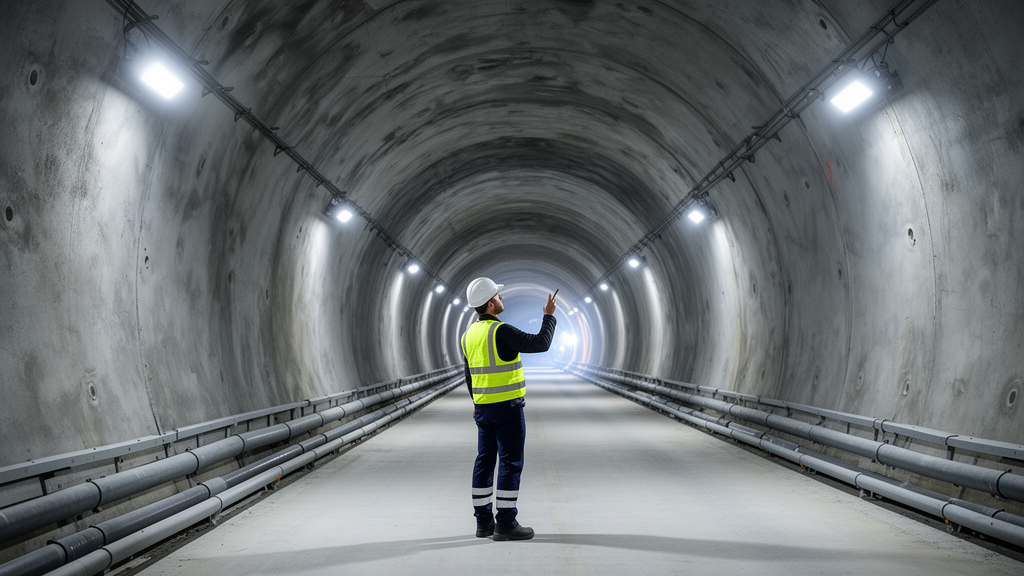
Diagnosing and treating water leakage within operational mountainous highway tunnels presents a significant engineering challenge, primarily due to the concealment of underlying geological conditions, the intricate nature of coupled seepage processes, and the persistent recurrence of issues following localized repairs. Researchers have addressed this complexity by proposing a novel causal-diagnosis and causal-chain-based treatment framework designed to tackle these persistent structural vulnerabilities.
The study meticulously interprets the water-leakage mechanism as a complex, progressive process involving several interconnected stages. This mechanism begins with groundwater recharge into the tunnel structure. This is followed by fracture-controlled seepage transport, where water moves through cracks and fissures within the surrounding rock. As the process continues, drainage systems can become obstructed, leading to a critical accumulation of water pressure behind the tunnel lining. This sustained pressure eventually results in failure at weak points within the waterproofing system, creating the visible leakage.
To effectively combat this progressive failure, the research established a comprehensive diagnostic method. This method integrates the analysis of several key variables: the specific characteristics of the leakage observed, the prevailing groundwater conditions, any geological anomalies identified behind the lining, the current performance of the drainage systems, and the specific defects present in the waterproofing materials. Building on this integrated diagnostic method, the researchers established a three-stage treatment strategy.
The practical application of this framework was demonstrated using data collected from the Dashiling Tunnel, which is part of the Shenzhen–Cenxi Expressway (G2518) in China. The investigation employed advanced techniques, including detailed leakage surveys, seismic reflection imaging to map subsurface conditions, and thorough visual inspections of the tunnel structure. This comprehensive data collection effort allowed the identification of a total of 312 distinct leakage defects within the tunnel system.
Analysis of the identified defects revealed specific patterns of failure. A significant portion of the issues were concentrated in known structural areas: 48.1% of the defects were found at the secondary-lining construction joints, while 37.8% occurred in the wall-foot-to-sidewall zones. Furthermore, the investigation found severe blockage in 50.0% of the inspected side drains, which revealed a compound leakage mechanism involving both structural and hydrological factors.
The implementation of the proposed causal-chain-based treatment strategy yielded substantial positive results. Following the targeted treatment of the identified defects and systemic issues, two years of continuous monitoring provided clear evidence of the framework’s efficacy. The total area of pavement leakage was reduced dramatically, dropping to approximately 3.9% of its pre-treatment level. Moreover, the number of tunnel water-leakage defects followed an approximately linear decreasing trend, confirming an overall reduction of more than 70% across the monitored sections.
The success of the treatment was quantified by the resulting defect densities across all statistical sections of the tunnel. The densities of tunnel water-leakage defects in all statistical sections were less than 0.3 points per linear meter, demonstrating good treatment effectiveness.
In conclusion, the development and application of this causal-diagnosis and causal-chain-based treatment framework offer a highly practical and robust methodology for managing water leakage in comparable in-service mountainous highway tunnels.
Subject of Research: Engineering application of a causal-chain-based diagnostic and treatment framework for mitigating water leakage in in-service mountainous highway tunnels.
Article Title: Diagnosis and causal-chain-based treatment of water-leakage in in-service mountainous highway tunnels: an engineering application
Article References: Deng, W., Liu, X., He, S., Ma, J., & Zhang, Y. (2026). Diagnosis and causal-chain-based treatment of water-leakage in in-service mountainous highway tunnels: an engineering application. Scientific Reports. https://doi.org/10.1038/s41598-026-76225-1
Image Credits: AI Generated
DOI: 10.1038/s41598-026-76225-1
Keywords: Tunnel Engineering, Water Leakage, Geotechnical Engineering, Structural Integrity, Causal Diagnosis, Hydrology, Civil Engineering, Infrastructure Maintenance, Diagnosis, causal-chain-based, treatment, water-leakage
Cite Scienmag News
Ophelia Keating. (October 28, 2026). Causal-Chain Framework Successfully Resolves Complex Water Leakage in Mountain Tunnels. Scienmag. https://scienmag.com/causal-chain-framework-successfully-resolves-complex-water-leakage-in-mountain-tunnels/
Ophelia Keating. "Causal-Chain Framework Successfully Resolves Complex Water Leakage in Mountain Tunnels." Scienmag, 28 October 2026, https://scienmag.com/causal-chain-framework-successfully-resolves-complex-water-leakage-in-mountain-tunnels/. Accessed 29 October 2026.
Ophelia Keating. "Causal-Chain Framework Successfully Resolves Complex Water Leakage in Mountain Tunnels." Scienmag. October 28, 2026. https://scienmag.com/causal-chain-framework-successfully-resolves-complex-water-leakage-in-mountain-tunnels/