


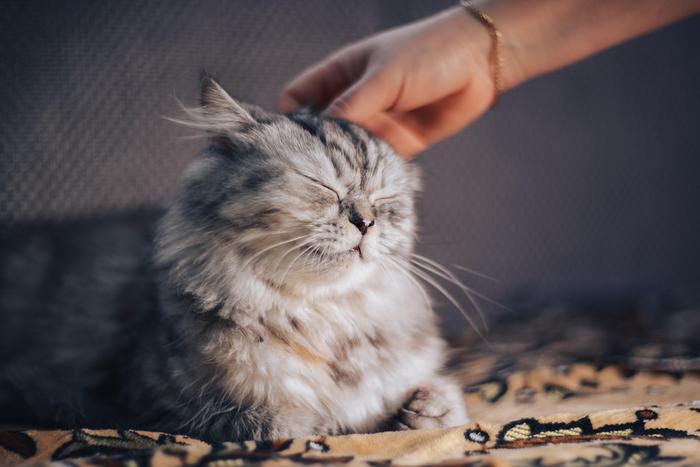
In a groundbreaking study published in the open-access journal PLOS One on May 28, 2025, researchers from Tokyo University of Agriculture, Japan, have uncovered compelling evidence that domestic cats possess the ability to distinguish between familiar and unfamiliar humans purely through olfactory cues. The investigation, led by Yutaro Miyairi and colleagues, delves into the nuanced sensory world of cats and sheds new light on how these enigmatic companions perceive the people around them.
Olfaction, one of the most sophisticated senses in cats, plays a fundamental role in their interactions with both their environment and fellow felines. While prior research has extensively documented cats’ use of smell in identifying territory, recognizing other cats, and facilitating intraspecies communication, this pioneering study is among the first to explore if cats can similarly differentiate individual humans by scent alone—without relying on visual or auditory signals.
The research team designed an observational study involving 30 domestic cats, carefully selecting subjects to represent a variety of ages, sexes, and personality profiles. The experimental setup revolved around presenting the cats with plastic tubes containing cotton swabs imbued with odors collected from distinct human sources: the cat’s owner and a completely unfamiliar individual. Crucially, the swabs were rubbed on characteristic human scent zones—the armpit, behind the ear, and between the toes—which are rich in skin bacteria and secretions that contribute to unique olfactory signatures.
Behavioral analysis revealed a strikingly consistent pattern: cats spent significantly longer sniffing the unfamiliar human odor than either the odor of their owner or an odorless control tube. This observation strongly suggests that cats possess a keen ability to detect and discriminate human scents, responding with heightened curiosity and investigative behavior towards novel olfactory information. The differential sniffing duration provides direct behavioral evidence that cats recognize their owners by smell and treat strangers as intriguing anomalies in their environment.
Of particular interest was the discovery of nostril-specific lateralization during the sniffing behavior. Initially, cats predominantly engaged their right nostril when sampling the unfamiliar odors, later shifting their attention to the left nostril with continued exposure. This phenomenon aligns with hemispheric specialization observed in many vertebrates, where the right and left cerebral hemispheres manage different aspects of sensory processing and cognition. The study’s findings imply that the olfactory processing in cats might similarly be lateralized, offering fertile ground for future neuroscientific exploration.
The subtle nuances of feline personality also played a role in the olfactory investigation experience. Owners completed detailed questionnaires assessing their cats’ temperaments and the nature of their relationship. Analysis revealed that male cats characterized by higher neuroticism exhibited persistent, repetitive sniffing behavior, almost ritualistic in nature. In contrast, males scoring higher on agreeableness approached the scents more calmly and methodically. Interestingly, these personality-dependent behavioral distinctions were not observed in female cats, raising questions about sex-specific sensory processing and emotional responses in felines.
Beyond identifying odors, cats displayed distinct rubbing or marking behavior following sniffing, which researchers interpret as a form of chemical communication or territorial marking. This action could represent an important behavioral sequence in which initial olfactory exploration is followed by active scent marking to establish recognition and social boundaries, potentially serving as a multisensory feedback loop in cats’ social interactions with their human companions.
The implications of these findings extend far beyond the scope of basic feline behavior. They challenge previous assumptions that cats rely predominantly on visual and auditory signals to recognize humans, introducing olfaction as a critical, and perhaps underappreciated, modality in human-cat bonding. This could influence how cat owners approach training, enrichment, and even the management of stress in their pets by acknowledging the importance of scent familiarity and environmental odors.
Moreover, the observed nostril lateralization opens intriguing avenues in neuroethology. Understanding how cats process olfactory information differentially across brain hemispheres could yield insights into their cognitive architecture and sensory integration. It may also have parallels with lateralization found in other highly olfactory-dependent animals, such as dogs and birds, hinting at evolutionary conserved mechanisms of olfactory processing.
Despite these advances, the scope of the study leaves open the nuanced question of whether cats can identify specific individuals solely through smell, beyond the binary distinction of familiar versus unfamiliar. The complex chemistry of human scent and its variability over time, coupled with cats’ known sensitivity to scent changes, suggests that ongoing research could unravel even more sophisticated recognition abilities.
The research team emphasizes the need for further studies to dissect the interplay between olfactory recognition and other sensory inputs in cats. Investigating the chemical composition of individual human scents and elucidating the neural substrates driving nostril-specific olfactory processing remain key priorities. Such work will deepen our understanding of the intricate social cognition of domestic cats and enhance human-animal relationship paradigms.
Ultimately, this study reinstates the domestic cat not only as an intriguing companion but also as a remarkable sensory organism, finely attuned to the social world through its nose. For millions of cat owners worldwide, these findings offer fresh appreciation for the subtleties of their pets’ interactions and the silent conversations conducted in scent.
Cite Scienmag News
Alan Morgan. (May 28, 2025). Cats Identify Their Owner’s Scent, New Study Reveals. Scienmag. https://scienmag.com/cats-identify-their-owners-scent-new-study-reveals/
Alan Morgan. "Cats Identify Their Owner’s Scent, New Study Reveals." Scienmag, 28 May 2025, https://scienmag.com/cats-identify-their-owners-scent-new-study-reveals/. Accessed 4 September 2026.
Alan Morgan. "Cats Identify Their Owner’s Scent, New Study Reveals." Scienmag. May 28, 2025. https://scienmag.com/cats-identify-their-owners-scent-new-study-reveals/


