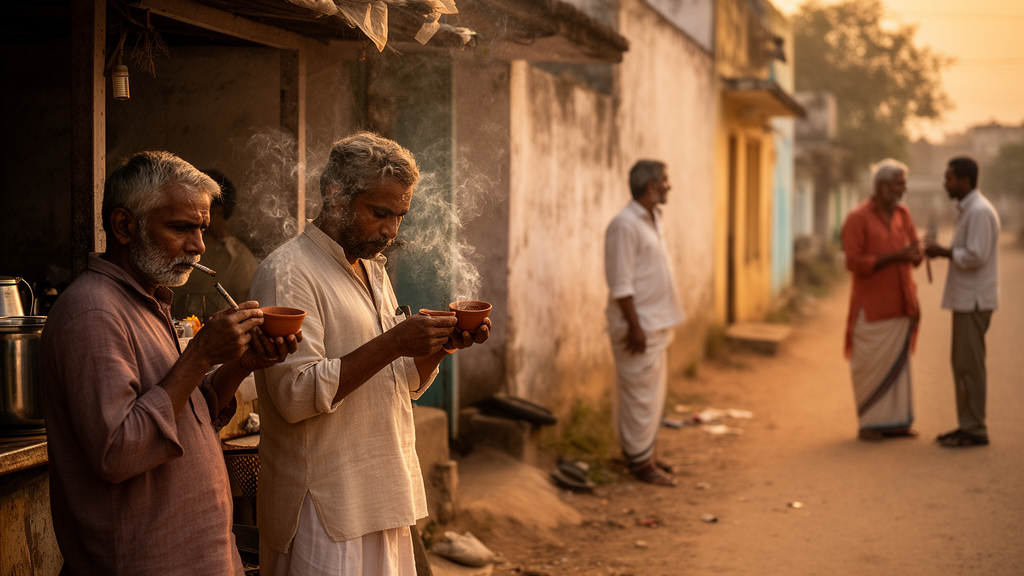
Tobacco consumption remains consistently higher among men from India’s Scheduled Castes and Scheduled Tribes than among Upper Caste men, but the gap between these social groups has narrowed considerably between 2005-06 and 2019-21, according to a peer-reviewed study published in Scientific Reports. The research analysed three rounds of the National Family Health Survey, NFHS-3, NFHS-4 and NFHS-5, to track how the disparity in tobacco use evolved among Indian men over roughly fifteen years. The study, led by Astapati Hemram and Pritam Ghosh, went beyond simply measuring the gap.
Using a statistical technique known as Fairlie decomposition, the researchers quantified how much each socio-demographic factor contributed to the difference in tobacco consumption between Upper Caste men and men from the socially disadvantaged groups. This method allowed them to attribute shares of the observed inequality to specific characteristics rather than treating the disparity as a single, unexplained figure. Four contributors stood out in the decomposition analysis: household wealth, education, occupation and newspaper exposure.
These factors together accounted for a substantial portion of the difference in tobacco use between the groups, indicating that the disparity is closely tied to the economic and informational resources available to households. The authors frame their findings as supporting a particular policy direction. They argue that community-oriented initiatives addressing economic disadvantage, combined with culturally relevant health education, could help reduce the tobacco burden among socially marginalised populations.
They also highlight the role of media campaigns in strengthening addiction prevention, treatment and cessation services, given that exposure to newspapers emerged as one of the factors linked to the observed differences. The study’s scope is limited to men, and its conclusions rest on the three survey rounds analysed rather than on new intervention trials, so the policy suggestions reflect the patterns observed in the data rather than tested programme outcomes.
Nevertheless, the consistent direction of the findings across fifteen years of national survey data, and the identification of specific, modifiable contributors to the inequality, offer a measurable baseline for efforts to close one of India’s persistent social gradients in health behaviour. The research was published as an open-access article, with the accepted version shared ahead of the final Version of Record.
Subject of Research: Social inequality in tobacco use among Indian men by caste group, 2005-06 to 2019-21
Article Title: Decomposing the inequality of tobacco use between upper caste and scheduled caste/tribe men in India, 2005-06 to 2019-21
Article References: Hemram, A., & Ghosh, P. (2026). Decomposing the inequality of tobacco use between upper caste and scheduled caste/tribe men in India, 2005-06 to 2019-21. Scientific Reports. https://doi.org/10.1038/s41598-026-77618-y
Image Credits: AI Generated
DOI: 10.1038/s41598-026-77618-y
Keywords: tobacco use, India, caste inequality, Scheduled Castes, Scheduled Tribes, National Family Health Survey, Fairlie decomposition, health disparities, men's health, public health, social determinants, Decomposing
Cite Scienmag News
Phoebe Ingram. (October 28, 2026). Caste gap in tobacco use among Indian men narrows but persists, study finds. Scienmag. https://scienmag.com/caste-gap-in-tobacco-use-among-indian-men-narrows-but-persists-study-finds/
Phoebe Ingram. "Caste gap in tobacco use among Indian men narrows but persists, study finds." Scienmag, 28 October 2026, https://scienmag.com/caste-gap-in-tobacco-use-among-indian-men-narrows-but-persists-study-finds/. Accessed 28 October 2026.
Phoebe Ingram. "Caste gap in tobacco use among Indian men narrows but persists, study finds." Scienmag. October 28, 2026. https://scienmag.com/caste-gap-in-tobacco-use-among-indian-men-narrows-but-persists-study-finds/