

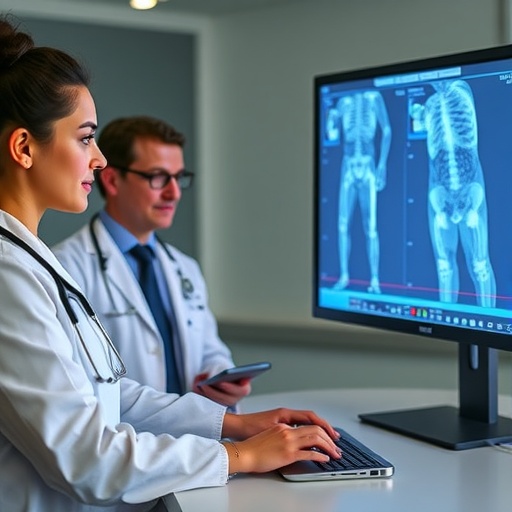
In a groundbreaking study, Zeng, J., Geng, Y., Zhang, J., and their colleagues have embarked on a vital exploration into the realm of medical education. Their research, published in BMC Medical Education, delves into the impact of computer-based case simulations on the clinical reasoning skills of non-dental medical students. This emerging approach is not just innovative; it promises to revolutionize the way medical training is imparted, particularly in the context of an ever-evolving healthcare landscape.
As medical education continues to adapt to new technologies, the necessity for effective pedagogical strategies remains at the forefront of educational discourse. The study specifically targets how digital case simulations can augment clinical reasoning—an essential skill for effective patient care. The urgency for such innovative training methods is underscored by the pressing need for healthcare professionals who can think critically and respond adeptly to complex clinical scenarios.
The intricacies of clinical reasoning are foundational to medical practice, encompassing the cognitive strategies that practitioners utilize to diagnose and manage patient conditions. Traditional teaching methods, including lectures and textbook-based learning, may fall short in fully preparing students for the unpredictable nature of real-world medical practice. As such, there has been a notable shift toward more experiential learning modalities, where students engage in simulated clinical environments that mimic real-life challenges.
Computer-based case simulations represent a vibrant intersection of technology and traditional learning. By immersing students in these virtual scenarios, educators can create a safe space where learners can practice decision-making without the real-world ramifications of their choices. This method fosters an environment where mistakes are viewed as valuable learning opportunities, enabling students to refine their clinical reasoning skills in a non-threatening setting.
The study utilized the mini-Clinical Evaluation Exercise (mini-CEX) as a key assessment tool to measure the effectiveness of these simulations. The mini-CEX is a well-established framework for evaluating clinical skills, focusing on actual interactions with patients, including communication, examination, and management capabilities. By employing this assessment alongside the case simulations, the researchers sought to provide concrete evidence of the pedagogical effectiveness of this approach.
Participants in the study reported notable improvements in their clinical reasoning and decision-making abilities following engagement with the simulations. These findings align with broader trends in education, where active learning strategies are increasingly recognized for their ability to enhance retention and understanding. The research outcome not only affirms the role of simulations in developing clinical skills but also advocates for a shift in educational paradigms toward more interactive learning experiences.
Moreover, the implications of this research extend beyond the confines of medical training institutions. As healthcare systems grapple with the complexities of patient care, the efficacy of training programs becomes paramount. Producing graduates who are not only knowledgeable but also adept at practical reasoning is essential for improving healthcare outcomes. The adoption of computer-based simulations in curricula could represent a significant step toward achieving this goal.
As medical educators reflect on the findings of this study, the potential for integrating technology into teaching practices becomes increasingly compelling. This research does not merely advocate for change; it provides a robust framework for understanding how digital environments can enhance learning experiences. The challenge now lies in the broader implementation of such strategies across medical schools globally.
Furthermore, the study raises questions about the future of medical education. Will all future medical professionals receive training that significantly leverages simulation technology? How can institutions ensure equitable access to such resources? These questions invite discourse amongst educators, policymakers, and technologists alike as they navigate the future landscape of healthcare education.
In conclusion, the work by Zeng and colleagues not only enhances our understanding of educational methodologies but also underscores the necessity for the continuous evolution of training practices within medicine. As the healthcare sector continues to be shaped by technological innovations, it is incumbent on academia to embrace these changes and explore their implications for future practitioners. The elevation of clinical reasoning through computer-based simulations signals a promising horizon for medical education, one that holds the potential to produce more competent, confident, and caring healthcare professionals.
The research is a clarion call for educators to reimagine the use of technology in teaching, ensuring that the next generation of medical professionals is equipped with the skills necessary to meet the demands of their field. The insights garnered from this study serve as a vital reference point for ongoing discussions about the future of medical training and practice.
Ultimately, the journey toward improved medical education does not rest on any single approach but rather on the integration of multiple teaching strategies that engage students at various levels. As we continue to explore innovative solutions, initiatives like computer-based case simulations will be critical in shaping the future landscape of patient care and medical education alike.
Subject of Research: Impact of computer-based case simulations on clinical reasoning skills of non-dental medical students.
Article Title: Computer-based case simulations enhances clinical reasoning skills of non-dental medical students as measured by mini-CEX.
Article References:
Zeng, J., Geng, Y., Zhang, J. et al. Computer-based case simulations enhances clinical reasoning skills of non-dental medical students as measured by mini-CEX.
BMC Med Educ (2026). https://doi.org/10.1186/s12909-026-08593-1
Image Credits: AI Generated
DOI: 10.1186/s12909-026-08593-1
Keywords: Medical Education, Clinical Reasoning, Computer-based Simulations, Mini-CEX, Non-dental Medical Students.


