

Thursday, October 22, 2026
Science
No Result
View All Result
  • Login
  • HOME
  • SCIENCE NEWS
  • CONTACT US
  • HOME
  • SCIENCE NEWS
  • CONTACT US
No Result
View All Result
Scienmag
No Result
View All Result
Home Science News Medicine

Case report describes low-impedance coronary-wire pacing during TAVR

October 22, 2026
in Medicine, Science News
Ophelia Keating
By Ophelia Keating Scienmag Editorial Profile - Health Services Research
Reading Time: 2 mins read
0
Case report describes low-impedance coronary-wire pacing during TAVR

Case report describes low-impedance coronary-wire pacing during TAVR

65
SHARES
587
VIEWS
Share on FacebookShare on Twitter
ADVERTISEMENT

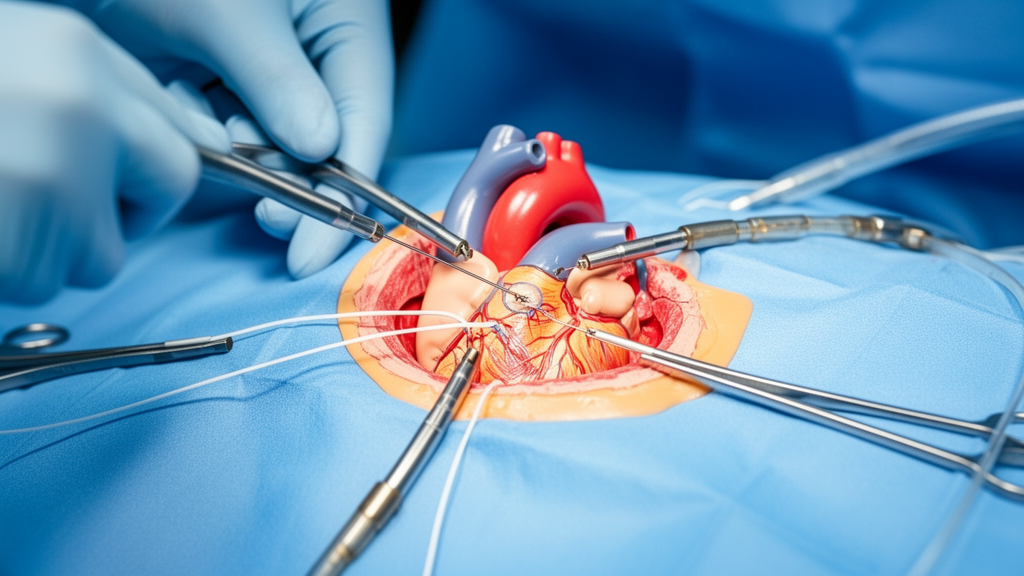
A case-based report from Hainan General Hospital in Haikou, China, describes a temporary pacing configuration for transcatheter aortic valve replacement that uses two wires in separate anatomical locations. A coronary wire placed in the left coronary artery served as the anode, while a left ventricular wire served as the cathode. The authors report extremely low pacing impedance and voltage thresholds in patients at high risk of coronary obstruction, alongside their description of the technique as simple and reliable.

The report focuses on the electrical characteristics of this arrangement rather than comparative clinical outcomes. Conventional pacing over a wire during TAVR can result in high impedance and elevated voltage thresholds, which the authors say might lead to loss of capture and, potentially, valve embolization. In the illustrated configuration, the coronary wire and left ventricular wire form the pacing circuit, allowing the authors to report the unusually low impedance and voltage thresholds associated with their approach.

The supplied report does not provide comparative data showing that coronary-wire pacing reduces loss of capture, prevents valve embolization, improves procedural outcomes or outperforms conventional pacing over a wire. It also does not establish how often the reported electrical performance occurred across a larger patient population. The findings are therefore limited to the cases described and to the authors’ technical assessment of the configuration.

Coronary obstruction risk is part of the reported clinical context for the patients discussed, but the supplied evidence does not provide enough procedural detail to determine how the wires were positioned beyond their roles as anode and cathode, how the configuration interacted with other steps in TAVR, or which patients beyond the reported setting might be suitable candidates. The article presents coronary-wire pacing as a possible approach to wire pacing in TAVR and reports its observed electrical performance, but it does not support clinical recommendations or a conclusion that the technique improves patient outcomes.

Subject of Research: Case-based coronary-wire temporary pacing during transcatheter aortic valve replacement

Article Title: Pacing during TAVR through a coronary wire in the coronary artery and left ventricular wire

Article References: Ma, R., Zhang, L., Liao, W., & Wang, S. (2026). Pacing during TAVR through a coronary wire in the coronary artery and left ventricular wire. Frontiers in Cardiovascular Medicine, 13, Article 1955852. https://doi.org/10.3389/fcvm.2026.1955852

Image Credits: AI Generated

DOI: 10.3389/fcvm.2026.1955852

Keywords: TAVR, coronary-wire pacing, temporary pacing, pacing impedance, voltage threshold, left coronary artery, left ventricular wire, coronary obstruction, aortic valve replacement, case report, Pacing, during

Cite Scienmag News

Ophelia Keating. (October 22, 2026). Case report describes low-impedance coronary-wire pacing during TAVR. Scienmag. https://scienmag.com/case-report-describes-low-impedance-coronary-wire-pacing-during-tavr/

Ophelia Keating. "Case report describes low-impedance coronary-wire pacing during TAVR." Scienmag, 22 October 2026, https://scienmag.com/case-report-describes-low-impedance-coronary-wire-pacing-during-tavr/. Accessed 22 October 2026.

Ophelia Keating. "Case report describes low-impedance coronary-wire pacing during TAVR." Scienmag. October 22, 2026. https://scienmag.com/case-report-describes-low-impedance-coronary-wire-pacing-during-tavr/


Tags: aortic valve replacementcase reportcoronary artery wire as pacing anodecoronary obstructioncoronary-wire pacingduringelectrical characteristics of TAVR pacinghigh-risk patient management in TAVRinnovative pacing techniques in valve replacementleft coronary arteryleft ventricular wireleft ventricular wire as pacing cathodelow-impedance pacingpacingpacing impedancepotential benefits of low-impedance pacingprocedural outcomes in TAVRsafety and reliability of coronary-wire pacingTAVRtemporary cardiac pacing during TAVRtemporary pacingTranscatheter aortic valve replacementvoltage threshold
Share26Tweet16
Previous Post

Kallmann family study finds PROK2 upregulation with uncertain ANOS1 variant

Next Post

Fractional damping study finds no universal seismic performance advantage

Related Posts

Fractional damping study finds no universal seismic performance advantage
Earth Science

Fractional damping study finds no universal seismic performance advantage

October 22, 2026
Kallmann family study finds PROK2 upregulation with uncertain ANOS1 variant
Medicine

Kallmann family study finds PROK2 upregulation with uncertain ANOS1 variant

October 22, 2026
Environmentally regulated cell state splits Arabidopsis root lineages
Medicine

Environmentally regulated cell state splits Arabidopsis root lineages

October 22, 2026
Modeling and outbreak analysis map African swine fever in South Korean farms
Science News

Modeling and outbreak analysis map African swine fever in South Korean farms

October 22, 2026
Brain structure tracks learning signals, with some sex-specific links
Medicine

Brain structure tracks learning signals, with some sex-specific links

October 22, 2026
Water Extraction of Cryogenically Prepared Cascabela Leaves Shows In Vitro Activity
Chemistry

Water Extraction of Cryogenically Prepared Cascabela Leaves Shows In Vitro Activity

October 22, 2026
Next Post
Fractional damping study finds no universal seismic performance advantage

Fractional damping study finds no universal seismic performance advantage

  • Mothers who receive childcare support from maternal grandparents show more optimized

    Mothers who receive childcare support from maternal grandparents show more parental warmth, finds NTU Singapore study

    27656 shares
    Share 11059 Tweet 6912
  • University of Seville Breaks 120-Year-Old Mystery, Revises a Key Einstein Concept

    1061 shares
    Share 424 Tweet 265
  • Bee body mass, pathogens and local climate influence heat tolerance

    682 shares
    Share 273 Tweet 171
  • Researchers record first-ever images and data of a shark experiencing a boat strike

    546 shares
    Share 218 Tweet 137
  • Groundbreaking Clinical Trial Reveals Lubiprostone Enhances Kidney Function

    531 shares
    Share 212 Tweet 133
Science

Embark on a thrilling journey of discovery with Scienmag.com—your ultimate source for cutting-edge breakthroughs. Immerse yourself in a world where curiosity knows no limits and tomorrow’s possibilities become today’s reality!

RECENT NEWS

  • Fractional damping study finds no universal seismic performance advantage
  • Case report describes low-impedance coronary-wire pacing during TAVR
  • Kallmann family study finds PROK2 upregulation with uncertain ANOS1 variant
  • Environmentally regulated cell state splits Arabidopsis root lineages

Categories

  • Agriculture
  • Anthropology
  • Archaeology
  • Athmospheric
  • Biology
  • Biotechnology
  • Blog
  • Bussines
  • Cancer
  • Chemistry
  • Climate
  • Earth Science
  • Editorial Policy
  • Marine
  • Mathematics
  • Medicine
  • Pediatry
  • Policy
  • Psychology & Psychiatry
  • Science Education
  • Science News
  • Social Science
  • Space
  • Technology and Engineering

Subscribe to Blog via Email

Enter your email address to subscribe to this blog and receive notifications of new posts by email.

Join 5,151 other subscribers

© 2025 Scienmag - Science Magazine

Welcome Back!

Login to your account below

Forgotten Password?

Retrieve your password

Please enter your username or email address to reset your password.

Log In
No Result
View All Result
  • HOME
  • SCIENCE NEWS
  • CONTACT US

© 2025 Scienmag - Science Magazine

Discover more from Science

Subscribe now to keep reading and get access to the full archive.

Continue reading