

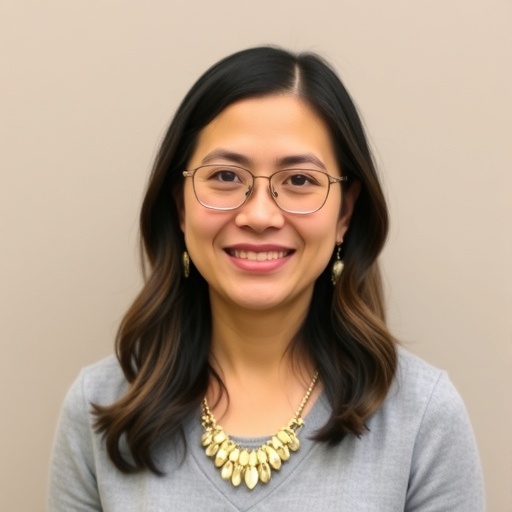
In the rapidly evolving world of pediatric research, early career investigators are the torchbearers of innovation, bringing fresh perspectives and groundbreaking insights to complex medical challenges. Caroline Y. Noh exemplifies this new wave of scientific thinkers. Her latest work, as highlighted in the Pediatric Research journal, delves deep into crucial elements shaping pediatric health outcomes and developmental trajectories. This commentary not only underscores her contributions but also sheds light on the intricate scientific frameworks that inform her studies, holding promise for transformative impacts on child health research.
Caroline Y. Noh’s journey reflects a keen dedication to understanding pediatric conditions through a lens that combines molecular biology, clinical observation, and translational application. Pediatric research traditionally grapples with unique challenges, given the biological variability and developmental dynamics that differ vastly from adult systems. Noh’s approach integrates advanced molecular techniques with clinical data analytics, aiming to unravel the nuances that underlie pediatric diseases and health disparities. This multi-dimensional strategy reflects a trend in pediatric science toward precision medicine, where interventions are tuned finely to developmental stages and genetic backgrounds.
One of the most compelling aspects of Noh’s work is her focus on early detection and intervention strategies. She argues that a deeper mechanistic understanding of pediatric diseases at their inception stages can significantly alter disease trajectories. Her research leverages emerging technologies such as genomics, proteomics, and metabolomics, providing a comprehensive biochemical snapshot of developing disease states in infants and young children. This holistic picture allows for the identification of novel biomarkers that could revolutionize screening processes, leading to earlier diagnosis and customized therapeutic regimens.
Noh’s biocommentary also touches upon the integration of computational biology in pediatric research. Advanced algorithms and machine learning models are becoming essential tools for data interpretation in complex biological systems. By incorporating computational methods, she bridges the gap between vast datasets and actionable insights, enabling the prediction of disease outcomes and the stratification of patient risk groups with unprecedented accuracy. This convergence of computational power and biological inquiry marks a new frontier in pediatric medicine, transforming raw data into life-saving information.
The interplay between environmental factors and genetic predispositions is another critical theme in Noh’s investigations. Pediatric diseases often emerge from multifactorial origins, where prenatal and early life exposures interact with inherent genetic risks. Noh emphasizes the significance of epigenetics in this context, exploring how environmental cues can modify gene expression patterns without altering the underlying DNA sequence. These epigenetic modifications can have lasting impacts on immune system development, metabolic regulation, and neurodevelopment, with profound implications for disease susceptibility and resilience during childhood.
Furthermore, Noh’s commentary brings attention to the need for multidisciplinary collaborations in pediatric research. Addressing complex pediatric illnesses requires the amalgamation of diverse expertise—from molecular biologists and bioinformaticians to clinicians and public health experts. Her work exemplifies such collaborative efforts, encouraging cross-disciplinary partnerships that catalyze innovative methodologies and accelerate translational outcomes. This collaborative ethos is key to overcoming the compartmentalization that has traditionally hindered pediatric clinical breakthroughs.
Another layer to Noh’s scientific narrative involves the ethical dimensions of pediatric research. The informatics-driven, data-intensive nature of her work necessitates stringent ethical frameworks that safeguard patient privacy while promoting open scientific inquiry. She advocates for responsible data stewardship practices, ensuring that sensitive pediatric data are protected even as researchers harness their potential for advancing knowledge. This balance between innovation and ethical responsibility epitomizes the evolving landscape of pediatric biomedical research.
Noh’s contributions also highlight the importance of mentorship and fostering new generations of scientists. As an early career investigator herself, she recognizes the challenges faced by young researchers in accessing funding, establishing laboratories, and publishing impactful work. Her biocommentary serves as inspiration for aspirants, emphasizing persistence, interdisciplinary skill acquisition, and the pursuit of research questions with both scientific rigor and societal relevance. This narrative resonates widely, encouraging the scientific community to invest in early-stage investigators as catalysts for future advancements.
In her meticulous work, Noh utilizes model systems that faithfully replicate aspects of human pediatric physiology and pathology, enhancing the translational value of her findings. These models range from cellular platforms to sophisticated animal systems that recapitulate genetic and environmental variables pertinent to childhood diseases. Through these platforms, her laboratory investigates pathophysiological mechanisms at a granular level, testing hypotheses that inform clinical strategies. This bench-to-bedside approach epitomizes the precision pediatric medicine paradigm.
Significantly, Noh’s studies integrate longitudinal cohort data, which are vital for understanding dynamic developmental processes. Tracking pediatric populations over time reveals how early biological markers predict later health outcomes, enabling preventive measures to be strategically implemented. The statistical models and longitudinal analytics applied in her research distill complex biological phenomena into predictive frameworks, facilitating interventions that could dramatically improve pediatric health trajectories.
A key element in the viral potential of this research stems from its real-world applications. By bridging foundational science with clinical relevance, Noh’s work appeals to both the academic community and healthcare providers focused on improving child health. This dual impact is particularly important in a media landscape hungry for stories that demystify science and highlight tangible benefits. The narrative of precision diagnosis and personalized treatment in childhood diseases is inherently compelling and timely, given global health priorities.
Moreover, the scalability of techniques and insights from Noh’s investigations points toward broader implementation. Her research outlines pathways for integrating novel diagnostic tools into standard pediatric care, potentially reshaping clinical protocols. These innovations, once validated through rigorous clinical trials, may reduce healthcare costs by preventing the progression of chronic pediatric conditions and minimizing hospitalizations, thereby delivering public health benefits on a systemic scale.
In discussing the future directions of pediatric research, Noh’s biocommentary highlights the need for continuous technological advancements and increased funding streams dedicated to child-specific health issues. Emerging tools such as high-throughput sequencing, single-cell technologies, and advanced imaging modalities promise to enrich the spatial and temporal resolution of pediatric studies. Noh envisions a future where these technologies converge synergistically, producing unprecedented insights into childhood diseases and enhancing therapeutic precision.
Noh’s work also underscores the vital importance of global health perspectives in pediatrics. Childhood diseases often manifest differently across diverse populations due to genetic variability, environmental exposures, and health system disparities. Her call for inclusive research frameworks that encompass underrepresented pediatric populations is a step toward equitable healthcare innovations. This global focus not only broadens the impact of scientific discoveries but also addresses urgent public health needs in low-resource settings.
Finally, Caroline Y. Noh’s early career investigator profile reflects the transformative potential of integrating cutting-edge science with compassionate clinical vision. As pediatric research navigates the complexities of development and disease, her work represents a beacon of hope capable of advancing pediatric medicine profoundly. With a dedication to precision, multidisciplinary integration, and ethical stewardship, Noh’s pioneering efforts inspire a new era where scientific innovation directly translates into healthier childhoods worldwide.
Subject of Research: Pediatric diseases and developmental trajectories, with a focus on molecular mechanisms, early detection, and precision medicine approaches.
Article Title: Caroline Y. Noh: Early Career Investigator biocommentary.
Article References:
Noh, C.Y. Caroline Y. Noh: Early Career Investigator biocommentary. Pediatr Res (2026). https://doi.org/10.1038/s41390-025-04755-x
Image Credits: AI Generated


