


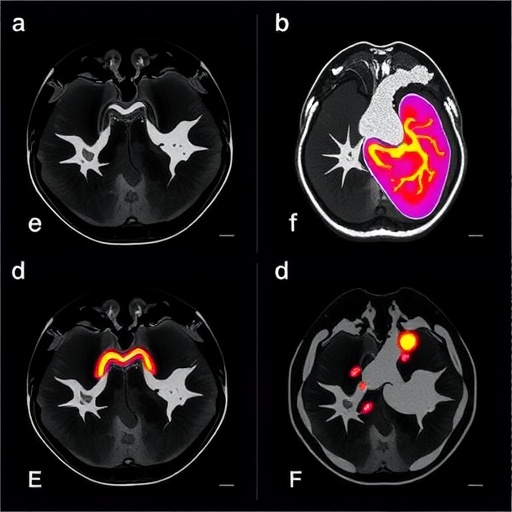
In the world of pediatric rare diseases, Rosai-Dorfman disease (RDD) stands out as a captivating enigma, primarily affecting children and characterized by an overabundance of histiocytes in lymph nodes and other tissues. However, recent research has unveiled a compelling connection between RDD and cardiovascular manifestations, raising important questions about diagnosis and management. Central to this investigation is the role of cardiac magnetic resonance imaging (CMR), a non-invasive imaging technique that offers in-depth insights into myocardial involvement in children suffering from RDD.
A landmark study conducted by a team of researchers, including Bhatia, Hashemi, and McEachern, delves into the utility of CMR in assessing cardiovascular complications associated with RDD. The essence of their findings underscores the need for heightened awareness among pediatricians and specialists regarding the cardiovascular implications of RDD, as early diagnosis can significantly alter the treatment trajectory. The study illuminates the importance of utilizing advanced imaging technologies, such as CMR, to unveil latent cardiac anomalies that may otherwise go undetected in this patient population.
CMR is heralded for its remarkable capacity to provide detailed anatomical and functional information about the heart without exposing patients to ionizing radiation. This makes it a particularly attractive option for pediatric patients, who may require repeated imaging over the course of their treatment. The researchers emphasize that CMR can detect various forms of myocardial involvement, such as myocardial edema, fibrosis, and changes in myocardial perfusion, which are crucial for understanding the full impact of RDD beyond its classic manifestations.
One of the primary challenges in diagnosing cardiovascular involvement in patients with RDD lies in its insidious nature. Symptoms may be subtle or overlooked, with many patients presenting with fatigue or nonspecific respiratory complaints that do not immediately raise concerns about cardiac health. The researchers’ findings advocate for a proactive approach: they recommend that clinicians maintain a high index of suspicion for potential cardiovascular issues in RDD patients, particularly those who exhibit systemic symptoms or lymphadenopathy.
The study also highlights intriguing imaging findings that may be particularly telling in the context of RDD. For instance, CMR can reveal hyperenhancement patterns within the myocardium that are indicative of inflammation or fibrosis. Recognizing these patterns is essential as they could be pivotal in distinguishing RDD-related cardiac changes from other forms of pediatric cardiomyopathy. This distinction is vital, as it informs the management strategies that may ultimately improve patient outcomes.
What makes this study particularly significant is its focus on a demographic that has traditionally been underrepresented in cardiac research. Much of the existing knowledge surrounding cardiovascular conditions has focused on adults or older patients, leaving a considerable knowledge gap regarding the pediatric population. The innovative use of CMR in the context of pediatric RDD fills this void, broadening our understanding of how systemic diseases can present with cardiac involvement and facilitating more tailored care approaches.
Moreover, the researchers advocate for integrating CMR into routine evaluations for children with RDD. Such integration could revolutionize how clinicians approach monitoring and managing these patients, enabling earlier detection of cardiac complications and more aggressive intervention when necessary. Furthermore, as the understanding of RDD deepens, the potential for CMR to serve as a biomarker for disease progression or response to therapy becomes evident.
As the study progresses to the peer-review process and publication, the implications for pediatric healthcare are profound. It pushes boundaries and encourages further research into the cardiovascular aspects of various childhood diseases, enriching the scientific discourse surrounding RDD and beyond. This research initiative could set a precedent for future studies aimed at cross-analyzing other systemic disorders with cardiac involvement, thus expanding the role of imaging modalities in broader pediatric applications.
The demand for CMR in pediatric assessments reflects a growing recognition of the interconnectedness of organ systems. RDD, while primarily an immune-related disorder, exemplifies how systemic diseases can exhibit multifaceted impacts on health. By focusing on the heart, this study not only elevates our comprehension of RDD but also catalyzes a reassessment of other diseases that may harbor similar cardiovascular complexities.
In conclusion, the groundbreaking research conducted by Bhatia, Hashemi, and McEachern underscores the urgent need for enhanced diagnostic protocols for pediatric patients with Rosai-Dorfman disease. The pioneering application of cardiac magnetic resonance imaging offers a glimpse into a future where advanced imaging could redefine our approach to diagnosing and managing cardiovascular complications in pediatric populations. As future studies are anticipated, this research serves as both a call to action and a roadmap for navigating the complexities of pediatric RDD through an innovative lens.
This exploration sets the stage for the pediatric medical community to embrace new methodologies that promote a more comprehensive understanding of rare diseases and their cardiovascular implications. In a field marked by rapid technological advancements, the marriage of cutting-edge imaging and holistic patient management practices is essential to improving clinical outcomes for children grappling with complex conditions such as Rosai-Dorfman disease.
Cite Scienmag News
Harold Sullivan. (August 26, 2025). Cardiac MRI’s Role in Pediatric Rosai-Dorfman Disease. Scienmag. https://scienmag.com/cardiac-mris-role-in-pediatric-rosai-dorfman-disease/
Harold Sullivan. "Cardiac MRI’s Role in Pediatric Rosai-Dorfman Disease." Scienmag, 26 August 2025, https://scienmag.com/cardiac-mris-role-in-pediatric-rosai-dorfman-disease/. Accessed 3 September 2026.
Harold Sullivan. "Cardiac MRI’s Role in Pediatric Rosai-Dorfman Disease." Scienmag. August 26, 2025. https://scienmag.com/cardiac-mris-role-in-pediatric-rosai-dorfman-disease/


