


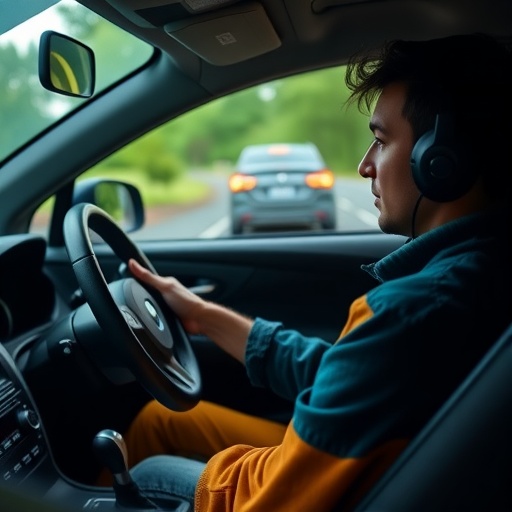
The debate over how cannabis affects driving has just received one of its most rigorous and consequential answers to date. A crossover randomized clinical trial published in JAMA Network Open demonstrates that tetrahydrocannabinol, or THC, delivered in edible form impairs simulated driving performance in a dose-dependent manner — and, critically, that this impairment occurs at blood THC concentrations below the per se thresholds commonly used by law enforcement for roadside enforcement. The finding, announced by JAMA Network, strikes at the foundation of the legal frameworks that several jurisdictions have adopted to define cannabis-impaired driving, and it arrives at a moment when edible cannabis products are proliferating across legalized markets at an unprecedented pace.
The study was led by corresponding author Bernard Le Foll, MD, PhD, of the Centre for Addiction and Mental Health in Toronto, Canada, a researcher whose career has focused on the pharmacology and treatment of substance use disorders. By selecting a randomized crossover design — widely regarded as the gold standard for examining the acute behavioral effects of psychoactive substances — the research team was able to compare each participant’s driving performance across different conditions while that individual served as his or her own control. This methodological choice matters enormously in a field cluttered with confounding variables: cannabis users differ widely in tolerance, metabolism, body composition, and baseline driving skill. By randomizing the order of exposure and washing out between sessions, the investigators could isolate the causal contribution of THC dose itself, rather than merely observing correlations between cannabis use and poor driving outcomes in observational data.
The pharmacological subtlety at the heart of the research concerns edibles specifically. Unlike inhaled cannabis, which delivers THC rapidly to the bloodstream through the lungs and produces peak effects within minutes, edible cannabis undergoes first-pass metabolism in the liver, where THC is converted to 11-hydroxy-THC, a metabolite that is itself powerfully psychoactive and may cross the blood-brain barrier even more readily than the parent compound. This transformation produces a delayed onset of intoxication — often thirty minutes to two hours — a longer duration of effect, and a notoriously unpredictable relationship between the dose consumed and the degree of impairment experienced. The delayed onset is also what makes edibles uniquely hazardous in the driving context: consumers who do not immediately feel “high” may ingest additional doses, misjudge their state, and then get behind the wheel while their impairment is still climbing.
What makes the new findings so legally significant is the disconnect they expose between blood THC concentration and functional impairment. Several jurisdictions — including a number of U.S. states that have legalized recreational cannabis, as well as Canada under its nationwide framework — have adopted per se laws that mirror drunk-driving statutes: if a driver’s blood contains a specified nanogram-per-milliliter quantity of THC, that driver is presumed impaired by law, regardless of observed behavior. These thresholds were adopted largely for administrative convenience, because blood THC levels offer an objective, enforceable number. But THC pharmacokinetics frustrate this logic. Unlike alcohol, whose blood concentration tracks intoxication reasonably well across individuals, THC is highly lipophilic, sequestering rapidly in fatty tissues and releasing slowly over days or weeks in regular users. A chronic cannabis consumer may register blood THC levels far above any legal per se threshold while being functionally unimpaired, while a naive user may exhibit profound cognitive and psychomotor deficits at concentrations that would be legally permissible.
Against this backdrop, the crossover trial’s central result acquires its sting: measurable, dose-dependent degradation of simulated driving performance occurred at blood THC concentrations below the very thresholds that define legal impairment. In practical terms, this means a driver could pass a roadside per se screening and still be operating a vehicle with compromised abilities — slower reaction times, degraded lane-keeping, impaired divided attention, and reduced capacity to respond to unexpected hazards. Simulated driving paradigms, the standard instrument of this research field, quantify such deficits with precision, capturing metrics such as standard deviation of lateral position, speed variability, response latency to unexpected events, and collision rates, all while eliminating the ethical impossibility of testing truly impaired drivers on public roads.
The implications ripple outward in several directions. For policymakers, the study suggests that per se THC thresholds may be simultaneously over-inclusive — penalizing tolerant regular users who are not impaired — and under-inclusive, missing impairment in less tolerant individuals whose blood levels have already fallen below the cutoff. The alternative approaches that toxicologists have long advocated, such as combining blood or oral fluid testing with standardized field sobriety testing, or developing functional impairment assessments, gain empirical support from these results. For public health communicators, the study supplies a clear and urgent message that legal limits do not function as a “safe to drive” certificate the way blood alcohol limits roughly do. For consumers, particularly the young adults who represent the demographic most likely to consume edibles and also most likely to be involved in motor vehicle crashes, the message is that the absence of a legally detectable blood concentration offers no protection against the pharmacological reality of impairment.
The publication also arrives amid a broader re-evaluation of cannabis and road safety driven by the rapid normalization of the drug. Legalization in Canada in 2018 and in a growing roster of American states has been accompanied by increases in self-reported cannabis-impaired driving and by stubborn uncertainty among law enforcement agencies about how to detect it. Unlike alcohol, for which the breathalyzer provides a cheap, instant, and legally robust measurement, cannabis detection requires blood or oral fluid sampling, laboratory analysis, and interpretation against thresholds whose scientific validity this study now directly challenges. The research community has warned for years that THC blood levels are a poor proxy for impairment; this trial elevates that warning from pharmacokinetic theory to controlled experimental evidence.
It is worth emphasizing what the crossover design contributes to the credibility of this conclusion. Placebo-controlled cannabis administration studies face substantial regulatory and ethical hurdles, and few research centers in the world possess the licenses, facilities, and expertise to conduct them. The fact that impairment tracked dose systematically — rather than appearing as a scattered or inconsistent pattern across participants — strengthens the inference that the relationship is causal and pharmacological rather than driven by expectancy effects. Participants in such trials are typically aware they may receive active drug, which can bias performance; the dose-dependency observed here suggests that expectancy alone cannot account for the results, since expectation would not scale neatly with the amount of THC actually administered and absorbed.
The study is accompanied by a commentary in JAMA Network Open, a signal that the journal and its editors view the findings as consequential enough to warrant explicit scholarly interpretation. Commentaries attached to clinical trials often serve to translate technical results into clinical and policy guidance, and in this case the pairing underscores the tension between the scientific evidence and the enforcement frameworks currently in place. Researchers, toxicologists, and legal scholars will now face intensified pressure to develop impairment-detection tools that reflect functional capacity rather than chemical concentration — a shift comparable to what would be required if blood alcohol levels were discovered to diverge substantially from actual driving deficit.
The work also carries lessons for the evolving edible marketplace. As legalized products migrate toward higher-potency edibles, gummies, beverages, and novel formulations, the dose-response relationship documented here becomes a matter of product labeling, dosing guidance, and consumer education. Many jurisdictions mandate standard serving sizes of a few milligrams of THC, yet studies of edible consumption repeatedly show that users frequently exceed recommended doses, misjudge onset, and combine edibles with alcohol. Each of these behaviors amplifies the risks that the trial quantifies, and none of them is captured by a blood threshold measured hours after consumption.
For the researchers at the Centre for Addiction and Mental Health and their collaborators, the trial represents a milestone in translating cannabinoid pharmacology into road-safety policy. The rigorous demonstration that impairment occurs below legal thresholds does not by itself rewrite any statute, but it hands regulators, prosecutors, and public health authorities a scientific mandate to reconsider how cannabis-impaired driving is defined, detected, and deterred. As edible cannabis continues its expansion into mainstream markets, the gap between what the law can measure and what the brain can no longer do has now been documented under the most controlled conditions science can provide — and closing that gap has become an urgent task for legislators and scientists alike.
The findings, published as “Dose-dependent effects of cannabis edibles on simulated driving performance” in JAMA Network Open, are available to the public through an access-token link provided by the journal, with an accompanying commentary offering further interpretation of the results and their policy significance.
News Publication Date: 31-Aug-2026
Web References: EurekAlert! news release, JAMA Network Media Center
Cite Scienmag News
Reid Dalton. (September 8, 2026). Cannabis edibles impair simulated driving in a dose-dependent manner. Scienmag. https://scienmag.com/cannabis-edibles-impair-simulated-driving-in-a-dose-dependent-manner/
Reid Dalton. "Cannabis edibles impair simulated driving in a dose-dependent manner." Scienmag, 8 September 2026, https://scienmag.com/cannabis-edibles-impair-simulated-driving-in-a-dose-dependent-manner/. Accessed 8 September 2026.
Reid Dalton. "Cannabis edibles impair simulated driving in a dose-dependent manner." Scienmag. September 8, 2026. https://scienmag.com/cannabis-edibles-impair-simulated-driving-in-a-dose-dependent-manner/


