


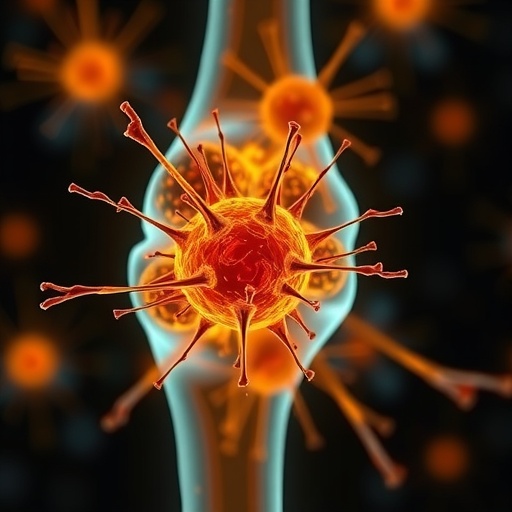
In a groundbreaking study that promises to reshape our understanding of cancer persistence and treatment resistance, researchers from Fox Chase Cancer Center have uncovered a previously unknown survival mechanism employed by cancer cells. This mechanism involves the ability of chronic lymphocytic leukemia (CLL) cells to literally hide inside bone marrow fibroblasts, effectively evading the attack of anti-cancer drugs. Termed the “cell-in-cell” phenomenon, this discovery sheds new light on why many patients, despite initially responding well to treatment, suffer from residual disease and eventual relapse.
The study, led by Dr. Y. Lynn Wang, a seasoned physician-scientist at Fox Chase’s Department of Pathology and the Cell Signaling and Microenvironment Research Program, spanned over five years of meticulous investigation. CLL, the most prevalent hematological malignancy in Western countries, presents a therapeutic challenge due to persistent residual cells that withstand standard therapies. The revelation of cancer cells entering fibroblasts to shield themselves unveils a novel axis of cancer survival and drug resistance that could pivot future therapeutic strategies.
Utilizing advanced imaging technologies such as confocal microscopy, the research team analyzed bone marrow samples from CLL patients treated with Bruton’s tyrosine kinase (BTK) inhibitors. While BTK inhibitors induce a significant initial response in over 90% of treated patients, complete remission is rare, occurring in only 8 to 11 percent of cases. This discrepancy pointed to an elusive reservoir of drug-resistant cells, which the researchers sought to identify and characterize.
The microscopic examinations revealed live CLL cells infiltrating bone marrow fibroblasts, a critical and supportive component of the tumor microenvironment. Remarkably, these engulfed cancer cells remained viable and capable of movement within fibroblasts, indicating an active and dynamic intracellular survival strategy rather than passive engulfment or cell death. This “cell-in-cell” state functions as an intracellular sanctuary where tumor cells avoid exposure to cytotoxic drugs present in the surrounding milieu.
Crucially, the study delineated the molecular mechanism guiding this protective interaction. Exposure to BTK inhibitors upregulated the expression of CXCR4, a chemokine receptor on the surface of CLL cells. CXCR4 senses chemical gradients created by ligands secreted by stromal fibroblasts, effectively guiding leukemia cells toward fibroblasts. This receptor-ligand interplay orchestrates the intimate contact necessary for CLL cells to penetrate the fibroblast membrane and establish their intracellular refuge.
The implications of this discovery extend beyond mere observation. Dr. Wang’s team demonstrated that pharmacological inhibition of CXCR4, using drugs already approved for other clinical applications, could block CLL cells from entering fibroblasts. By “locking the door” to this protective niche, combination therapies incorporating both BTK inhibitors and CXCR4 blockers may heighten cancer cell vulnerability to treatment, improving the rate of complete remission and potentially curbing relapse.
This protective “cell-in-cell” phenomenon hints at a broader relevance within oncology. Similar cellular behaviors were observed in follicular lymphoma, suggesting that the mechanism may represent a generalizable strategy employed by diverse cancer types. The tumor microenvironment, long recognized as a key player in drug resistance, now gains an additional layer of complexity through the discovery of intracellular hideouts where cancer cells can shelter.
The study’s findings provoke a paradigm shift in how residual disease is conceptualized and targeted. Traditionally viewed as free-floating, drug-resistant cancer cells, the notion that these cells may adopt a hidden, intracellular lifestyle compels a reexamination of therapeutic targets and strategies. Interventional approaches will need to account for this cellular cloaking to achieve durable responses.
Moreover, this study underscores the dynamic adaptability of cancer cells, which can modify their surface receptor expression in response to therapeutic pressure, navigating physical and molecular landscapes to survive. Understanding these adaptive mechanisms is vital for designing next-generation therapies that anticipate and counteract cancer’s evasive maneuvers.
The significance of Dr. Wang’s work transcends biology, as it highlights the importance of advanced imaging and molecular tools in uncovering cancer biology’s hidden facets. Techniques such as live-cell confocal microscopy enable visualization and quantification of intricate cell behaviors in real time, providing insights that static analyses could not reveal.
Looking forward, this research opens avenues for extensive exploration of how cancer cells interact with stromal components and whether other intracellular “safe houses” exist within the tumor microenvironment. It also raises questions about the potential interplay between these intracellular niches and immune evasion, another cornerstone of cancer resistance.
Ultimately, this study delivers a hopeful message: by elucidating the survival tactics of residual disease, scientists can develop more effective strategies to eliminate these “hidden” cancer cells. Dr. Wang’s team advocates for the broader scientific community to engage with these findings, fueling collaborative research to build on this conceptual breakthrough with the aim of achieving cancer cures.
As molecular oncology continues to evolve, discoveries such as the “cell-in-cell” phenomenon underscore both the sophistication of cancer biology and the relentless ingenuity required to outsmart it. This pioneering research ushers in a new frontier where targeting the physical and biochemical microenvironments of cancer cells becomes as critical as targeting the cancer cells themselves.
News Publication Date: 25-Jul-2025
Web References: https://doi.org/10.1016/j.bneo.2025.100142
References: Wang, Y. L., et al. (2025). Shelter in place: Live CLL Cells Inside the Bone Marrow Fibroblasts and Its Implication in Residual Disease Persistence. Blood Neoplasia.
Cite Scienmag News
Nathaniel Bowman. (August 12, 2025). Cancer Cells Evade Anti-Cancer Drugs by Hiding and Thriving Within Bone Marrow Fibroblasts. Scienmag. https://scienmag.com/cancer-cells-evade-anti-cancer-drugs-by-hiding-and-thriving-within-bone-marrow-fibroblasts/
Nathaniel Bowman. "Cancer Cells Evade Anti-Cancer Drugs by Hiding and Thriving Within Bone Marrow Fibroblasts." Scienmag, 12 August 2025, https://scienmag.com/cancer-cells-evade-anti-cancer-drugs-by-hiding-and-thriving-within-bone-marrow-fibroblasts/. Accessed 3 September 2026.
Nathaniel Bowman. "Cancer Cells Evade Anti-Cancer Drugs by Hiding and Thriving Within Bone Marrow Fibroblasts." Scienmag. August 12, 2025. https://scienmag.com/cancer-cells-evade-anti-cancer-drugs-by-hiding-and-thriving-within-bone-marrow-fibroblasts/


