


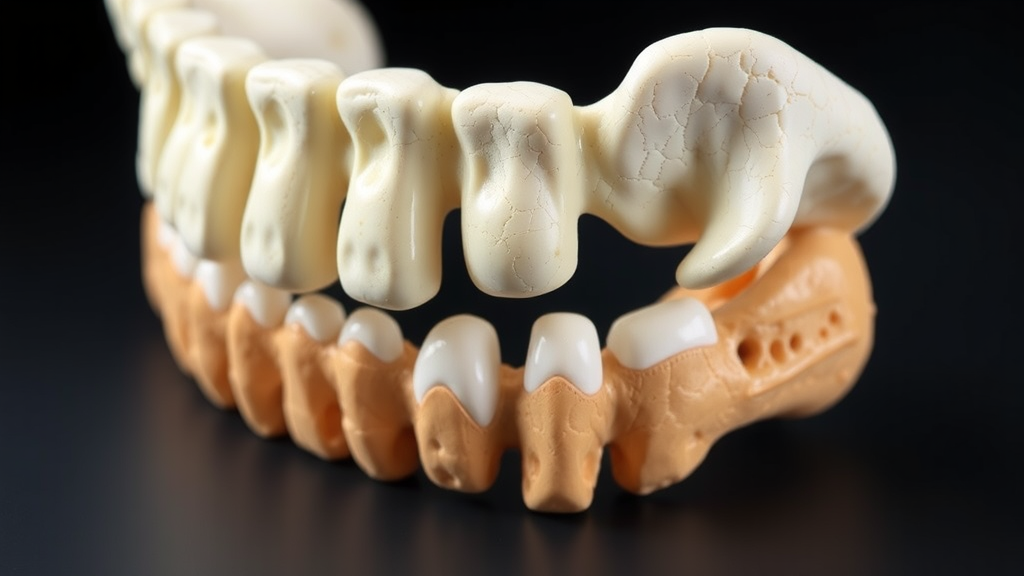
Every year, millions of people worldwide undergo surgery to repair broken, diseased, or surgically resected bone, and a large share of those operations still depends on materials that merely fill the gap rather than help the body rebuild itself. A new review published in the journal Advanced Composites and Hybrid Materials argues that one ceramic, beta-tricalcium phosphate, or β-TCP, deserves far more systematic attention as a bridge between pure mechanical repair and genuine biological regeneration. The article, written by a team of researchers affiliated with Honghui Hospital of Xi’an Jiaotong University and Xi’an University of Technology in China, assembles the scattered literature on β-TCP into a single framework that connects how the material is made, how it sets and cures, how its physicochemical properties can be tuned, and how those properties drive the biological processes that ultimately replace an implant with living bone.
β-TCP is a calcium phosphate ceramic whose chemistry places it unusually close to the mineral phase of natural bone. Bone itself is a composite built from collagen fibers reinforced with poorly crystalline, calcium-phosphate-rich mineral, and the apatite that forms in and around β-TCP implants as the material degrades echoes that native chemistry. The authors highlight three properties that have made β-TCP a central figure in orthopedic biomaterials: excellent biocompatibility, controlled biodegradability, and mechanical behavior that can be matched to bone tissue. Unlike inert implant materials that remain permanently in the body, β-TCP is designed to disappear gradually, dissolving and being resorbed by bone-resorbing cells while new bone grows into the space it vacates. This resorbability is what transforms the implant from a static filler into an active participant in remodeling, the lifelong biological process by which bone is continuously broken down and rebuilt.
The review identifies a clear gap in the existing literature as its starting point. Previous overviews of β-TCP, the authors note, have concentrated mainly on comparing biological performance and discussing application prospects, leaving the synthesis and preparation methods, the curing and osteogenic mechanisms, and the performance-optimization strategies insufficiently integrated. A clinician or materials engineer searching for guidance has therefore had to consult fragmented sources to answer questions that are really one connected question: how do choices made in the laboratory or factory cascade through material structure, physicochemical behavior, and cellular response to determine whether a bone defect heals? The new review is organized to answer that question end to end, beginning with the characteristics and structural foundations of β-TCP and moving systematically through synthesis, curing behavior, property regulation, biological mechanism, and clinical application.
Synthesis sits at the foundation of that chain. The way β-TCP crystals are created determines their phase purity, crystallinity, grain size, and elemental composition, and each of those parameters feeds forward into degradation rate and biological response. Established routes described in the literature include solid-state reactions, in which calcium-deficient or mixed calcium phosphate precursors are calcined at high temperature to form the β phase, and wet-chemical precipitation, in which calcium and phosphate ions are combined in solution under controlled pH and temperature before being heat-treated. Sol-gel processing offers molecular-level mixing and fine, homogeneous powders, while hydrothermal and other solution-based methods can tailor crystal morphology directly. The review also surveys emerging pathways that reflect the modern push toward materials engineered at ever finer scales, including routes designed to produce the highly porous, interconnected architectures that bone tissue requires for vascular ingrowth and cell migration.
A distinctive feature of the review is its treatment of curing behavior, which connects β-TCP to the clinically important class of self-setting calcium phosphate bone cements. These cements are formed as powders that react with an aqueous liquid at physiological temperature, hardening in situ inside a defect and conforming to its irregular shape. For surgeons, this injectable or moldable character solves a persistent problem with prefabricated ceramic blocks, which are difficult to fit precisely into complex defects. The review analyzes the setting reactions and the factors that govern them, since setting time, cohesion in the presence of blood and body fluids, and the mechanical integrity of the hardened cement all determine whether a cement can survive the surgical window and the early loading period that follow implantation.
The physicochemical side of the review maps the regulatory mechanisms through which processing controls performance. Porosity, for example, exists on multiple scales: micrometer-scale pores provide surfaces and spaces for cell attachment and fluid transport, while larger, interconnected channels allow blood vessels and bone tissue to infiltrate. Grain size and sintering conditions set the balance between mechanical strength and dissolution rate, because denser, coarser ceramics tend to be stronger but slower to resorb, whereas more soluble, finer structures degrade faster but may lack support capacity. Phase composition matters as well, since residual secondary phases such as hydroxyapatite or calcium pyrophosphate can shift both resorption behavior and local chemistry. By systematically linking each of these controllable parameters to its biological consequence, the review provides the kind of design map that researchers developing next-generation implants have lacked.
On the biological side, the review connects material properties to the cellular machinery of osteogenesis. When β-TCP contacts physiological fluid, partial dissolution releases calcium and phosphate ions into the local environment, elevating supersaturation and favoring the deposition of carbonate-containing apatite on the implant surface. That biologically formed mineral layer supports the adhesion and spreading of bone-forming cells and can permit direct bonding between implant and host bone. Osteoclasts, the body’s bone-resorbing cells, also recognize and break down β-TCP, creating the degradation-and-replacement dynamic that distinguishes truly regenerative implants from permanent ones. The review discusses the signaling pathways and growth-factor environments implicated in these responses, and its indexed research subjects include bone remodeling and transforming growth factor beta, signaling molecules central to how bone-forming and bone-resorbing cells coordinate during healing.
The application section of the review confronts the realities that currently limit β-TCP’s reach. In non-load-bearing and moderately loaded sites, such as defect filling in spinal surgery and the repair of cavitary bone losses, β-TCP-based materials including granules, blocks, and cements are already established clinical tools. The challenges are equally well known: β-TCP ceramics are comparatively brittle and their standalone mechanical strength is generally insufficient for major load-bearing reconstruction, and matching the degradation rate of the implant to the pace of new bone formation remains an unresolved balancing act, since an implant that resorbs too quickly leaves a structural deficit while one that resorbs too slowly crowds out regenerating tissue. The authors frame these challenges not as disqualifications but as engineering targets that synthesis and fabrication strategy can attack.
Toward that end, the review proposes novel approaches to material design and fabrication that map the field’s future directions. These include composite strategies in which β-TCP is combined with reinforcing phases or polymers to improve toughness and controllability, advanced fabrication methods capable of producing patient-specific, architecturally optimized scaffolds, and refinement of the ion-release behavior and surface chemistry that cells actually sense. The overarching vision is a material whose dissolution, resorption, and replacement by bone proceed at matched rates from the first day of implantation to the last. The authors close by positioning high-performance β-TCP bone repair materials as a realistic near-term goal rather than a distant aspiration, arguing that the field already possesses the mechanistic understanding assembled in this review and now needs to translate it systematically into materials that move orthopedic surgery from mechanical repair toward biological regeneration.
Subject of Research: β-tricalcium phosphate (β-TCP) as a resorbable biomaterial for bone defect repair and regeneration
Article Title: From mechanical repair to biological regeneration: a review on β-TCP for bone repair
Article References: From mechanical repair to biological regeneration: a review on β-TCP for bone repair. (n.d.). https://doi.org/10.1007/s42114-026-02080-3
Image Credits: AI Generated
DOI: 10.1007/s42114-026-02080-3
Keywords: β-TCP, calcium phosphate, bone repair, bone regeneration, bioceramics, bone cement, osteogenesis, biodegradable implants, orthopedic biomaterials, bone defect, tissue engineering, biocompatibility
Cite Scienmag News
Denise Maddox. (September 20, 2026). Calcium Phosphate Ceramic Bridges Mechanical Repair and True Bone Regeneration. Scienmag. https://scienmag.com/calcium-phosphate-ceramic-bridges-mechanical-repair-and-true-bone-regeneration/
Denise Maddox. "Calcium Phosphate Ceramic Bridges Mechanical Repair and True Bone Regeneration." Scienmag, 20 September 2026, https://scienmag.com/calcium-phosphate-ceramic-bridges-mechanical-repair-and-true-bone-regeneration/. Accessed 4 October 2026.
Denise Maddox. "Calcium Phosphate Ceramic Bridges Mechanical Repair and True Bone Regeneration." Scienmag. September 20, 2026. https://scienmag.com/calcium-phosphate-ceramic-bridges-mechanical-repair-and-true-bone-regeneration/


