


By Josh Stowe

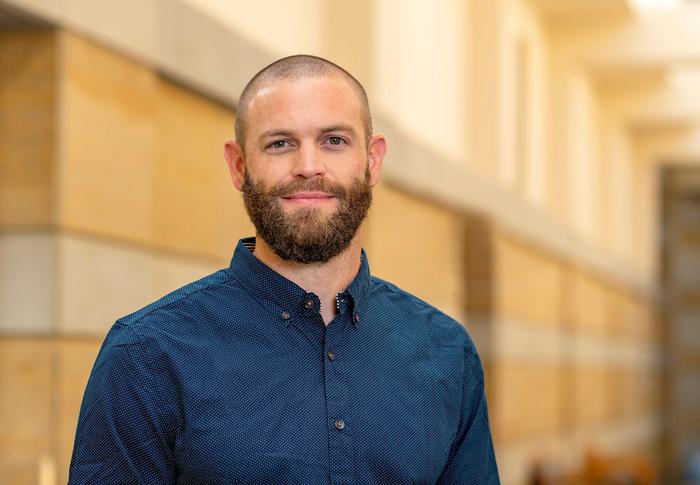
Credit: Photo by Barbara Johnston/University of Notre Dame
By Josh Stowe
Toxic pollution is the single largest cause of death and poor health, killing up to 9 million people each year — about 100 times more than war and terrorism combined. Business produces the bulk of this deadly pollution, but can also play a critical role in addressing it and mitigating its effects, according to new research by University of Notre Dame expert Richard (Drew) Marcantonio.
Marcantonio, whose study was recently published in Business Horizons, is assistant professor of environment, peace and global affairs in Notre Dame’s Keough School of Global Affairs.
His new research underscores the importance of promoting access to a safe, clean and healthy environment as a human right, as well as the need for business to help protect that right, both of which the United Nations has advocated for in recent years.
“Business is the top cause of pollution,” Marcantonio said. “But it is also one of the most potent tools for countering it and equitably restoring affected communities and ecosystems.”
Pollution, whether in the air, water or soil, harms health and well-being in multiple ways, Marcantonio said, noting that it causes respiratory conditions such as asthma and chronic obstructive pulmonary disease and contributes to malnutrition, chronic stress and disability.
Importantly, the risks are not evenly distributed, Marcantonio said. Most of the people harmed by pollution are neither producing it nor participating in the overconsumption that causes it. About 92 percent of toxic pollution deaths occur in low- and middle-income countries, he said. And within more developed countries, the people who are most harmed by pollution live in lower-income and marginalized communities.
Policymakers have called for action to address the global health consequences. In 2021, the United Nations Human Rights Council passed a resolution that recognized access to a healthy environment as a human right. In 2022, the United Nations General Assembly reaffirmed the resolution, declaring that a healthy environment is a human right.
In addition, the United Nations’ Guiding Principles on Business and Human Rights say that businesses should respect human rights. The principles specify that business must avoid infringing on the human rights of others and should further address any adverse impacts they have on human rights.
Marcantonio’s study builds upon this human rights perspective of environmental damage and harm to health, leveraging his expertise as an environmental peacebuilder who has conducted research on five continents.
As an environmental peacebuilding expert at Notre Dame, Marcantonio is affiliated with the Business Ethics and Society Program and the Deloitte Center for Ethical Leadership in the Mendoza College of Business; with the Environmental Change Initiative and Lucy Family Institute for Data & Society; and with the Keough School’s Kellogg Institute for International Studies and Kroc Institute for International Peace Studies. His study received funding from the Meyer Business on the Frontlines Program, part of the Mendoza College of Business, and from the Environmental Change Initiative.
The research describes toxic pollution as a contributor to “environmental violence,” a form of structural violence that, although less dramatic than armed conflicts, is nevertheless more deadly and debilitating. It calls for business to help address the systemic and structural health inequalities that come with pollution.
“Businesses can take much-needed steps to curb pollution, in part by embracing innovations like adaptive construction, which reuses existing structures, as well as alternative energy options that cut emissions,” Marcantonio said. “In addition, they can provide health services to the communities in which they operate, ensuring that residents are healthier and less vulnerable to pollution.”
Marcantonio said policymakers can help businesses protect the human right to health by adopting regulations that push companies to innovate and mitigate. For instance, he said mandatory carbon damage disclosures encourage companies to reduce their carbon footprint, and similar disclosures for toxic pollutants might have a similar impact.
“To ignore the role of business in producing the environmental violence of toxic pollution is immensely dangerous and naive,” Marcantonio said. “But to ignore its role as a primary solution would be equally unwise. Policymakers, researchers and business leaders should embrace both realities and work together toward policies and practices that sustainably prioritize human health by reducing toxic pollution and doing more to mitigate its effects. The goal is to protect health as a human right.”
Contact: Tracy DeStazio, associate director of media relations, 574-631-9958 or tdestazi@nd.edu
Journal
Business Horizons
Method of Research
Data/statistical analysis
Subject of Research
Not applicable
Article Title
Environmental violence and enterprise: The outsized role of business for environmental peacebuilding
Article Publication Date
25-Jul-2024
Cite Scienmag News
Courtney Benton. (August 13, 2024). Business crucial to addressing toxic pollution and protecting human health. Scienmag. https://scienmag.com/business-crucial-to-addressing-toxic-pollution-and-protecting-human-health/
Courtney Benton. "Business crucial to addressing toxic pollution and protecting human health." Scienmag, 13 August 2024, https://scienmag.com/business-crucial-to-addressing-toxic-pollution-and-protecting-human-health/. Accessed 4 September 2026.
Courtney Benton. "Business crucial to addressing toxic pollution and protecting human health." Scienmag. August 13, 2024. https://scienmag.com/business-crucial-to-addressing-toxic-pollution-and-protecting-human-health/

