


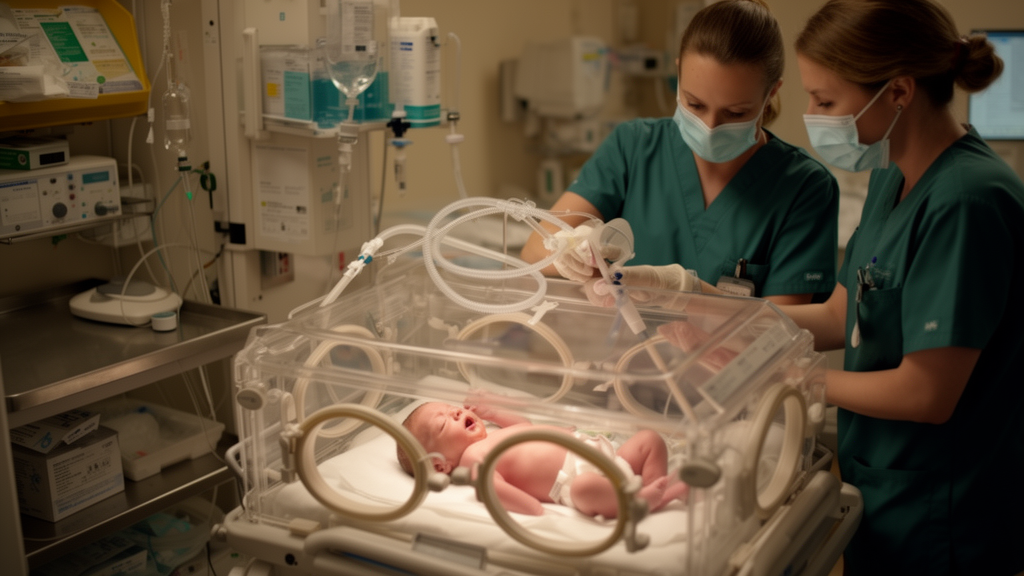
A systematic review and meta-analysis of 34 studies involving 6,301 neonates in neonatal intensive care units found that bundle-based quality-improvement programs were associated with fewer ventilator-associated pneumonia cases, while oral care was linked with lower odds of pneumonia but a less certain effect size. The analysis, reported in Pediatric Research, focused on primary prevention of VAP in neonates receiving mechanical ventilation and included randomized trials, observational studies and quasi-experimental before-and-after evaluations. Seven studies assessed prevention bundles. Their pooled results showed lower odds of VAP, a lower incidence rate after adjustment for ventilator days and an absolute reduction of 8.33 cases per 1,000 mechanical-ventilation days. The authors stress that the bundle estimate describes heterogeneous packages rather than the effect of any one component and that non-randomized designs limit causal conclusions.
The bundle studies reported a pooled odds ratio of 0.40, with a 95% confidence interval of 0.28 to 0.57 and an I² of 37%, indicating 60% lower odds of VAP in intervention groups than in comparison groups. When incidence was evaluated relative to time at risk, the incidence-rate ratio was 0.56 (95% CI 0.43–0.73; I² 28%), consistent with a 44% lower VAP rate per unit of patient-time. The incidence-rate difference was −0.0083 (95% CI −0.0127 to −0.0039; I² 38%), corresponding to 8.33 fewer cases per 1,000 mechanical-ventilation days. Leave-one-out analysis did not materially change the pooled bundle estimates, but Doi and funnel plots showed asymmetry, with the largest study having relatively higher effect sizes.
These packages combined clinical and organizational measures rather than applying a uniform intervention. Depending on the unit and study, bundles included hand-hygiene practices, head-of-bed elevation, sterile airway management with closed suction and reduced circuit changes, oral-care protocols, daily readiness-to-wean evaluations, staff education, adherence monitoring, audit and feedback and changes to unit workflow. The breadth of the packages means the pooled estimates cannot identify which practice or implementation feature produced the association. It is also possible that improvements in surveillance, staffing, infection-control practice or other secular changes contributed to the lower pneumonia rates observed after implementation. Several bundle evaluations used before-and-after comparisons, which cannot fully separate an intervention’s effect from changes in neonatal care occurring over the same period.
Oral care produced the clearest evidence among individual preventive approaches. Across 14 oral-care studies, the pooled odds ratio for VAP was 0.53 (95% CI 0.35–0.81), with very low statistical heterogeneity of I² 3%. Twelve of those studies evaluated oropharyngeal therapy with mothers’ own milk, or OPT-MOM, which involves using breast milk to swab the oral and pharyngeal area. In a subgroup analysis, OPT-MOM was associated with an odds ratio of 0.54 (95% CI 0.31–0.93; I² 13%). The overall association remained after four studies without a clearly defined mechanically ventilated at-risk population were removed, producing an odds ratio of 0.47 (95% CI 0.29–0.77). The sensitivity result indicates that the association was not explained solely by those four studies, but it does not remove the broader limitations affecting the oral-care evidence.
That oral-care signal nevertheless carries substantial uncertainty. Most studies were small, the pooled analysis showed signs of publication bias or small-study effects, and the magnitude was not consistent across every methodological subgroup. In the randomized-trial-only subgroup, oral care remained associated with lower VAP odds, at 0.53 (95% CI 0.34–0.83; I² 0%). The estimate was also consistent in studies using Centers for Disease Control and Prevention diagnostic criteria, at 0.35 (95% CI 0.14–0.85; I² 0%), and in studies clearly restricted to ventilated neonates, at 0.47 (95% CI 0.29–0.77; I² 0%). By contrast, estimates were non-significant in some groups defined by gestational age or birth weight, and studies without clear mechanical-ventilation restriction showed a weaker, highly uncertain association of 0.69 (95% CI 0.17–2.78). The evidence assessment therefore rated the certainty for oral care as moderate rather than conclusive.
Individual ventilator-care methods did not lend themselves to pooled analysis because the interventions differed markedly. Three studies examined the interval between ventilator-circuit changes. None found that changing circuits more frequently reduced VAP, and the differing comparisons ranged from every third day versus daily, every seven days versus every two days, and every 14 days versus every seven days. Two studies comparing closed- and open-suction systems found no reduction in VAP with closed suction, although closed suction appeared safe. A modified endotracheal tube with a sanitation port was associated with lower pneumonia incidence in one study, 10% versus 30%, but the finding was not independently replicated. A trial of polymyxin B rather than saline for suction-catheter flushing found no significant difference, and its interpretation was limited by baseline differences and non-random allocation. Overall, the evidence did not support more frequent circuit changes or closed suction as effective standalone measures for reducing neonatal VAP.
Evidence for other approaches was also limited. Two trials examined nursing education programs. One reported better practice scores and markedly different VAP incidence after four infection-control and ventilator-care sessions, while another found no significant change in VAP but a reduction in overall healthcare-associated infections. Two small trials evaluated nebulized 3% hypertonic saline. Both reported lower VAP incidence and shorter ventilation exposure, but the authors judged the evidence low certainty because of small samples, single-center designs and variable protocols. Environmental studies produced mixed results: copper plating and ultraviolet-C treatment reduced healthcare-associated infection rates without a statistically significant VAP effect, while an upper-room ultraviolet germicidal system was associated with fewer VAP episodes, lower tracheal microbial loads and less antibiotic use in one study. These findings describe associations from limited studies rather than establishing the effectiveness of each approach across neonatal intensive care units.
The certainty assessment rated evidence for preventive bundles and oral care as moderate, evidence for ventilator-care strategies and nebulization as low, and evidence for education and environmental interventions as very low to low. The analysis included studies from several countries, with seven conducted in the United States, six in India and five in Egypt. Eighteen of the 34 studies were randomized controlled trials, and 14 used CDC criteria to define VAP. Most enrolled high-risk neonatal groups, particularly preterm and very-low-birth-weight infants, although mechanical-ventilation indications were not reported in 18 studies. Mechanical-ventilation status was not clearly restricted in every included report, so the 6,301 participants should not all be described as ventilated neonates. Study populations ranged from 12 to 1,465 infants, with a mean of 186 per study. Methodological quality scores ranged from 16 to 33 out of 36, with a mean of 25.4, assessed using the Methodological Standards for Epidemiological Research scale.
Several features limit how confidently the results can be applied. In addition to varied bundle composition, studies differed in baseline pneumonia risk, gestational age, birth weight, intervention protocols and diagnostic definitions. This variation could cause the same clinical presentation to be classified differently across studies. Some reports did not clearly restrict enrollment to mechanically ventilated infants or provide an adequately detailed mechanical-ventilation-day denominator, potentially diluting associations with VAP. Nine non-English articles were excluded because reliable translation and detailed extraction were not feasible, and several quality-improvement reports were excluded for lacking extractable VAP data. Most bundle evidence also came from before-and-after evaluations, which are vulnerable to confounding by concurrent changes in care. Finally, few studies assessed long-term outcomes, cost-effectiveness, sustainability, implementation barriers or performance in resource-limited units.
Overall, the synthesis provides a focused meta-analytic assessment of primary prevention interventions for VAP in ventilated neonates, including outcomes adjusted for mechanical-ventilation days. The strongest and most consistent signal was for multicomponent quality-improvement bundles, which were associated with lower odds, lower incidence rates and an absolute reduction of about eight VAP cases per 1,000 mechanical-ventilation days. Oral care was also associated with lower odds, including in trials and studies focused on ventilated infants, but small-study effects, publication bias, inconsistent subgroups and variable VAP definitions limit confidence in the size of that benefit. The authors call for future multicenter studies with standardized VAP definitions, stronger controlled designs, detailed reporting of bundle components and implementation fidelity, and consistent use of mechanical-ventilation-day-adjusted outcomes. Until then, the pooled bundle estimate should be understood as the association with a diverse quality-improvement program, not proof that a particular bundle or individual component is responsible.
Subject of Research: Meta-analysis of primary prevention interventions for ventilator-associated pneumonia in neonates receiving mechanical ventilation
Article Title: Primary preventive interventions to reduce ventilator-associated pneumonia in neonatal intensive care units: a meta-analysis
Article References: Elmakaty, I., Karen, O., Kokash, R., Al-Sayegh, N. F., Bacha, K. M., Abdelhady, I., & Gad, A. (2026). Primary preventive interventions to reduce ventilator-associated pneumonia in neonatal intensive care units: a meta-analysis. Pediatric Research. https://doi.org/10.1038/s41390-026-05562-8
Image Credits: AI Generated
DOI: 10.1038/s41390-026-05562-8
Keywords: neonatal intensive care, ventilator-associated pneumonia, quality-improvement bundles, oral care, mechanical ventilation, preventive interventions, systematic review, meta-analysis, neonatal infection, evidence synthesis, Primary, preventive
Cite Scienmag News
Harold Sullivan. (October 22, 2026). Bundles linked with lower neonatal ventilator-associated pneumonia. Scienmag. https://scienmag.com/bundles-linked-with-lower-neonatal-ventilator-associated-pneumonia/
Harold Sullivan. "Bundles linked with lower neonatal ventilator-associated pneumonia." Scienmag, 22 October 2026, https://scienmag.com/bundles-linked-with-lower-neonatal-ventilator-associated-pneumonia/. Accessed 22 October 2026.
Harold Sullivan. "Bundles linked with lower neonatal ventilator-associated pneumonia." Scienmag. October 22, 2026. https://scienmag.com/bundles-linked-with-lower-neonatal-ventilator-associated-pneumonia/


