


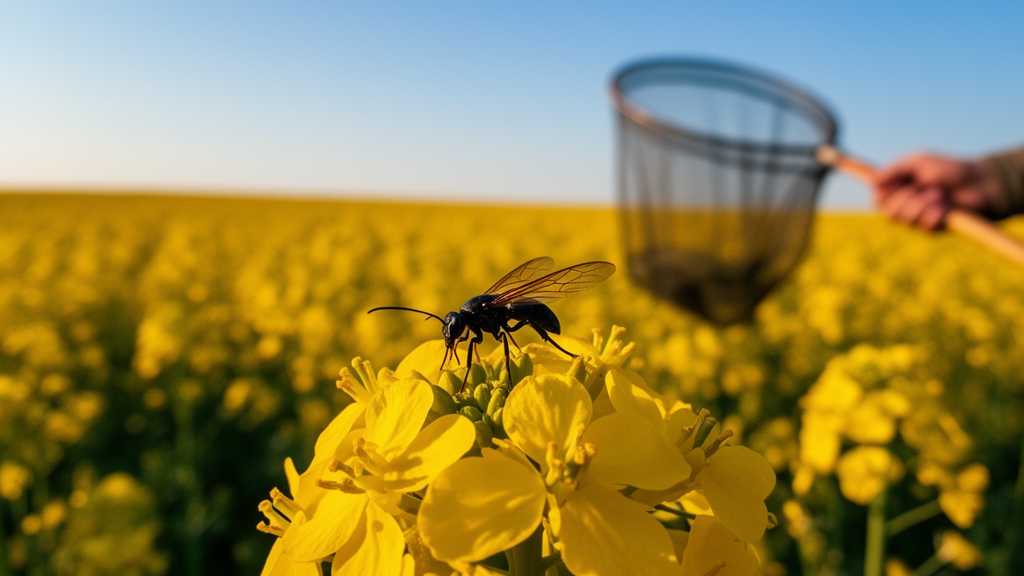
Oilseed rape, scientifically known as Brassica napus, stands as one of the most critical agricultural crops globally, providing a significant portion of the world’s vegetable oil supply. This crop, which accounts for approximately 11.7 percent of total vegetable oil consumption, is second only to soybean and palm oil in production volume. Despite its economic importance, the cultivation of oilseed rape is frequently challenged by a diverse array of insect pests that can severely reduce yield and quality. In response to these threats, farmers often rely on chemical interventions, yet recent scientific attention has shifted toward understanding the natural enemies that inhabit these fields. A new study published in the journal BioRisk offers a detailed look at the pteromalid wasp fauna in Bulgarian oilseed rape fields, highlighting the potential for biological control strategies that could reduce dependence on synthetic pesticides.
The research team conducted a comprehensive field study across ten oilseed rape fields located in the southern foots of the Sarnena Gora Mountains and the western and south-eastern parts of the Thracian Lowland in Bulgaria. The sampling took place during late April and the second half of May 2018, a period critical for the development of various pest species and their natural enemies. The study focused specifically on the family Pteromalidae, a group of parasitoid wasps that are widespread and abundant in temperate regions. These wasps are known to serve as natural enemies of crop pests, playing a vital role in the biological control of harmful insects. By examining the diversity and abundance of these wasps, the researchers aimed to assess the existing biological control potential within these agroecosystems.
Using two classic sweep netting techniques, the scientists collected a total of 93 pteromalid specimens, of which 86 were successfully identified. The specimens belonged to 26 taxa, representing 15 valid species across 14 genera. The most abundant genus was Mesopolobus, which accounted for 67 percent of all sampled pteromalids. Within this genus, the species Mesopolobus morys was the most numerous, averaging 60.2 percent of all collected specimens. This species is well-known in Europe as a key parasitoid of the cabbage seed weevil, Ceutorhynchus obstrictus, one of the major pests of winter rape. The high prevalence of M. morys in the sampled fields suggests a significant natural capacity for controlling this specific pest without the need for chemical intervention.
An interesting finding from the study was the first record of the species Halticoptera patellana in the Bulgarian fauna. This cosmopolitan species is primarily associated with flies belonging to the families Agromyzidae and Chloropidae. While its presence in oilseed rape fields may not directly indicate a role in controlling the primary pests of Brassica napus, it contributes to the overall biodiversity of the area. The study also identified several other species that are potentially associated with hosts feeding on Brassicaceae plants, such as Pachyneuron aphidis and Pachyneuron muscarum. These species are polyphagous hyperparasitoids, meaning they parasitize other parasitoids, which can have complex effects on the biological control dynamics within the field.
The research also compared the pteromalid assemblages in fields managed using two different production systems: conventional technology and Clearfield technology. Clearfield technology involves the use of an imidazolinone-based herbicide and a corresponding plant variety that is tolerant to the herbicide. This system aims to provide reliable control of broadleaf and grass weeds in post-emergence. The results showed that Clearfield oilseed rape fields had relatively higher parasitoid abundance and richness compared to the conventionally treated fields. Specifically, the number of specimens captured in Clearfield crops was higher, with a mean of 12.67 individuals per site, compared to 5.50 individuals in conventional crops. Similarly, the taxonomic richness was greater in Clearfield fields, with a mean of 5.00 taxa per site versus 2.50 taxa in conventional fields.
The difference in parasitoid abundance between the two systems may be attributed to the different chemical agents used in each. Conventional fields often rely on a variety of insecticides, including carbamates, pyrethroids, and organophosphates, which can have negative effects on beneficial insect species. In contrast, Clearfield technology may involve fewer or different types of insecticide applications, potentially creating a more favorable environment for parasitoid wasps. However, the researchers noted that comparative investigations between the effects of insecticides on beneficial insects in Clearfield versus conventional crops have not been conducted until now. Therefore, further laboratory and field studies are necessary to fully understand the impact of pesticide treatments on parasitoid communities in these different crop systems.
The study also highlighted the presence of several pteromalid species that are not directly associated with oilseed rape pests but may use the crop as a source of flower nectar or honeydew. These species, such as Cyrtogaster vulgaris and Macroglenes penetrans, contribute to the overall ecological balance of the field. Macroglenes penetrans, for instance, is a well-known natural biological agent of two cecidomyiid wheat pests, but its presence in oilseed rape fields indicates its adaptability to different agricultural environments. The diversity of these wasps underscores the complexity of the interactions within the agroecosystem and the importance of maintaining a healthy population of natural enemies to support sustainable crop production.
One of the notable findings of the study was the high proportion of unidentified taxa, which accounted for 12 percent of the collected specimens. These unidentified taxa are likely undescribed species, a common phenomenon in the study of Pteromalidae. This finding highlights the incomplete knowledge we have about these parasitoids and the need for further taxonomic research. Understanding the full diversity of pteromalid wasps is crucial for developing effective biological control strategies, as it allows researchers to identify potential new agents for pest management. The presence of these undescribed species also suggests that the pteromalid fauna in oilseed rape fields is more diverse than previously thought, offering additional opportunities for biological control.
In conclusion, the study provides valuable insights into the pteromalid fauna in Bulgarian oilseed rape fields and its potential for biological control. The high abundance of Mesopolobus morys indicates a strong natural capacity for controlling the cabbage seed weevil, a major pest of oilseed rape. The higher parasitoid abundance and richness in Clearfield fields compared to conventional fields suggest that alternative production systems may offer better conditions for supporting beneficial insects. However, further research is needed to fully understand the interactions between parasitoid wasps, pests, and chemical treatments in these different systems. The findings of this study underscore the importance of integrating biological control strategies into agricultural practices to reduce reliance on chemical pesticides and promote sustainable crop production.
As the global demand for vegetable oil continues to grow, the need for sustainable agricultural practices becomes increasingly urgent. The study of pteromalid wasps in oilseed rape fields offers a promising avenue for achieving this goal. By understanding the natural enemies of crop pests and the factors that influence their abundance, farmers and researchers can develop more effective and environmentally friendly pest management strategies. The results of this study serve as a foundation for future research, highlighting the potential of biological control in ensuring the long-term productivity and sustainability of oilseed rape cultivation.
Subject of Research: Pteromalid fauna (Hymenoptera, Pteromalidae) in oilseed rape (Brassica napus L.) fields in Bulgaria – species composition and perspectives for biological control
Article Title: Pteromalid fauna ( Hymenoptera , Pteromalidae ) in oilseed rape ( Brassica napus L.) fields in Bulgaria – species composition and perspectives for biological control
Article References: Todorov, I., Ljubomirov, T., & Peneva, V. (2022). Pteromalid fauna (Hymenoptera, Pteromalidae) in oilseed rape (Brassica napus L.) fields in Bulgaria – species composition and perspectives for biological control. BioRisk, 17, 329-342. https://doi.org/10.3897/biorisk.17.77454
Image Credits: AI Generated
Keywords: Pteromalid, fauna, Hymenoptera, Pteromalidae, oilseed, rape, Brassica, napus, fields, Bulgaria, species, composition
Cite Scienmag News
Gavin Prescott. (October 18, 2026). Bulgarian Study Reveals Parasitoid Wasps in Oilseed Rape Fields. Scienmag. https://scienmag.com/bulgarian-study-reveals-parasitoid-wasps-in-oilseed-rape-fields/
Gavin Prescott. "Bulgarian Study Reveals Parasitoid Wasps in Oilseed Rape Fields." Scienmag, 18 October 2026, https://scienmag.com/bulgarian-study-reveals-parasitoid-wasps-in-oilseed-rape-fields/. Accessed 18 October 2026.
Gavin Prescott. "Bulgarian Study Reveals Parasitoid Wasps in Oilseed Rape Fields." Scienmag. October 18, 2026. https://scienmag.com/bulgarian-study-reveals-parasitoid-wasps-in-oilseed-rape-fields/


