


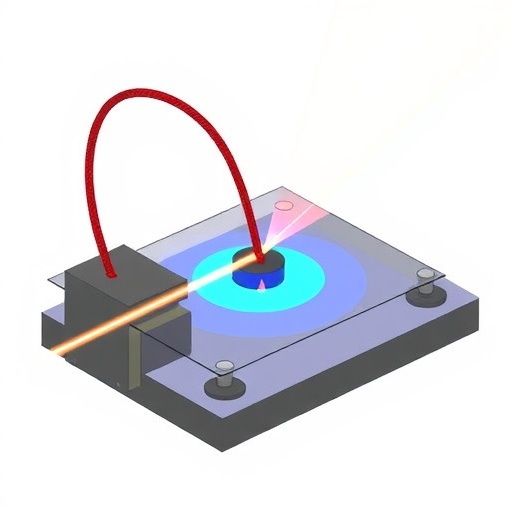
Researchers at the Cape Peninsula University of Technology in Cape Town have reported a systematic development process aimed at building a single-photon detector that costs a small fraction of the commercial instruments that currently dominate quantum optics laboratories. In a study published in Quantum Information Processing, the team led by Rory Pentz and supervised by Kessie Govender characterised three avalanche photodiodes, redesigned the first amplification stage around a modern ultra-low-noise operational amplifier, and demonstrated photon counting approaching the single-photon level using components costing a few hundred South African rand rather than tens of thousands.
Single-photon detectors are the workhorses of quantum information science. A quantum key distribution system based on the Einstein–Podolsky–Rosen protocol, for example, requires four of them, and even the characterisation of entangled-photon sources produced by spontaneous parametric down-conversion or four-wave mixing depends on detectors capable of registering individual photons. Commercial detectors, however, are prohibitively expensive for many research groups, particularly in developing research ecosystems, and this cost barrier is precisely what the South African quantum research group set out to dismantle.
The team’s approach began with the recognition that no single-photon detector achieves perfect accuracy. Every design step involves trade-offs: sensitivity must be balanced against dark counts, the false pulses generated even when no light strikes the sensor, and high-gain amplifiers inherently bring more noise than their low-noise counterparts. Dark current arises when the enormous electric field across a reverse-biased junction dislodges electrons spontaneously, producing pulses in the absence of photons. Managing this fundamental tension drove every stage of the design process.
For the light-sensing element, the researchers selected silicon avalanche photodiodes optimised for operation at 780 nanometres, a wavelength well suited to free-space quantum communication. An APD is operated in reverse bias above its breakdown voltage, so that a single photon striking the PN junction triggers an avalanche of impact-ionised charge carriers, multiplying the tiny primary photoelectron into a measurable current pulse. The bias voltage equals the breakdown voltage plus an excess voltage: the larger the excess voltage, the higher the internal gain, but the dark current climbs in parallel. Passive quenching is achieved by placing a series resistor with the APD; when an avalanche begins, the current through this resistor creates a voltage drop that pushes the bias below breakdown, resetting the junction. The quenching time is set by the product of the diode capacitance and the resistor, while active quenching with transistors can reset the device faster but adds cost and complexity — a compromise the team declined, consistent with its cost-first philosophy.
Three candidate APDs were characterised: the KYOSEMI KPDA050P-H8, costing R1200; the ISO Electronics APD10-8-150-T52, costing R2000; and the Excelitas C30902, costing R8000. For comparison, APDs purpose-built for single-photon detection typically cost around R30000. The KPDA and APD10 carry expected internal gains of about 100, while the C30902 offers roughly 250. The researchers systematically measured voltage gain and dark current as the reverse bias was increased in one-volt steps, and separately swept temperature from above 40 degrees Celsius down to about minus 2 degrees using a Peltier thermoelectric cooler mounted beneath an aluminium block holding the diode. Cooling yielded gains increasing by factors of one to four and, crucially, suppressed thermal noise and dark current, improving the signal-to-noise ratio enough to permit slightly higher bias voltages.
One of the study’s more striking findings concerns the quenching resistor itself. The conventional design equation, which divides the excess voltage above breakdown by the trigger current, gave a value of 150 kilo-ohms for the APD10 biased at 151.5 volts. Yet when the team experimentally varied the quenching resistance from 33 kilo-ohms to 1 mega-ohm and measured the output voltage across it, the curve peaked at 56 kilo-ohms — a substantial discrepancy. Because the plotted curve rests on actual measurements, the authors flag the standard calculation method as needing further investigation, an honest note of caution for anyone building passive-quenched detectors from textbook formulas.
The most consequential engineering contribution, however, lies in the amplification architecture. The literature traditionally prescribes a transimpedance amplifier as the first stage, converting the APD’s current pulse into a voltage, historically built from bipolar junction transistors whose gain is not constrained by the gain–bandwidth product that limits operational amplifiers. But as op-amp technology has advanced, the team recognised an opportunity. They selected the Texas Instruments LMP7721, an amplifier with an input current of just three femtoamperes and an internal guard ring that shields its inputs from stray noise. Using the op-amp as a transimpedance amplifier, with the quenching resistor doubling as the feedback element that sets the gain, the group measured an additional gain factor of roughly 1.75 to 2.92 when the diode was cooled from 25 to minus 2 degrees Celsius — matching theoretical predictions.
Then came the genuinely novel move. Rather than feeding the APD current into a transimpedance stage, the researchers simply took the voltage that develops across the series quenching resistor and amplified it with an inverting voltage amplifier, whose gain is set by the ratio of two resistors. Two otherwise identical printed circuit boards were built, differing only in first-stage topology, allowing a fair head-to-head comparison. The result was dramatic: where the transimpedance configuration gained a factor of roughly two from cooling, the inverting voltage amplifier produced additional gains of up to 38 for the APD10 and between 24 and 38 for the KPDA devices, and a factor of four for the C30902. The authors suggest this topology warrants further investigation, noting that even higher gains should be achievable if the temperature can be pushed below minus 2 degrees.
To quantify just how few photons the system could register, the team attenuated a pulsed 780-nanometre laser diode — switched on for 0.8 microseconds and off for 100 microseconds in early tests — using stacked neutral density filters with optical densities up to 10. The physics here is subtle: a laser is best described quantum mechanically as a coherent state whose photon number follows a Poisson distribution, so a small probability of multi-photon arrivals always exists, though this does not materially affect the bias and temperature optimisation performed here. Using the measured light power of 510 microwatts, the pulse duration, and the attenuation, the photon flux was calculated from the relation that divides power times time times wavelength by Planck’s constant times the speed of light. At minus 2 degrees Celsius with an inverting voltage amplifier, the C30902 detected pulses corresponding to as few as 4 photons, while the APD10 registered at least 3845 photons under the same conditions. The inexpensive KPDA proved unsuitable for single-photon work, its dark current at high bias overwhelming the signal, though it remains serviceable as an ordinary photodetector.
Four amplifier stages in total were required to lift the avalanche pulses to TTL logic levels, and a control circuit closes the loop on detector stability. The control system holds the reverse bias and temperature at their set points, with the temperature control signal deliberately fed into the biasing set point: as cooling suppresses dark current, the bias can be nudged higher for more gain. This coupling, the authors note, is essential to squeezing maximum usable sensitivity from the device.
The upshot is that the C30902, paired with the femtoampere-class op-amp, constitutes a viable replacement for detectors whose integrated amplifier assemblies drive their price to around R30000 — a substantial saving even before accounting for the design simplification of replacing bipolar transistors with a single op-amp. The cheaper APD10 remains an aspirational option; its promise of near-single-photon performance at R2000 is tantalising, but harnessing it demands better control electronics and careful printed-circuit-board design to isolate the delicate first stage from electromagnetic noise, a vulnerability the inexpensive devices exhibited as bias voltage increased.
Beyond the immediate hardware, the study offers the wider quantum community a methodological template: characterise gain and dark current against bias, sweep temperature to find the optimum, determine the quenching resistor empirically rather than by formula, and question whether the canonical transimpedance front end is really the best choice when modern op-amps make alternatives practical. As quantum key distribution and entanglement experiments spread beyond well-funded laboratories, engineering of exactly this kind — frugal, systematic, and unafraid to revisit textbook assumptions — may prove as important to the quantum technology transition as any breakthrough in quantum theory itself.
Cite Scienmag News
Denise Maddox. (September 8, 2026). Building a cheaper single-photon detector: from design to reality. Scienmag. https://scienmag.com/building-a-cheaper-single-photon-detector-from-design-to-reality/
Denise Maddox. "Building a cheaper single-photon detector: from design to reality." Scienmag, 8 September 2026, https://scienmag.com/building-a-cheaper-single-photon-detector-from-design-to-reality/. Accessed 8 September 2026.
Denise Maddox. "Building a cheaper single-photon detector: from design to reality." Scienmag. September 8, 2026. https://scienmag.com/building-a-cheaper-single-photon-detector-from-design-to-reality/


