


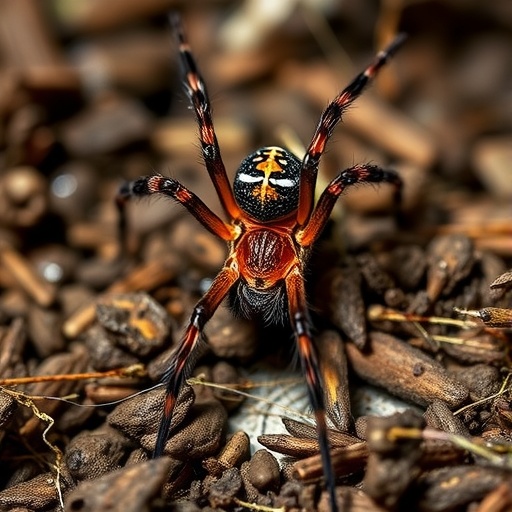
In a groundbreaking study shedding light on the nuanced world of arachnid behavior, researchers have unveiled fascinating insights into the mating tactics of the brown widow spider. This comprehensive analysis explores the complex interplay between male self-sacrifice and mating success among these enigmatic creatures, ultimately revealing that the choice of mating strategy does not significantly alter the fundamental mechanisms of copulation. The findings challenge long-standing assumptions in arachnology and are expected to ignite discussions regarding reproductive strategies across various species in the animal kingdom.
Brown widow spiders, known scientifically as Latrodectus geometricus, have long intrigued scientists and enthusiasts alike due to their unique mating behaviors. Male brown widows are often observed engaging in a self-sacrificial mating tactic, where they allow themselves to be consumed by the female post-copulation. This phenomenon, often described as “sexual cannibalism,” raises compelling questions about evolutionary advantages and reproductive success. The researchers sought to investigate whether this male self-sacrifice particularly influenced the copulatory mechanisms that underpin mating in these spiders.
Through meticulous observation and experimentation, the research team documented various mating scenarios involving males that either sacrificed themselves or escaped post-mating. By analyzing the copulatory mechanisms in both situations, they found intriguing parallels that suggested no significant variation in the fundamental mating process based on the chosen tactic. Copulation, characterized by intricate behaviors and physical adaptations, proved resilient against the dramatic differences in male strategies, indicating a stable underlying reproductive framework.
This investigation not only amplifies our understanding of brown widow spiders but also contributes to a broader discussion on the evolutionary pressures shaping reproductive behavior. In a world where anatomical and behavioral adaptations often dictate survival and reproductive success, the study offers a refreshing perspective on how diverse strategies can coexist without undermining core biological processes. The findings present an essential viewpoint for evolutionary biologists and ecologists examining the dynamics of sexual selection and mating systems.
Moreover, the researchers highlight the potential implications of these behaviors in broader ecological contexts. As environmental pressures fluctuate, the ability of a species to adapt its reproductive strategies could significantly influence its resilience. Understanding how brown widow spiders navigate the complexities of mating could provide insights into the resilience of other species facing similar pressures.
In discussing the potential applications of this research, the authors emphasize the role of observational studies in revealing complex interactions that often remain hidden in controlled laboratory environments. By witnessing these interactions in natural settings, scientists can garner a richer understanding of the evolutionary significance of sexual behaviors. The balance between male self-sacrifice and reproductive success exemplifies the intricacies of nature that continue to perplex researchers across disciplines.
As social media and scientific discourse become more intertwined, these findings hold the potential to reach an audience beyond academic circles, inspiring fascination and engagement from a broader public. The visual allure of brown widow spiders, paired with their complex mating tactics, creates an opportunity for viral science communication that captivates an audience eager to explore the hidden marvels of the natural world.
The implications of these discoveries extend beyond the immediate context of spider behavior to influencing our understanding of sexual selection in a variety of taxa. As researchers further dissect the nuances of reproductive strategies, critical shifts in how we perceive mating dynamics across the animal kingdom may emerge. Such cross-disciplinary discussions could lead to substantial advancements in fields ranging from behavioral ecology to applied conservation efforts.
As the scientific community contemplates the broader ramifications of this work, the study serves as a reminder of the interconnectedness of life forms and the ever-evolving complexities of their interactions. The research enriches ongoing debates regarding the selective pressures that shape reproductive behaviors, potentially prompting re-evaluations of theories that have dominated the field for decades. This comprehensive analysis not only encapsulates the complexity of spider reproductive tactics but also acknowledges the potential for continual discovery in the realm of evolutionary biology.
In conclusion, the research on brown widow spiders, particularly the examination of alternative mating tactics, reveals a striking balance between male self-sacrifice and copulatory mechanisms. These findings open new avenues for inquiry and discussion in the scientific community, serving as a beacon for future explorations in animal behavior. As researchers delve deeper into the complexities of mating systems, we can only anticipate the fascinating stories waiting to be uncovered in the intricate world of spiders.
With this study, the researchers have indeed provided a significant contribution to the field of animal behavior and reproductive ecology. The insights gained from alternative mating tactics in brown widow spiders not only challenge existing paradigms but also encourage a rethinking of the dynamic processes that drive evolution. The journey into the mating lives of these spiders is far from over, as the quest for understanding the biological tapestry of life continues.
Cite Scienmag News
Drew Townsend. (November 29, 2025). Brown Widow Spider Mating: Sacrifice Not Required. Scienmag. https://scienmag.com/brown-widow-spider-mating-sacrifice-not-required/
Drew Townsend. "Brown Widow Spider Mating: Sacrifice Not Required." Scienmag, 29 November 2025, https://scienmag.com/brown-widow-spider-mating-sacrifice-not-required/. Accessed 4 September 2026.
Drew Townsend. "Brown Widow Spider Mating: Sacrifice Not Required." Scienmag. November 29, 2025. https://scienmag.com/brown-widow-spider-mating-sacrifice-not-required/


