


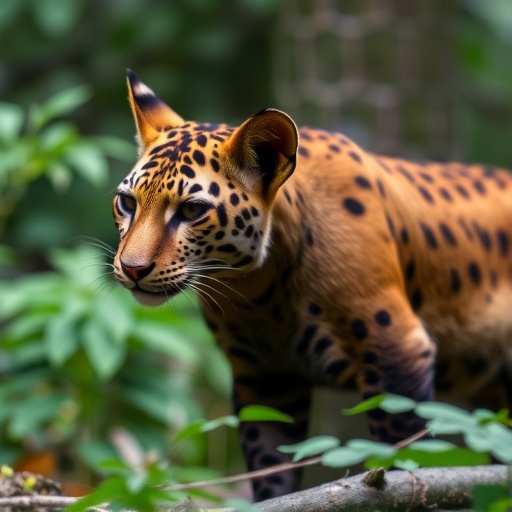
In a groundbreaking leap for wildlife research, a novel artificial intelligence system named SA-FARI (Segment Anything in Footage of Animals for Recognition and Identification) promises to revolutionize the way scientists study animal populations globally. This cutting-edge AI model can automatically detect, segment, identify, and track individual animals across video footage, merging computer vision and ecological monitoring in a way that has never been achieved before. Pioneered by an international consortium featuring key contributions from the University of Bristol’s Animal Biometrics and AI for Conservation group, SA-FARI harnesses the power of META’s Segment Anything Model 3 (SAM3), the latest in foundational vision-language models.
SA-FARI’s innovation lies in its ability to generate ‘masklets’—precise, pixel-level outlines of individual animals that persist across every frame of a video sequence. This capability allows researchers to isolate animals from complex natural backgrounds, enabling unparalleled accuracy in observational data. By doing so, it unlocks new potential in population monitoring, behavioral analysis, and species identification, significantly reducing the manual effort previously required in handling surveillance footage from camera traps deployed in wild habitats. Such detailed tracking in naturalistic settings has long been a bottleneck in wildlife science, limited by the laborious and error-prone process of manual footage review.
The backbone of the SA-FARI system, SAM3, is a vision-language model designed to leverage both textual and visual prompts. This dual modality facilitates highly nuanced object recognition that goes beyond simple detection—allowing the AI to segment animals in diverse conditions, lighting, and environments with remarkable precision. The integration of language understanding into visual analysis means that researchers can actively input descriptive cues to enhance the model’s focus, adapting seamlessly to the specific needs of different ecological studies or species.
Central to the development and validation of SA-FARI was the curation of a massive dataset, comprising over 11,000 wildlife videos encompassing nearly 100 species captured in their native habitats. Each clip underwent meticulous annotation, furnishing the AI with an extensive training corpus that spans a myriad of animal shapes, sizes, and behaviors. This rich dataset’s open availability offers an unprecedented resource for biologists and conservation practitioners, enabling broad application and further advancement of AI tools tailored to wildlife monitoring challenges worldwide.
The potential applications of SA-FARI extend far beyond individual tracking. As Professor Tilo Burghardt, an authority in computer vision and animal biometrics at the University of Bristol, notes, the system’s fine-grained segmentation capabilities underpin future expansions such as animal body pose estimation, three-dimensional depth analysis, and integration of natural language descriptions. These enhancements could enable researchers to assess intricate behavioral patterns, physiological states, and interspecies interactions with a depth and scale unfeasible with traditional observational methods.
Moreover, the ability to spatially and temporally localize animals within video sequences is transformational for ecological studies. Dr. Otto Brookes of Bristol emphasizes that identifying when and where animals appear is foundational for assessing behavioral ecology, distinguishing individual identities, and quantifying responses to conservation measures. SA-FARI’s precision in this task makes it a crucial precondition for scaling wildlife monitoring efforts in a reproducible and objective manner, ultimately informing evidence-based policy decisions on habitat protection and species management.
The international nature of the SA-FARI consortium illustrates the interdisciplinary and collaborative spirit driving this frontier of AI-enhanced conservation science. Partner institutions include the Hasso Plattner Institute, the University of Oviedo, Osa Conservation, the Senckenberg Museum of Natural History, the Max Planck Institute for Evolutionary Anthropology, and Climate Corridors. Coordinated by ConservationX Labs (CXL) and META, these collaborations bridge expertise from artificial intelligence, ecology, evolutionary biology, and environmental science to address global biodiversity challenges with powerful computational tools.
SA-FARI’s impending presentation as an award candidate at the prestigious Conference on Computer Vision and Pattern Recognition (CVPR) 2026 highlights the project’s impact on both AI research and wildlife conservation fields. The CVPR conference is renowned for showcasing breakthroughs in visual AI technologies, and SA-FARI’s recognition underscores its potential to become a benchmark in wildlife monitoring technology. For the University of Bristol team, this marks a record second consecutive year receiving such noteworthy international accolades, reflecting their sustained leadership in this niche.
Practical implications of SA-FARI’s deployment are wide-ranging. With camera traps generating millions of hours of footage annually, the manual processing burden on researchers is immense. By automating animal detection and identification, SA-FARI reduces this workload drastically, accelerating scientific inquiry and conservation action. This efficiency not only conserves human resources but also enhances data quality, consistency, and the accessibility of wildlife information to stakeholders, including policymakers, land managers, and citizen scientists.
Looking to the future, the modular design and adaptability of SA-FARI’s architecture could enable seamless integration with other ecological data streams, such as acoustic monitoring, satellite imagery, and environmental sensors. Such multimodal fusion could create holistic wildlife monitoring platforms capable of delivering real-time insights into ecosystem dynamics amid accelerating climate change and habitat degradation. Through continuous refinement and community engagement, SA-FARI exemplifies the transformative potential of AI when harnessed responsibly for planetary stewardship.
The open sharing of SA-FARI’s dataset and code supports a democratization of conservation technologies, enabling emerging research groups and NGOs to leverage state-of-the-art tools without prohibitive barriers. This commitment to open science fosters innovation, reproducibility, and collaborative problem-solving at an international scale—a critical factor as global biodiversity faces unprecedented threats. By providing these resources, SA-FARI helps catalyze a new era of informed, data-driven efforts to protect wildlife and ensure their long-term survival.
In summary, SA-FARI represents a critical convergence of artificial intelligence and wildlife ecology, delivering a scalable, precise, and flexible system for tracking and understanding animals in their natural environments. Led by a multidisciplinary team from the University of Bristol and global partners, it deploys sophisticated vision-language models trained on an expansive and diverse dataset to set new standards in automated animal recognition and behavioral analysis. Its forthcoming unveiling to the scientific community at CVPR 2026 is much anticipated, symbolizing a significant milestone in leveraging AI for conservation impact.
News Publication Date: 6-Jun-2026
Web References:
References:
Wasmuht, D. F., et al. “The SA-FARI Dataset: Segment Anything in Footage of Animals for Recognition and Identification.” CVPR 2026.
Keywords
Artificial Intelligence, Wildlife Monitoring, Animal Biometrics, Computer Vision, Segment Anything Model, SA-FARI, Conservation Technology, Ecological Data, Behavioral Analysis, Camera Trap Data, Vision-Language Model, AI for Conservation
Cite Scienmag News
Margaret Porter. (June 5, 2026). Bristol Researchers Harness Visual AI to Advance Wildlife Conservation. Scienmag. https://scienmag.com/bristol-researchers-harness-visual-ai-to-advance-wildlife-conservation/
Margaret Porter. "Bristol Researchers Harness Visual AI to Advance Wildlife Conservation." Scienmag, 5 June 2026, https://scienmag.com/bristol-researchers-harness-visual-ai-to-advance-wildlife-conservation/. Accessed 3 September 2026.
Margaret Porter. "Bristol Researchers Harness Visual AI to Advance Wildlife Conservation." Scienmag. June 5, 2026. https://scienmag.com/bristol-researchers-harness-visual-ai-to-advance-wildlife-conservation/


