

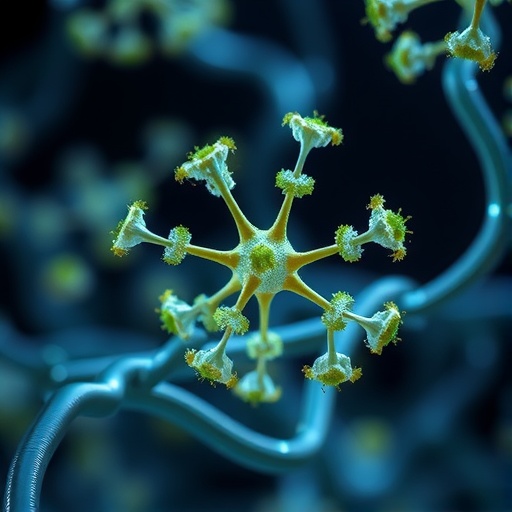
In a major scientific breakthrough, researchers at the Max Planck Institute for Chemical Ecology in Jena, Germany, have unraveled the complex biosynthetic pathway responsible for producing cinchona alkaloids, the class of compounds that includes quinine. Quinine has played a pivotal role in medicine for over three and a half centuries as one of the only effective treatments for malaria, a devastating disease caused by Plasmodium parasites and transmitted by Anopheles mosquitoes. This landmark study not only deepens our understanding of the molecular machinery behind cinchona alkaloid biosynthesis but also opens the door to sustainable, biotechnological production of these valuable drugs, potentially transforming how we manufacture critical antimalarials.
The quinine story begins in South America, where the indigenous Quechua people named the cinchona bark quina-quina, meaning “bark of barks.” Jesuit missionaries probably introduced powdered cinchona bark to Europe in the 17th century as a fever remedy. It was not until the early 1800s that quinine was chemically isolated as the active antimalarial compound within cinchona bark, marking a milestone in natural product chemistry. Today, quinine remains clinically relevant, particularly in tropical regions like Central Africa, where malaria exacts a heavy toll on human health.
Despite quinine’s long-standing importance, the intricate enzymatic steps by which cinchona trees synthesize these alkaloids remained elusive for more than a century. The molecular architecture of quinine is uniquely complex, making it difficult to predict the intermediary metabolites and the enzymes involved. Furthermore, the scarcity of genomic and proteomic data for cinchona trees, combined with challenges in growing these plants under controlled conditions, significantly impeded scientific progress. The team in Jena set out on a scientific quest to decode this biosynthetic enigma, employing advanced molecular biology and metabolomics approaches.
The first clues emerged from pioneering work that identified corynantheal as an intermediate in the pathway. However, how this compound is subsequently converted into quinine and related alkaloids remained unknown. To tackle this, the researchers leveraged a multi-disciplinary strategy: administering isotopically labeled precursor molecules into different tissues of the red cinchona tree (Cinchona pubescens), then tracing these labels through consecutive metabolic products. This technique illuminated three previously unknown intermediate compounds, forming the backbone of a comprehensive biosynthetic map.
Decoding the enzymatic machinery required mining complex gene expression datasets across root, stem, and leaf tissues. By comparing gene activity profiles and protein sequences with related species, the team identified two enzymes responsible for synthesizing malonyl-corynantheol, a novel intermediate molecule. Crucially, transient gene silencing experiments validated the role of malonyl-corynantheol as a direct predecessor to quinine, confirming its position in the metabolic chain and the enzymes’ essential functions.
A key breakthrough came in identifying the enzyme that catalyzes the unusual cyclization of malonyl-corynantheol to form cinchonium, a newly characterized intermediate. Unexpectedly, this enzyme was found to be a transferase, a class not typically associated with catalyzing such complex ring-forming reactions. This discovery challenges traditional views on enzymatic reactivity and underscores nature’s ingenuity in evolving novel catalytic functions adapted to synthesize specialized metabolites.
Further downstream in the pathway, the research uncovered two more crucial enzymes shaping the characteristic quinoline-quinuclidine scaffold of quinine. These were an oxoglutarate-dependent dioxygenase and a cytochrome P450 monooxygenase. The cooperative action of these enzymes transforms an indole precursor ring structure into the expanded quinoline system central to the bioactivity of quinine and its analogs. Such oxidative rearrangements add to the remarkable chemical complexity that these biosynthetic routes achieve under mild physiological conditions.
Harnessing these newly identified enzymes, the scientists successfully reconstituted the biosynthetic steps in engineered model organisms, producing quinine and related compounds in controlled laboratory settings. This demonstration of heterologous biosynthesis offers a sustainable alternative to relying solely on plant extraction from scarce tropical plantations. Moreover, the pathway’s modularity allows exploration of synthesizing novel cinchona alkaloid derivatives that do not naturally occur, with potential for enhanced medicinal properties or novel pharmacological uses.
This work from the Jena team exemplifies the power of integrating metabolomics, genomics, and enzymology to unlock nature’s chemical repertoire. Their findings do not merely decode how the cinchona tree crafts one of the world’s most celebrated medicines; they lay a foundation for synthetic biology platforms that can democratize and stabilize quinine supply. Such advances are critical given the continuing burden of malaria globally and the persistent threat of drug resistance.
“The enzymes we discovered demonstrate nature’s unparalleled sophistication as a chemist,” said Sarah O’Connor, head of the Department of Natural Product Biosynthesis at the Max Planck Institute. “Our results will enable biotechnological production of quinine and structurally related alkaloids, reducing dependence on tropical cultivation and facilitating the creation of new therapeutic candidates.”
Historically, quinine’s isolation from cinchona bark was a seminal moment in medicinal chemistry, marking the dawn of pure chemotherapeutic agents derived from natural products. Today’s revelations at the molecular and enzymatic levels represent a new dawn — one where human ingenuity synergizes with natural biosynthesis to create scalable, green pharmaceutical manufacturing pathways. This breakthrough is poised to revolutionize antimalarial drug production and inspire similar efforts for other complex plant-derived medicines.
By deciphering the biochemical vocabulary encoded in cinchona’s genome and protein machinery, the research underscores how centuries-old natural remedies hold untapped molecular secrets. The convergence of classical botany, modern omics, and synthetic biology heralds an exciting era in drug discovery and development, with nature’s blueprints guiding sustainable innovation.
In sum, the unraveling of the cinchona alkaloid pathway is not just a story of chemical curiosity but a vital step toward securing global health. As malaria continues to menace millions, transforming how we source and produce quinine could have far-reaching impacts on accessibility, affordability, and therapeutic efficacy, ensuring that this iconic medicine remains a cornerstone in the fight against one of humanity’s oldest scourges.
Subject of Research: Not applicable
Article Title: Biosynthesis of Cinchona Alkaloids
News Publication Date: 18-Mar-2026
Web References: 10.1038/s41586-026-10227-x
Image Credits: Angela Overmeyer, Max Planck Institute for Chemical Ecology
Keywords: Quinine, Cinchona alkaloids, Malaria treatment, Biosynthesis pathway, Enzymatic cyclization, Synthetic biology, Natural product chemistry, Medicinal plants, Metabolomics, Cytochrome P450, Oxoglutarate-dependent dioxygenase, Transferase enzyme


