


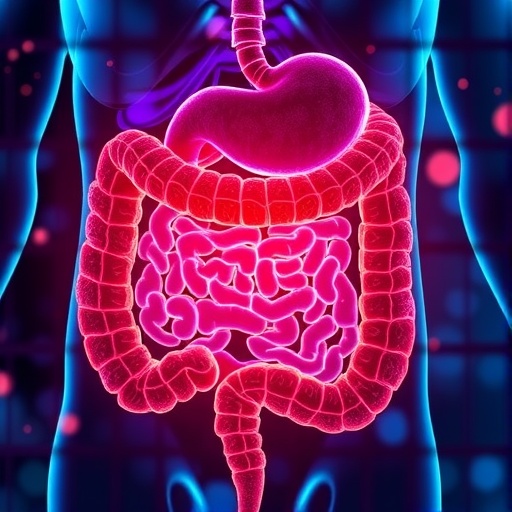
Researchers at the University of California San Diego School of Medicine have made significant strides in our understanding of the immune system’s response to gut inflammation, particularly in the context of Crohn’s disease, a chronic inflammatory bowel condition. This intricate disease is characterized by a complex interplay of immune cells, including a specialized group known as macrophages, which are critical for managing the balance between inflammation and healing in the gut. The recent study merges artificial intelligence with advanced molecular biology techniques to unravel the mysteries of macrophage behavior, shedding light on how these white blood cells can either exacerbate or alleviate gastrointestinal distress.
The human gut is home to different types of macrophages, each performing distinct functions that are essential for maintaining gut health. Inflammatory macrophages are involved in combating microbial infections, while their non-inflammatory counterparts facilitate tissue repair. In Crohn’s disease, an imbalance arises between these two types of macrophages, leading to chronic inflammation within the intestinal wall. This inflammation not only results in pain but can also cause significant damage to the digestive tract over time. Understanding the factors that govern this balance is crucial for finding novel therapeutic interventions for Crohn’s patients.
One of the pivotal components of this research is the gene known as NOD2, first identified in 2001 as the first gene linked to an elevated risk for Crohn’s disease. Despite its early discovery, the exact role of NOD2 in macrophage regulation remained a long-standing question. Researchers employed a sophisticated machine learning algorithm to examine gene expression patterns in macrophages derived from both affected and unaffected colon tissues. Their investigation revealed a specific gene signature consisting of 53 genes that can accurately distinguish between inflammatory and repairing macrophages.
Among the various genes identified, one stood out — the gene that encodes a protein called girdin. Detailed analysis indicated that in non-inflammatory macrophages, a unique region of the NOD2 protein directly binds to girdin. This interaction is responsible for suppressing excessive inflammation, eliminating harmful pathogens, and facilitating the repair of tissues damaged by inflammatory bowel disease. Alarmingly, common mutations in the NOD2 gene associated with Crohn’s disease result in the loss of this binding site for girdin. Consequently, this loss can precipitate a dangerous imbalance that favors inflammatory macrophages and exacerbates disease severity.
Dr. Pradipta Ghosh, the senior author of the study, emphasizes the importance of this discovery, stating, “NOD2 functions as the body’s infection surveillance system. When bound to girdin, it detects invading pathogens and maintains gut immune balance by swiftly neutralizing them. Without this partnership, the NOD2 surveillance system collapses.” This statement highlights the critical role of the NOD2-girdin interaction in maintaining homeostasis within the gut, showcasing how its disruption can lead to significant health consequences.
To further validate their findings, the researchers utilized mouse models to compare the outcomes of Crohn’s disease in mice lacking girdin to those with functional girdin protein. Their findings were compelling: mice deprived of girdin experienced severe disruptions in their gut microbiome and developed small intestine inflammation leading to a high incidence of mortality from sepsis. This exacerbated state is indicative of the immune system’s overreaction to infections, illustrating how critical the balance maintained by macrophages is to overall health.
The study indicates that the status of macrophages is central to our understanding of Crohn’s disease and exemplifies the innovative integration of artificial intelligence into biological research. AI provided the capability to classify and understand complex gene expression data, enabling researchers to track how macrophages operate under disease conditions. The findings from the research resolve a historical controversy regarding the interplay of genetic mutations and immune response in Crohn’s disease, laying the groundwork for potential new therapeutic approaches.
By bringing together AI classification techniques, mechanistic insights into biochemistry, and detailed animal studies, this research not only clarifies the pathway by which a significant genetic mutation contributes to Crohn’s disease but could also inspire efforts to develop treatments that restore the lost interaction between girdin and NOD2. Such treatments may aim to re-establish the delicate balance of macrophage populations in the gut, potentially offering relief to many patients affected by this debilitating condition.
This innovative research signifies a major leap forward in our understanding of the immune mechanisms at play in inflammatory bowel diseases. The pathways illuminated by these findings could pave the way for precision medicine approaches that target specific molecular interactions, offering hope for those suffering with Crohn’s disease and related disorders. Through continuous advancements in technology and biology, researchers are unlocking the intricate secrets of the human body, underpinning a future where targeted therapies can mitigate chronic conditions effectively.
Ultimately, these findings highlight the importance of an integrative approach to biomedical research, demonstrating that collaborative efforts across disciplines—artificial intelligence, molecular biology, and clinical research—can lead to breakthroughs in understanding complex diseases. The future of treating conditions like Crohn’s disease may very well hinge on continued exploration of the immune system’s complexities, backed by cutting-edge research and a commitment to unraveling the mysteries of our biology.
This remarkable study not only contributes to our existing repository of knowledge regarding Crohn’s disease but also sets the stage for future research directed toward restoring gut health and enhancing patient outcomes through innovative solutions grounded in solid scientific discovery.
Keywords
Crohn’s Disease, NOD2, Macrophages, Inflammatory Bowel Disease, Artificial Intelligence, Girdin, Genetic Mutation, Immune Balance.
Cite Scienmag News
Morgan Morrow. (October 27, 2025). Breakthrough Discovery: AI Unraveling a 25-Year Mystery in Crohn’s Disease by Rebalancing Gut Microbiota. Scienmag. https://scienmag.com/breakthrough-discovery-ai-unraveling-a-25-year-mystery-in-crohns-disease-by-rebalancing-gut-microbiota/
Morgan Morrow. "Breakthrough Discovery: AI Unraveling a 25-Year Mystery in Crohn’s Disease by Rebalancing Gut Microbiota." Scienmag, 27 October 2025, https://scienmag.com/breakthrough-discovery-ai-unraveling-a-25-year-mystery-in-crohns-disease-by-rebalancing-gut-microbiota/. Accessed 4 September 2026.
Morgan Morrow. "Breakthrough Discovery: AI Unraveling a 25-Year Mystery in Crohn’s Disease by Rebalancing Gut Microbiota." Scienmag. October 27, 2025. https://scienmag.com/breakthrough-discovery-ai-unraveling-a-25-year-mystery-in-crohns-disease-by-rebalancing-gut-microbiota/


