

Friday, October 23, 2026
Science
No Result
View All Result
  • Login
  • HOME
  • SCIENCE NEWS
  • CONTACT US
  • HOME
  • SCIENCE NEWS
  • CONTACT US
No Result
View All Result
Scienmag
No Result
View All Result
Home Science News Psychology & Psychiatry

Brains and AI Networks Tilt Toward the Same Representational Axes

October 23, 2026
in Psychology & Psychiatry
Cassandra Pierce
By Cassandra Pierce Scienmag Editorial Profile - Systems Neuroscience
Reading Time: 3 mins read
0
Brains and AI Networks Tilt Toward the Same Representational Axes

Brains and AI Networks Tilt Toward the Same Representational Axes

65
SHARES
587
VIEWS
Share on FacebookShare on Twitter
ADVERTISEMENT

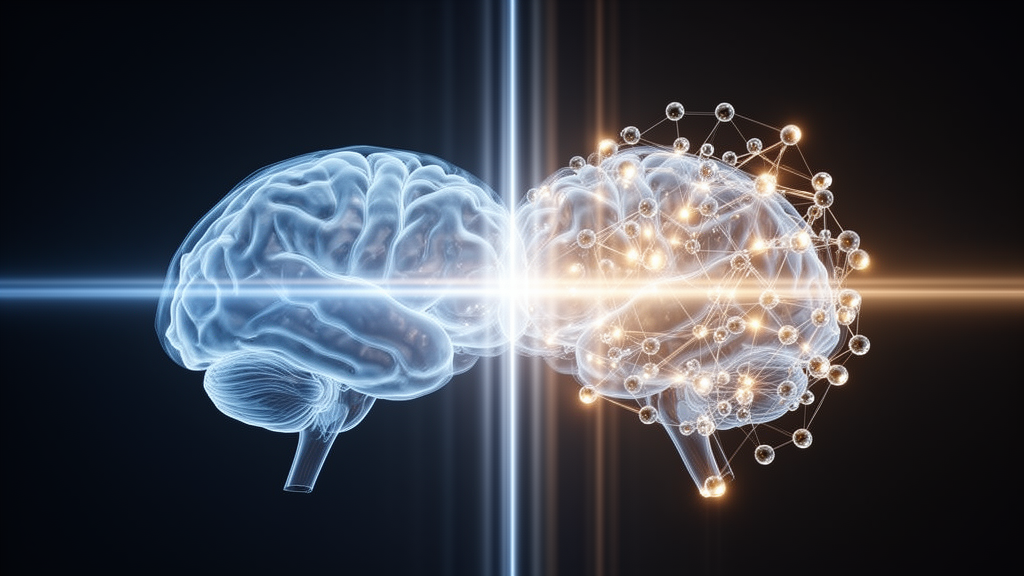
Neurons in the brain and units in artificial neural networks may not treat all directions of representation equally. A study published in Nature Human Behaviour by Meenakshi Khosla, Sudhanshu Srivastava, Alex H. Williams, Josh McDermott, Nancy Kanwisher and colleagues reports that both biological and artificial networks consistently privilege certain representational axes—the native tunings of individual neurons—when coding sensory information, and that these privileged axes tend to align across brains and machines.

Much recent neuroscience has focused on the geometry of population codes, asking what information a group of neurons carries using measures that ignore exactly which neurons encode which features. The new work asks whether this indifference is justified. The team developed methods to test whether neural tuning is aligned across different brains and across deep convolutional neural networks trained on natural inputs. If tuning directions were arbitrary, alignment between different systems should be no better than chance; if some axes are systematically privileged, alignment should appear repeatedly.

That is what the researchers found. Across both vision and audition, brains and deep convolutional networks favoured particular axes for representing the natural world. Moreover, the representational axes of networks trained on natural inputs were aligned with those observed in perceptual cortices.

The alignment also has practical consequences for computational neuroscience. Axis-sensitive model-to-brain similarity metrics, the authors report, better differentiated competing models of biological sensory systems than measures blind to tuning axes. This means that how a model represents information—not just how much information it captures—can determine whether it is judged similar to a given brain region, sharpening a widely used tool for evaluating mechanistic models of the sensory cortex.

The study goes on to argue that privileging certain axes is computationally useful rather than incidental. According to the paper, coding schemes that favour particular axes can facilitate task performance, reduce wiring costs for downstream circuits, and improve generalization to new inputs.

The reported findings span multiple levels of sensory representation. The authors present evidence that privileged axes extend beyond category selectivity and reach higher-order cortical representations, indicating that the phenomenon is not confined to low-level sensory features. Figures in the paper document sensory cortex alignment, model-to-model and model-to-brain alignment, and the computational implications of axis privileging, alongside analyses of what the preferred axes actually are in brains and networks.

The work is published as subscription content in Nature Human Behaviour, and the detailed quantitative results sit behind the paywall. Nonetheless, the abstract-level claims outline a reframing of how neural tuning should be studied: not merely as a flexible population code whose geometry carries the message, but as a structured scheme in which the identities of the tuning axes themselves carry information about the constraints shaping a system.

Because the reported results are summarized at the abstract level and the full quantitative analyses are not freely available, independent verification of the effect sizes and their scope will depend on access to the complete paper and on replication by other laboratories. The findings as presented, however, establish that the specific axes along which neurons tune are not interchangeable, and that this structure is shared, at least in part, between perceptual cortices and deep networks trained on natural inputs.

Subject of Research: Alignment of privileged neural representational axes between brains and artificial neural networks

Article Title: Privileged representational axes in biological and artificial neural networks

Article References: Khosla, M., Srivastava, S., Williams, A. H., McDermott, J., & Kanwisher, N. (2026). Privileged representational axes in biological and artificial neural networks. Nature Human Behaviour. https://doi.org/10.1038/s41562-026-02515-3

Image Credits: AI Generated

DOI: 10.1038/s41562-026-02515-3

Keywords: neural coding, representational axes, deep neural networks, sensory cortex, vision, audition, population codes, model-brain similarity, neural tuning, Nature Human Behaviour, Privileged, representational

Cite Scienmag News

Cassandra Pierce. (October 23, 2026). Brains and AI Networks Tilt Toward the Same Representational Axes. Scienmag. https://scienmag.com/brains-and-ai-networks-tilt-toward-the-same-representational-axes/

Cassandra Pierce. "Brains and AI Networks Tilt Toward the Same Representational Axes." Scienmag, 23 October 2026, https://scienmag.com/brains-and-ai-networks-tilt-toward-the-same-representational-axes/. Accessed 23 October 2026.

Cassandra Pierce. "Brains and AI Networks Tilt Toward the Same Representational Axes." Scienmag. October 23, 2026. https://scienmag.com/brains-and-ai-networks-tilt-toward-the-same-representational-axes/


Tags: alignment of neural tuning in brains and AI systemsauditionbrain and AI model comparison in perceptioncross-species neural representational similaritydeep convolutional networks in natural input processingdeep neural networksimplications for understanding sensory processing and artificial intelligencemodel-brain similarityNature Human Behaviourneural and AI network representational axesneural codingneural coding axes in vision and auditionNeural representation alignment between biological brains and artificial neural networksneural tuningneural tuning and sensory information encodingpopulation code geometry in neurosciencepopulation codesPrivilegedprivileged axes in sensory codingrepresentationalrepresentational axessensory cortexsensory modality-specific neural codingvision
Share26Tweet16
Previous Post

Emotional Intelligence May Build Career Success Through Adaptability and Proactive Behavior

Next Post

RNA Tag m6A Emerges as a Master Switch in Gene Control, Stress and Disease

Related Posts

Emotional Intelligence May Build Career Success Through Adaptability and Proactive Behavior
Psychology & Psychiatry

Emotional Intelligence May Build Career Success Through Adaptability and Proactive Behavior

October 23, 2026
Uncertainty, Not Just Thrills: How Sensation Seekers Weigh Risk Differently
Psychology & Psychiatry

Uncertainty, Not Just Thrills: How Sensation Seekers Weigh Risk Differently

October 23, 2026
Flanker study finds distance-dependent attention differences in deaf and hard of hearing children
Psychology & Psychiatry

Flanker study finds distance-dependent attention differences in deaf and hard of hearing children

October 22, 2026
Pandemic Study Links Personality, Support and Interpersonal Estrangement
Psychology & Psychiatry

Pandemic Study Links Personality, Support and Interpersonal Estrangement

October 22, 2026
Qualitative study maps pandemic grief coping among 17 rural South African youths
Psychology & Psychiatry

Qualitative study maps pandemic grief coping among 17 rural South African youths

October 22, 2026
Reflexive model maps how researchers shape psychobiographical knowledge
Psychology & Psychiatry

Reflexive model maps how researchers shape psychobiographical knowledge

October 22, 2026
Next Post
RNA Tag m6A Emerges as a Master Switch in Gene Control, Stress and Disease

RNA Tag m6A Emerges as a Master Switch in Gene Control, Stress and Disease

  • Mothers who receive childcare support from maternal grandparents show more optimized

    Mothers who receive childcare support from maternal grandparents show more parental warmth, finds NTU Singapore study

    27656 shares
    Share 11059 Tweet 6912
  • University of Seville Breaks 120-Year-Old Mystery, Revises a Key Einstein Concept

    1061 shares
    Share 424 Tweet 265
  • Bee body mass, pathogens and local climate influence heat tolerance

    682 shares
    Share 273 Tweet 171
  • Researchers record first-ever images and data of a shark experiencing a boat strike

    546 shares
    Share 218 Tweet 137
  • Groundbreaking Clinical Trial Reveals Lubiprostone Enhances Kidney Function

    531 shares
    Share 212 Tweet 133
Science

Embark on a thrilling journey of discovery with Scienmag.com—your ultimate source for cutting-edge breakthroughs. Immerse yourself in a world where curiosity knows no limits and tomorrow’s possibilities become today’s reality!

RECENT NEWS

  • Chronological Age Fails to Predict Survival After Gastric Cancer Surgery in Patients 75 and Older
  • Ticks Dominate Cattle Ectoparasite Diagnoses in Nine-Year Ethiopian Clinic Record Review
  • RNA Tag m6A Emerges as a Master Switch in Gene Control, Stress and Disease
  • Brains and AI Networks Tilt Toward the Same Representational Axes

Categories

  • Agriculture
  • Anthropology
  • Archaeology
  • Athmospheric
  • Biology
  • Biotechnology
  • Blog
  • Bussines
  • Cancer
  • Chemistry
  • Climate
  • Earth Science
  • Editorial Policy
  • Marine
  • Mathematics
  • Medicine
  • Pediatry
  • Policy
  • Psychology & Psychiatry
  • Science Education
  • Science News
  • Social Science
  • Space
  • Technology and Engineering

Subscribe to Blog via Email

Enter your email address to subscribe to this blog and receive notifications of new posts by email.

Join 5,151 other subscribers

© 2025 Scienmag - Science Magazine

Welcome Back!

Login to your account below

Forgotten Password?

Retrieve your password

Please enter your username or email address to reset your password.

Log In
No Result
View All Result
  • HOME
  • SCIENCE NEWS
  • CONTACT US

© 2025 Scienmag - Science Magazine

Discover more from Science

Subscribe now to keep reading and get access to the full archive.

Continue reading