

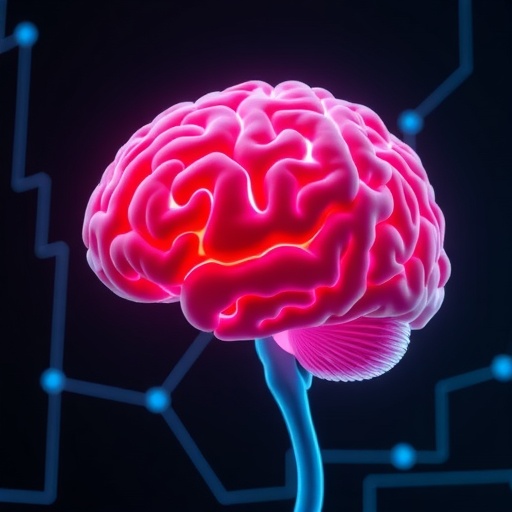
In the perennial conflict between knowing what is right and acting accordingly, human behavior often betrays a curious inconsistency. Why do some individuals fail to embody the moral principles they readily champion? Cutting-edge neurological research has illuminated this enigma by pinpointing a crucial brain region—the ventromedial prefrontal cortex (vmPFC)—as a key player in the divide between moral judgment and actual behavior. Published in the distinguished journal Cell Reports, this groundbreaking study utilized functional magnetic resonance imaging (fMRI) alongside non-invasive brain stimulation techniques to unravel the neural mechanisms underpinning moral inconsistency.
The ventromedial prefrontal cortex resides at the forefront of our reasoning and emotional processing faculties. Located deep within the frontal lobe, the vmPFC is central to integrating affective signals with decision-making, particularly when these decisions involve ethical considerations. The research team, led by Xiaochu Zhang from the University of Science and Technology of China and Guizhou Education University, embarked on a mission to decode how discrepancies arise between individuals’ moral evaluations of others and their own conduct.
During the experiments, participants engaged in tasks that compelled them to balance the competing drives of honesty and personal profit. Subtly designed, this paradigm allowed subjects the option to cheat for monetary gain, thereby creating a scenario where moral conflicts could be scrutinized. Participants also had to reflect on their behavior, rating it on a moral scale from “extremely immoral” to “extremely moral,” further capturing their self-judgment. Notably, the study also assessed how these individuals judged the morality of others performing identical tasks.
Strikingly, those classified as morally consistent demonstrated a symmetrical activation of the vmPFC when judging their own actions and those of others. This neural pattern suggests a seamless integration of moral knowledge with behavior, reinforcing the notion that their internal moral compass guides behavior reliably. Conversely, participants exhibiting moral inconsistency—who harshly judged others’ dishonest actions but leniently rated their own—showed diminished vmPFC activity during their own decision-making tasks. This reduced activation extended to weakened communication between the vmPFC and other brain regions responsible for deliberation and ethical reasoning.
To probe causality, the researchers deployed a novel non-invasive technique named transcranial temporal interference stimulation (tTIS) to modulate vmPFC activity. This sophisticated neuromodulation method allows targeted electrical stimulation deep within the brain without surgery or discomfort. Participants subjected to vmPFC stimulation prior to the task exhibited heightened moral inconsistency, thus demonstrating that vmPFC functionality is not only correlated with but instrumental in maintaining moral congruence between judgment and behavior.
These insights underscore a neurobiological framework where moral consistency emerges from the brain’s capacity to map ethical knowledge onto real-life decisions. The findings challenge the simplistic notion that knowledge alone governs moral behavior. Instead, moral inconsistency appears to be rooted in a biological failure—specifically, insufficient vmPFC engagement that hampers the effective translation of moral principles into actions.
The vmPFC’s underactivity and reduced connectivity with decision-related networks suggest a disjoint in the brain’s system for ethical integration. Such dysregulation may predispose individuals to rationalize selfish behavior despite recognizing its immorality. Importantly, these individuals are not ignorant of moral norms; rather, their neural architecture limits their ability to faithfully adhere to these norms in everyday choices.
Looking ahead, the research team intends to explore the neural correlates of the “victim perspective”—the subjective experience of unfair treatment—to capture how emotional and cognitive circuits respond to being wronged. This extension promises to deepen our understanding of how empathy and fairness considerations are encoded neurally and how they might influence moral decision-making discrepancies.
From an applied perspective, the notion that moral consistency is a skill shaped by deliberate neural processes offers fertile ground for intervention. By harnessing techniques to bolster vmPFC activity or its functional connectivity, we might cultivate more consistent moral behavior through training or neuromodulation. The ramifications ripple beyond individual psychology, bearing potential impacts for educational programs aimed at character development and for the design of ethical artificial intelligence systems.
In sum, this research propels our comprehension of human morality from abstract philosophical discourse to tangible neural mechanisms. The vmPFC emerges as an epicenter of moral integration, a biological substrate where the abstract meets the practical. Understanding and eventually manipulating this brain region could pave new roads toward fostering integrity and narrowing the gap between what we preach and what we practice.
As society grapples with ethical challenges amplified by technological advancements and complex social dynamics, illuminating the neural substrates of moral inconsistency invites both scientific fascination and profound ethical reflection. The delicate balance of honesty and self-interest is encoded in the brain’s wiring, and unlocking its mysteries holds promise for cultivating a more morally attuned humanity.
Subject of Research: People
Article Title: Moral inconsistency is based on the vmPFC’s insufficient representation across tasks and connectedness
News Publication Date: 19-Mar-2026
Web References:
Cell Reports Journal
DOI Link
Keywords: Moral judgment, Social values, Prefrontal cortex


