


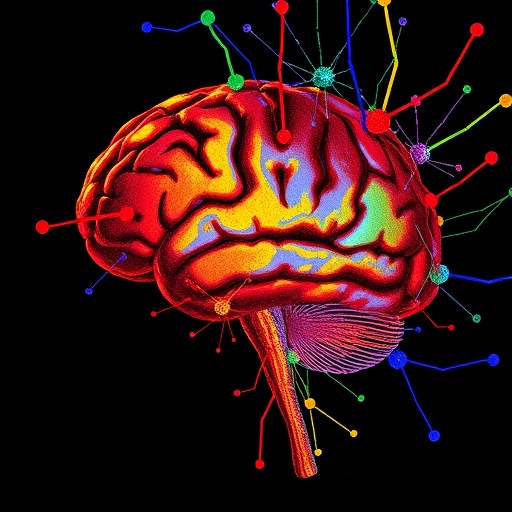
A groundbreaking new study published in Nature Communications reveals critical insights into the neurodevelopmental mechanisms underlying impulsivity and substance use trajectories in youth, highlighting a complex interplay between basal ganglia tissue iron concentration, cognitive function, and behavior. This research marks a significant advancement in our understanding of how brain chemistry during development can influence the propensity for substance use, providing a sophisticated neurobiological framework that could inform early interventions and preventative strategies.
The basal ganglia, a group of subcortical nuclei deeply integrated into motor control, decision-making, and reward processing, have long been implicated in addiction research. This study focuses on tissue iron within the basal ganglia, a vital element necessary for multiple neural processes, including myelination and neurotransmitter synthesis, and its developmental variations. By utilizing advanced magnetic resonance imaging techniques sensitive to iron content, the research team quantified iron distribution in basal ganglia subregions across a broad youth cohort, uncovering patterns distinctly correlated with neurocognitive performance and behavioral impulsivity.
Notably, iron accumulation in the basal ganglia follows a sensitive developmental trajectory, and deviations from normative levels were observed to correlate with impaired executive function and increased impulsivity. These cognitive domains are critical in self-regulation and decision-making processes, often compromised in individuals initiating and escalating substance use during adolescence. The investigation robustly links the spatial and temporal dynamics of basal ganglia iron to these neuropsychological outcomes, shedding light on a potentially modifiable neurobiological substrate predisposing youth to risky behaviors.
The study cohort encompassed a diverse sample of adolescents and young adults, longitudinally tracked to characterize trajectories of substance use initiation, frequency, and intensity. Intriguingly, the researchers demonstrated that lower tissue iron accumulation in specific basal ganglia regions was predictive of earlier onset and more severe trajectories of substance use behaviors. This finding aligns with the hypothesis that disrupted iron homeostasis may impair neural circuit function governing inhibitory control and reward sensitivity, critical factors driving addiction vulnerability.
Neurocognitive assessments conducted in parallel with neuroimaging unveiled distinct patterns correlating decreased basal ganglia iron with deficits in working memory, cognitive flexibility, and processing speed—hallmarks of executive dysfunction. This cognitive profile underpins difficulty in resisting impulses and making goal-directed decisions, heightening susceptibility to substance experimentation and habitual use. The investigation delineates a compelling link between neurochemical brain development and functional cognitive outcomes, mediated through iron-dependent neural maturation processes.
Impulsivity emerged as a central behavioral phenotype bridging basal ganglia iron concentration and substance use progression. Utilizing validated psychometric instruments, the research delineated heightened impulsivity scores in individuals with abnormally low basal ganglia iron levels. This heightened impulsive behavior is theorized to reflect underlying neurobiological dysregulation within dopaminergic pathways, which are critically modulated by iron-rich basal ganglia structures. Such insights offer mechanistic clarity for why certain youths are more prone to risk-taking and experimentation.
The ramifications of these findings extend far beyond academic understanding, illuminating potential therapeutic avenues. Modulating brain iron levels through nutritional or pharmacological means during critical developmental windows might offer novel preventative strategies. Furthermore, early identification of individuals with atypical basal ganglia iron profiles via non-invasive imaging could provide biomarkers for targeted intervention programs tailored to mitigate risky behavior and subsequent addiction.
This research elegantly integrates multi-modal data, combining longitudinal behavioral metrics with sophisticated neuroimaging biomarkers to trace the developmental course of substance use vulnerability. The methodological rigor underscores the importance of considering biological maturation alongside environmental and psychosocial factors in addiction etiology. By contextualizing brain iron dynamics in the neurodevelopmental landscape, the study pioneers a nuanced model capable of explaining heterogeneity in substance use onset and escalation.
Moreover, the developmental window addressed in this work coincides with critical periods of synaptic pruning and myelination, processes exquisitely sensitive to iron availability. Disruption in these intricate developmental processes could foster neural network inefficiencies predisposing to impulsive tendencies and poor cognitive control. The basal ganglia’s pivotal role in habit formation further accentuates the importance of iron regulation, suggesting that neurodevelopmental perturbations here might underpin maladaptive behavioral loops culminating in addiction.
The authors also discuss potential genetic and environmental moderators influencing basal ganglia iron accumulation. While not the primary focus, they highlight the necessity of future research into how nutrition, socio-economic status, and genetic polymorphisms related to iron metabolism interplay with neural iron deposition. Such multidimensional approaches are crucial to fully explicate the complexity of developmental trajectories leading to substance misuse and to identify modifiable risk factors amenable to public health interventions.
In addition, the translational potential of these findings is profound. Understanding iron-dependent neurodevelopmental mechanisms may inform the creation of precision medicine frameworks in psychiatry, where interventions are personalized based on neurobiological profiles. Given the high societal burden of youth substance abuse, integrating imaging biomarkers such as basal ganglia iron content into early screening programs could revolutionize prevention paradigms.
This study not only advances the science of addiction neuroscience but also bridges critical gaps linking cellular-level brain chemistry to emergent behavioral phenotypes. It compels a re-examination of substance use etiologies through a developmental neurobiological lens, sparking excitement about future research pathways. As investigators continue to unravel the complex biology of iron in brain maturation, novel insights will undoubtedly emerge into the prevention and treatment of risky behaviors and addiction.
Ultimately, these findings underscore the basal ganglia’s central position in orchestrating neurocognitive function and behavioral regulation during adolescence—a time marked by remarkable neural plasticity but also vulnerability. By pinpointing iron as a key modulator in this system, the research opens up promising vistas for early diagnostic tools and innovative therapeutic strategies targeting the neurochemical substrates of impulsivity and addiction susceptibility. This research heralds a new era in developmental neuroscience, emphasizing the biochemical foundations of behavior and their profound implications for public health.
The multidisciplinary approach embodied in this study—combining neuroimaging, cognitive science, and behavioral assessments—sets a benchmark for future investigations aiming to decode the biological pathways linking brain development and complex behaviors. As the field progresses, integrating such biomarker data with genetic and environmental contexts will be vital in creating holistic models of youth substance use and its prevention.
In conclusion, this pioneering work not only elucidates the fundamental neurobiological factors influencing youth impulsivity and substance use but also provides a robust framework for future research and clinical innovation. The intricate relationship between basal ganglia iron concentration, cognitive functioning, and impulsive behavior represents a paradigm shift, offering hope for reducing the individual and societal burdens imposed by early substance use through targeted neurodevelopmental interventions.
Cite Scienmag News
Cassandra Pierce. (June 11, 2026). Brain Iron, Impulsivity Link Youth Substance Use Trajectories. Scienmag. https://scienmag.com/brain-iron-impulsivity-link-youth-substance-use-trajectories/
Cassandra Pierce. "Brain Iron, Impulsivity Link Youth Substance Use Trajectories." Scienmag, 11 June 2026, https://scienmag.com/brain-iron-impulsivity-link-youth-substance-use-trajectories/. Accessed 5 September 2026.
Cassandra Pierce. "Brain Iron, Impulsivity Link Youth Substance Use Trajectories." Scienmag. June 11, 2026. https://scienmag.com/brain-iron-impulsivity-link-youth-substance-use-trajectories/


