


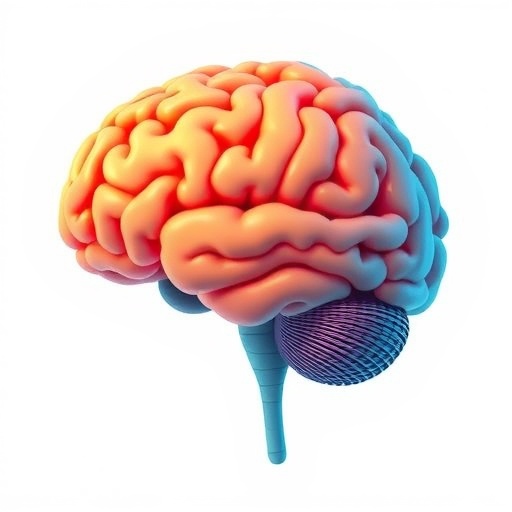
Recent groundbreaking research published in BMC Psychiatry has unveiled intricate brain functional abnormalities in individuals suffering from major depressive disorder (MDD) with a history of childhood maltreatment (CM). This study illuminates the nuanced neural underpinnings that link early adverse experiences to subsequent depressive pathology, offering critical insights for future therapeutic strategies targeting this vulnerable population.
The investigation involved a cohort of 84 MDD patients, subdivided into those with histories of childhood maltreatment and those without, alongside a comparison group of 54 healthy controls. By employing advanced neuroimaging techniques such as the amplitude of low-frequency fluctuation (ALFF), fractional ALFF (fALFF), degree centrality, and regional homogeneity measurements, researchers meticulously mapped regional brain activities and interregional functional connectivity (FC) patterns that distinguish these subgroups.
Significantly, MDD patients with prior CM exhibited a pronounced decrease in ALFF within the right posterior orbitofrontal cortex (pOFC) and right middle frontal gyrus (MFG) relative to individuals with MDD but no maltreatment history. The pOFC region, critically involved in affect regulation and reward processing, alongside the MFG, a key node in executive functioning, suggest that childhood trauma may induce persistent local neural hypoactivity underlying depressive symptomatology.
Further analysis extended into interregional connectivity, revealing diminished FC between the right pOFC and core hubs of the default mode network (DMN), including the superior medial frontal gyrus (SMFG), angular gyrus, and superior frontal gyrus. Disruption in DMN connectivity is increasingly recognized as a hallmark of mood disorders, implicating altered self-referential thought and rumination processes that exacerbate depressive states.
Conversely, the study detected elevated FC between the right MFG and the right superior temporal gyrus, regions implicated in Theory of Mind (ToM) functions — the capacity to attribute mental states to oneself and others. This augmented connectivity could reflect neural adaptations or compensatory mechanisms potentially contributing to the socio-cognitive deficits observed in MDD with CM.
Crucially, the researchers employed a moderated mediation model to dissect the complex interplay between CM, brain dysfunction, dysfunctional attitudes, and depression severity. ALFF reductions in the right MFG specifically mediated the relationship between emotional neglect — a subtype of childhood maltreatment — and the severity of depressive symptoms. Dysregulated cognitive schemas, manifested as dysfunctional attitudes, concurrently moderated this mediation, highlighting the intricate biopsychosocial matrix governing depression pathophysiology.
These findings potentiate a paradigm shift in understanding how early environmental insults engrain maladaptive neurobiological signatures, increasing MDD vulnerability. They emphasize the necessity of integrating neurofunctional markers with cognitive-behavioral profiles to optimize individualized treatment approaches that address both brain dysfunction and psychological maladaptation.
From a methodological standpoint, the robust combination of regional brain activity indices and seed-based functional connectivity analyses represents a comprehensive strategy to scrutinize both localized and network-level alterations. Such an approach provides granular understanding of the spatial and functional hierarchy of brain disturbances in psychiatric illness linked to childhood adversity.
The implications of this study extend to clinical diagnostics, as identification of specific brain regions and networks affected by childhood maltreatment can facilitate biomarker development for early detection and intervention. Moreover, elucidating the moderating role of dysfunctional attitudes offers avenues for targeted cognitive therapies that may potentiate neural plasticity and symptom amelioration.
Beyond clinical utility, the study advances theoretical frameworks positing neurodevelopmental trajectories modulated by early trauma exposure, informing future research on resilience and susceptibility factors in mental health. The delineation of the right pOFC and MFG as critical loci underscores the importance of prefrontal-subcortical circuits in emotion regulation deficits inherent to depression with maltreatment.
In sum, this seminal research interlinks childhood maltreatment and major depression through the lens of functional neuroimaging, decoding the fine-scale neural circuitry disrupted by early adversity. As the global burden of depression escalates, especially among populations affected by trauma, these insights herald a more nuanced comprehension and refined toolkit for addressing this formidable psychiatric challenge.
With childhood maltreatment profoundly shaping the neural architecture that governs emotion, cognition, and social processing, interventions must evolve to restore the integrity of these circuits. Bridging the gap between neurobiological findings and clinical praxis will ultimately pave the way for more efficacious treatments tailored to the complex needs of trauma-exposed individuals with major depressive disorder.
This study is registered under the Chinese Clinical Trial Registry (ChiCTR2300078193), reinforcing the rigor and transparency of the investigation. As neuropsychiatry continues to unravel the biological substrates underpinning mood disorders, integrating environmental histories remains paramount for a holistic understanding of mental illness etiology and progression.
Cite Scienmag News
Glenn Wilkins. (November 15, 2025). Brain Dysfunction in Depression Linked to Childhood Maltreatment. Scienmag. https://scienmag.com/brain-dysfunction-in-depression-linked-to-childhood-maltreatment/
Glenn Wilkins. "Brain Dysfunction in Depression Linked to Childhood Maltreatment." Scienmag, 15 November 2025, https://scienmag.com/brain-dysfunction-in-depression-linked-to-childhood-maltreatment/. Accessed 4 September 2026.
Glenn Wilkins. "Brain Dysfunction in Depression Linked to Childhood Maltreatment." Scienmag. November 15, 2025. https://scienmag.com/brain-dysfunction-in-depression-linked-to-childhood-maltreatment/


