

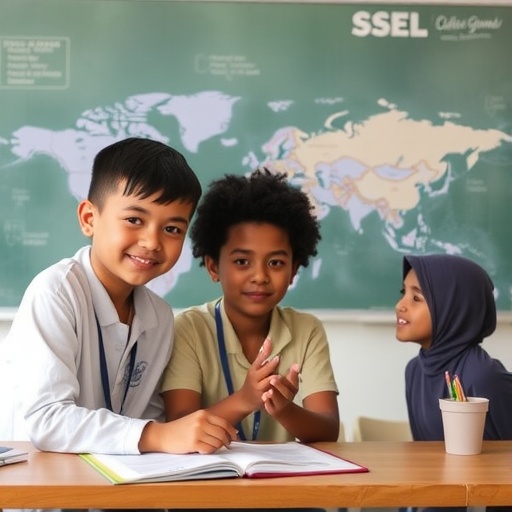
In an increasingly interconnected world, schools serve as microcosms of the diverse societies from which they draw their students. Social-Emotional Learning (SEL) programs have emerged as critical tools for enhancing the well-being of students by addressing their social and emotional needs. A recent study conducted by Christopher C.E. Gerstner explores the implementation of the SEL program, Fly Five, in international schools, providing valuable insights into how such programs can be effectively integrated into various educational contexts.
The study highlights that students in international schools often come from a variety of cultural and educational backgrounds, making their emotional and social contexts complex. Understanding these nuances is essential for educators who aim to create nurturing environments that foster both academic success and personal growth. In order to promote social-emotional well-being, it is vital that schools adopt educational frameworks that resonate with the diverse experiences of their students.
Gerstner’s research emphasizes the significance of tailored SEL programs, which account for the unique challenges faced by students in international settings. The Fly Five program, in particular, is structured to provide students with the foundational skills they need in order to navigate not only their own emotions but also their interactions with peers. The findings from the study suggest that when programs like Fly Five are implemented effectively, students report feeling safer in their school environments, which in turn improves their overall academic performance.
The methodology employed in Gerstner’s study is noteworthy for its comprehensive approach. A mixed-methods research design was utilized, combining quantitative data from surveys with qualitative insights gathered through interviews with students, teachers, and administrators. This dual approach allowed for a richer understanding of how the Fly Five program affected the well-being of students across different schools. The data collected highlighted a significant positive change in the emotional stability of students, showcasing the effectiveness of the program.
Moreover, the research outlines several key principles that underpin successful implementation strategies for SEL programs. Gerstner identifies the importance of training teachers to understand the principles of social-emotional learning, which ensures that they can effectively facilitate discussions and activities. Teachers who are adequately prepared can create an environment of trust and openness, where students feel comfortable expressing their feelings and challenges.
In addition to teacher training, the study underscores the role of community involvement in the success of SEL programs. Engaging parents and families in the educational process creates a cohesive support system that reinforces the lessons learned in the classroom. In a multicultural setting, this is particularly important, as it aligns various cultural perspectives and values towards a shared goal of nurturing emotional intelligence in children.
The analysis also suggests that the Fly Five program can bridge gaps in students’ social skills that often arise from cultural differences. By employing relatable scenarios and diverse storytelling techniques, the program effectively engages students from different backgrounds. It promotes empathy, cooperation, and conflict resolution, skills that are essential not only in school but also in the global community they will eventually inhabit.
As international schools continue to grow in numbers, the need for robust SEL programs will only become more pronounced. The findings of Gerstner’s study advocate for a paradigm shift in how educators view student welfare. Emotional well-being should not be seen as an ancillary aspect of education, but rather as a cornerstone of effective learning environments. This shift in perspective can lead to more inclusive practices that benefit all students, regardless of their backgrounds.
In exploring the long-term impacts of the Fly Five program, Gerstner raises pertinent questions about how emotional well-being influences academic outcomes and future life choices. The study suggests that students who acquire strong social-emotional skills are better equipped to tackle challenges, both in their personal lives and future workplaces. They become resilient problem-solvers, capable of navigating the complexities of an ever-evolving society.
The research findings contribute to the growing body of evidence highlighting the efficacy of SEL in fostering resilient, emotionally intelligent individuals. As educational institutions begin to incorporate these findings into their curricula, it paves the way for a new educational model where emotional wellness is prioritized alongside academic excellence. By embracing such holistic approaches, schools can cultivate environments where students not only thrive academically but also grow as informed, compassionate global citizens.
Future research directions could further investigate how different educational models influence the effectiveness of SEL programs like Fly Five. Gerstner’s groundwork invites scholars and educators to consider how various postures towards emotional education can transform institutional practices. Through continued exploration, the ultimate goal remains clear: to enhance the quality of education while developing the whole child.
In conclusion, the study by Christopher C.E. Gerstner serves as both a clarion call and a guide for educational leaders aiming to promote social-emotional well-being in our increasingly diverse classrooms. As schools adapt to the changing world, the insights provided by this research will undoubtedly influence the formation of policies and practices that prioritize emotional learning. In fostering safe spaces where every student can thrive, we take a transformative step toward not only advancing education but also nurturing responsible global citizens prepared to contribute positively to society.
Subject of Research: Social-Emotional Learning in International Schools
Article Title: Promoting Students’ Social-Emotional Well-Being in Diverse School Settings: an Implementation Study of the SEL Program Fly Five in International Schools
Article References:
Gerstner, CC.E. Promoting Students’ Social-Emotional Well-Being in Diverse School Settings: an Implementation Study of the SEL Program Fly Five in International Schools.
School Mental Health (2026). https://doi.org/10.1007/s12310-026-09854-6
Image Credits: AI Generated
DOI: https://doi.org/10.1007/s12310-026-09854-6
Keywords: Social-Emotional Learning, International Schools, Fly Five Program, Student Well-Being, Teacher Training, Community Involvement.


