


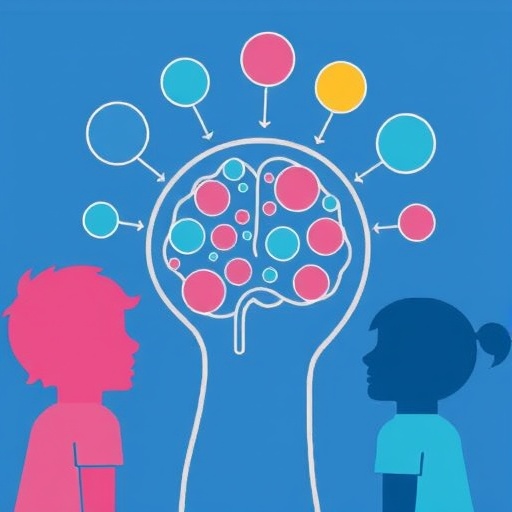
In a groundbreaking systematic review conducted by Miao et al., the spotlight shines brightly on the often-overlooked realm of children’s psychological well-being, particularly through the lens of participatory research methods. As societies grapple with the increasing mental health challenges faced by younger generations, this research serves as a clarion call for a more inclusive approach to addressing these issues. With the advent of innovative tools and techniques, researchers are now equipped to not only understand but also involve children in the discourse surrounding their own emotional health.
The study showcases the pivotal role that participatory research methods play in fostering an environment where children’s voices are heard and valued. Traditionally, research in the fields of psychology and child development has primarily focused on adult perspectives, often sidelining the very subjects who are most affected by these studies. Miao and colleagues unravel the potential of engaging children directly in research processes, highlighting the benefits that come from inclusive data collection that honors their experiences, thoughts, and feelings.
One of the key findings of the review is that participatory research not only empowers children by giving them a stake in the research process, but it also leads to richer, more nuanced data. When children are allowed to convey their own narratives and articulate their emotional struggles, researchers gain insight that might otherwise be lost in traditional methodologies that rely solely on parental or educator reports. This shift not only enhances the validity of the research outcomes but also ensures that the interventions developed are genuinely reflective of children’s needs.
Furthermore, the study underscores a variety of participatory tools that have emerged in recent years, which can be used effectively to garner children’s insights. These include visual tools like drawings, storytelling, and digital mediums that resonate with the younger demographic. By utilizing these methods, researchers can tap into the unique ways children express themselves, thereby creating a multidimensional understanding of their psychological well-being.
The systematic review meticulously categorizes the different participatory methods employed across studies, providing a comprehensive overview of best practices. What stands out is the diverse range of tools adaptable to different cultural contexts, which is crucial given the global nature of psychological challenges facing children. This adaptability allows for a more tailored approach that takes into account local values and norms, thereby enhancing the relevance of the findings.
Moreover, Miao et al. delve into the ethical considerations surrounding participatory research with children, a topic that has garnered much attention in recent years. Involving children in research raises significant ethical questions, particularly around informed consent, the right to withdraw, and the implications of their involvement. The review articulates the importance of establishing trust and creating safe spaces for children to share their experiences without fear of judgment or repercussion.
As the study progresses, it also highlights instances where participatory research has led to tangible outcomes in promoting children’s mental health. By implementing tools designed with children’s input, interventions can be more effective, resulting in programs that resonate with the target audience. This stands in stark contrast to the conventional “one-size-fits-all” approach that often overlooks the complexities of children’s emotional lives.
An intriguing aspect of the findings is the call for greater collaboration between researchers, educators, and mental health professionals. By forming interdisciplinary teams, the potential to create holistic strategies for children’s psychological well-being increases significantly. This collaborative effort not only disperses the responsibility for addressing mental health issues but also enriches the research field with diverse perspectives and expertise.
Furthermore, the review emphasizes the transformative potential of participatory research in educational settings. Training educators to utilize participatory methods can empower them to better understand their students’ emotional landscapes, leading to more supportive classroom environments. This, in turn, can foster resilience and a positive emotional climate that nurtures children’s overall well-being.
The authors also acknowledge potential limitations of the studies they reviewed, including variability in implementation and the need for more robust longitudinal studies. As the field of participatory research is still relatively nascent, ongoing evaluations are crucial to assess the long-term impacts of these methods on children’s psychological health. Such insights will inform future research directions and refine the tools available for practitioners in the field.
In conclusion, Miao et al.’s systematic review is not merely an academic exercise; it’s a call to action for researchers and practitioners alike. By embracing participatory research methods, we can unlock new avenues for understanding and improving children’s psychological well-being. The findings themselves serve as a testament to the power of listening to children’s voices, a practice that should become foundational in the fight against the mental health crisis facing today’s youth.
In light of the urgency surrounding children’s mental health, this review positions participatory research as a critical ally in developing solutions that are both effective and respectful of children’s unique perspectives. As stakeholders in the realm of child psychology and education rally around these findings, the hope is to see a paradigm shift where children’s voices are not only heard but are also instrumental in shaping the research landscape.
Ultimately, the systematic review opens doors to a future where children’s psychological well-being is prioritized through inclusive, participatory approaches that genuinely reflect their needs and aspirations. In doing so, it lays the groundwork for a more empathetic and effective mental health framework that can tackle the complex challenges faced by children today.
Miao, X., Yin, I.Z., Zhang, H. et al. Participatory Research Methods and Tools for Promoting Children’s Psychological Well-Being: A Systematic Review.
Applied Research Quality Life (2025). https://doi.org/10.1007/s11482-025-10490-6
Cite Scienmag News
Glenn Wilkins. (September 4, 2025). Boosting Kids’ Mental Health: A Research Overview. Scienmag. https://scienmag.com/boosting-kids-mental-health-a-research-overview/
Glenn Wilkins. "Boosting Kids’ Mental Health: A Research Overview." Scienmag, 4 September 2025, https://scienmag.com/boosting-kids-mental-health-a-research-overview/. Accessed 3 September 2026.
Glenn Wilkins. "Boosting Kids’ Mental Health: A Research Overview." Scienmag. September 4, 2025. https://scienmag.com/boosting-kids-mental-health-a-research-overview/


