

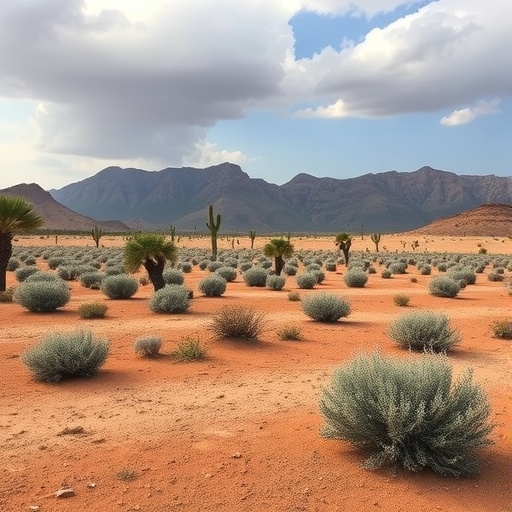
In an era where climate change and environmental sustainability dominate global conversations, researchers have made significant progress in understanding how vegetation in arid and semi-arid lands can enhance photosynthetic efficiency. This exciting development is spearheaded by a remarkable study published in Commun Earth Environ, which showcases large gains in leaf-scale photosynthetic rates in sparsely vegetated ecosystems. The implications of these findings are vast, potentially revolutionizing approaches to agricultural practices, climate resilience, and global carbon cycling.
Arid and semi-arid lands, which collectively cover about 40% of the Earth’s surface, are characterized by limited water availability, extreme temperatures, and sporadic vegetation. Often thought of as barren and unproductive, these regions hold the key to significant improvements in photosynthesis, presents a unique paradox. Through innovative research methods, the study conducted by Pu and colleagues sheds light on the mechanisms behind plant adaptation to these challenging environmental conditions.
The research team employed a combination of advanced technologies, including satellite data, ground-based measurements, and sophisticated modeling techniques, to measure leaf-scale photosynthesis across diverse plant species in arid environments. Notably, they discovered that certain plants can increase their photosynthetic rates dramatically when subjected to specific temperature and moisture conditions. This finding underlines the adaptability and resilience of plant life, presenting opportunities for enhancing food security and ecological sustainability in drought-prone areas.
The ability of plants in these climates to thrive and effectively utilize carbon dioxide from the atmosphere is crucial in the context of rising global temperatures, where greenhouse gas concentrations continue to climb. By optimizing photosynthesis, these plants could potentially absorb more carbon dioxide, contributing to climate change mitigation efforts. The study emphasizes the urgent need for additional research focused on determining which species exhibit the most promise for future agricultural and ecological applications.
Research into leaf-scale photosynthesis also highlights the importance of physiological mechanisms that allow plants to optimize their performance in challenging conditions. For instance, the study identified specific traits associated with increased photosynthetic rates, such as leaf morphology, stomatal conductance, and chlorophyll content. By understanding these traits, scientists can better predict how plants adapt to changing climates, offering valuable information for breeding programs aimed at developing more resilient crop varieties.
As the implications of increased photosynthesis unfold, agricultural practices could see transformative changes. Farmers in arid regions may soon have access to crops that are better suited to their unique environments, boosting yields and sustainability. This research may also influence practices beyond traditional agriculture, such as restoration efforts in degraded ecosystems, where enhancing photosynthetic rates can aid in soil stabilization and promote biodiversity.
Moreover, the findings of the study could extend to the management of water resources. Traditional agricultural practices often involve significant water inputs; however, by focusing on plant species that exhibit heightened photosynthetic efficiency, farmers can reduce reliance on irrigation. This aligns with much-needed shifts toward water conservation in regions facing water scarcity, ultimately promoting sustainable agricultural practices that benefit both ecosystems and local communities.
The significance of this study is further amplified when considering the role of technology in modern ecology. By employing cutting-edge tools and methodologies, researchers can analyze vast datasets that were previously unattainable. This enables a more comprehensive understanding of ecosystem dynamics and drives informed decision-making that better reflects the realities of environmental change.
It’s essential to recognize that advancing our knowledge of leaf-scale photosynthesis will require ongoing research collaboration among scientists, policymakers, and agricultural stakeholders. This collective effort will be crucial in ensuring the effective application of these findings and harnessing their potential for global benefit. Moving forward, creating supportive policies that encourage the use of innovative agricultural practices will help foster resilience in the face of climate challenges.
As the scientific community continues to uncover the intricacies of plant adaptation and photosynthesis, it becomes clear that the paths to sustainability lie not only in well-established ecosystems but also in the overlooked and often misunderstood arid lands. Understanding their potential can reshape our approach to conservation and sustainable resource management, making these regions not merely survivors of harsh climates but critical contributors to global ecological health.
Additionally, as global populations surge and food security becomes an even greater concern, the importance of research like this cannot be overstated. By focusing efforts on improving photosynthetic capacity across different vegetation types, we can pave the way for more sustainable food production systems that are capable of thriving even as environmental conditions shift.
Ultimately, the findings of Pu et al. hold profound implications not just for science but for the future of agriculture, ecology, and our efforts to combat climate change. These large gains in leaf-scale photosynthetic rates illuminate a path forward, one where our understanding of plant biology and environmental interaction could guide innovative strategies toward a resilient future.
As we delve into these promising avenues of research, it is essential to maintain a holistic view of ecosystems, recognizing that every contribution towards understanding carbon capture, resilience, and sustainable practices can lead to meaningful change. Engaging with local communities, using indigenous knowledge, and conducting further in-depth studies will enhance our understanding and implementation of these findings.
In conclusion, the groundbreaking research demonstrating large gains in leaf-scale photosynthetic rates in sparsely vegetated arid and semi-arid lands offers a beacon of hope amidst the pressing challenges posed by climate change. This innovative study encourages us to think critically about the intersections of ecology, agriculture, and sustainability, inviting collaboration across disciplines to unlock the potential of our planet’s diverse landscapes. By investing in scientific inquiry and responsible application of findings, we can build a future that honors both our natural resources and our commitment to global sustainability.
Subject of Research: Leaf-scale photosynthetic rates in arid and semi-arid lands.
Article Title: Large gains in leaf scale photosynthetic rates of sparsely vegetated arid and semi-arid lands.
Article References:
Pu, J., Chang, Y., Winkler, A.J. et al. Large gains in leaf scale photosynthetic rates of sparsely vegetated arid and semi-arid lands.
Commun Earth Environ (2025). https://doi.org/10.1038/s43247-025-03121-3
Image Credits: AI Generated
DOI:
Keywords: Photosynthesis, arid lands, climate change, ecological sustainability, agriculture.


