

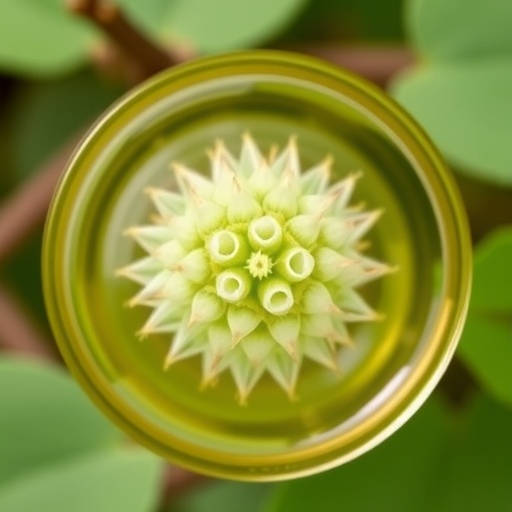
In the ever-evolving landscape of nanomedicine, plant-derived extracellular vesicle-like nanoparticles (PDVLNs) have emerged as a groundbreaking frontier, celebrated for their minimal immunogenicity, exceptional biocompatibility, and compelling promise as natural drug delivery systems. Traditionally, the isolation of these lipid-based nanostructures has been confined to fresh plant juices, owing to the prevailing assumption that the delicate lipid bilayers would disintegrate under high-temperature conditions such as boiling. However, a pioneering study has upended this convention, demonstrating that functionally potent PDVLNs can indeed be extracted from traditional herbal decoctions prepared by boiling dried plant material, thereby opening unprecedented avenues in both herbal medicine and nanotechnology.
The research focused on GeGen Decoction, a centuries-old preparation derived from the dried roots of Pueraria lobata, commonly known as kudzu. By replicating the classical decoction process—immersing the dried herb in boiling water—the investigators successfully isolated vesicle-like nanoparticles now termed GGD-PDVLNs. These nanoparticles retained an intact “cup-shaped” lipid bilayer architecture despite enduring exposure to 100 °C, challenging the dogma that high-temperature processing irrevocably degrades such nanostructures. Furthermore, in vitro assays mimicking gastric and intestinal fluids confirmed the remarkable stability of GGD-PDVLNs, indicating their resilience through the harsh conditions of the gastrointestinal tract.
The significance of this discovery extends well beyond mere structural preservation. In murine models of ulcerative colitis—a chronic inflammatory disease of the colon—removal of GGD-PDVLNs from the GeGen decoction abrogated the therapeutic benefits typically observed. Conversely, administration of isolated GGD-PDVLNs alone replicated the anti-colitic effects of the complete decoction. This compelling evidence positions these PDVLNs as the principal bioactive agents, rather than mere byproducts or secondary components, transforming our understanding of the active constituents in traditional herbal therapies.
Delving deeper into the mechanism of action unmasked the critical role of the gut microbiota in mediating the effects of GGD-PDVLNs. These nanoparticles were actively internalized by intestinal bacteria, fostering a significant increase in beneficial microbial populations such as Akkermansia and Bifidobacterium. These microbes are well-documented for their anti-inflammatory properties and ability to reinforce the intestinal mucosal barrier, promoting homeostasis in the gut ecosystem. Restoration of this microbial equilibrium is instrumental in mitigating inflammatory cascades and facilitating tissue repair.
Further reinforcing the microbiota-dependent mechanism, experiments utilizing pseudo-germ-free mouse models—animals depleted of their native gut microbiome—demonstrated a complete loss of therapeutic response to GGD-PDVLNs. This finding underscores the intricate cross-kingdom communication facilitated by these nanoparticles, highlighting a novel “TCM nanoparticle–gut microbiota–immune barrier” axis. This axis exemplifies how traditional Chinese medicine operates on a nanoscale, orchestrating multi-component and multi-target interactions within the host to achieve systemic immune modulation.
From a methodological perspective, the ability to isolate structurally intact nanoparticles from boiled herbal decoctions marks a paradigm shift. It challenges long-standing assumptions about the fragility of lipid vesicles and repositions traditional decoction processes not just as crude extraction methods, but as ancient nanoengineering techniques. The implications for pharmaceutical science are profound: by harnessing naturally occurring nanovesicles that are orally bioavailable and resistant to digestive degradation, new avenues open for developing safe, targeted, and cost-effective nanomedicines derived directly from plants.
This convergence of traditional herbal wisdom and modern nanotechnology reframes the conversation around herbal extracts. Instead of viewing them merely as complex chemical mixtures, we now recognize that they contain functional nanostructures capable of precise biological targeting. This understanding provides a molecular and nanoscale foundation for the efficacy of longstanding multi-component therapies, reconciling centuries of empirical knowledge with cutting-edge scientific principles.
The translational potential of this work for inflammatory bowel diseases (IBD) like ulcerative colitis is especially promising. Current IBD treatments often involve immune suppression, which carries risks of infection and other adverse effects. In contrast, GGD-PDVLNs offer a biologically intuitive, microbiota-mediated therapeutic pathway. By enhancing beneficial intestinal microbes and restoring mucosal integrity, these nanoparticles achieve anti-inflammatory effects while preserving the natural immune barrier, potentially providing a safer and more sustainable treatment option.
Moreover, this discovery is a significant step forward in validating the scientific basis of traditional Chinese medicine (TCM) through contemporary biomedical frameworks. It invites further exploration into whether other herbal decoctions similarly contain heat-stable PDVLNs that exert systemic effects via the gut microbiota. Such research may unlock a treasure trove of natural nanomedicine candidates with broad therapeutic applicability.
The study, entitled “Vesicle-like nanoparticles extracted from Pueraria lobata decoction alleviate colitis by modulating the intestinal microbiota,” was published in Extracellular Vesicles and Circulating Nucleic Acids in February 2026. It represents a landmark integration of herbal pharmacognosy, microbiome science, and nanotechnology, heralding a new era in natural product-based therapeutics.
As the scientific community continues to unravel the complexities of vesicular nanostructures in herbal preparations and their dynamic interactions with the human microbiota, this work lays a critical foundation. It inspires a re-examination of traditional medicinal preparations, inviting innovation that honors ancient practices while leveraging nano-bio science to address modern medical challenges.
Ultimately, the identification of GGD-PDVLNs as core active ingredients in GeGen decoction not only redefines natural product research but also propels forward the development of next-generation nanomedicines. These naturally derived nanoparticles combine stability through oral delivery, specificity through microbiota modulation, and efficacy in treating complex immune-mediated diseases, positioning them as highly attractive candidates in the therapeutic arsenal.
Subject of Research: Not applicable
Article Title: Vesicle-like nanoparticles extracted from Pueraria lobata decoction alleviate colitis by modulating the intestinal microbiota
News Publication Date: 16-Feb-2026
Web References:
DOI: 10.20517/evcna.2025.134
Extracellular Vesicles and Circulating Nucleic Acids Journal
Image Credits: HIGHER EDUCATION PRESS
Keywords: Cell biology, extracellular vesicles, plant-derived nanoparticles, nanomedicine, gut microbiota, ulcerative colitis, Pueraria lobata, traditional Chinese medicine, herbal decoction, nanoparticle stability, microbiota modulation, immune barrier


