


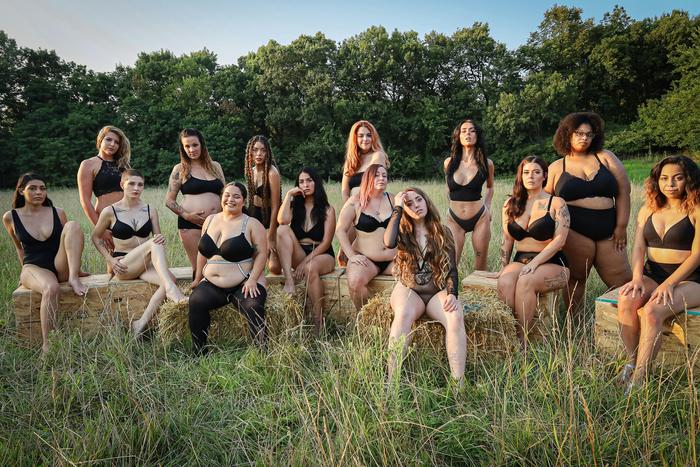
People from different cultures show both similarities and differences in how body appreciation, sociocultural pressure, and internalization of thin ideals vary, according to a study published July 31, 2024 in the open-access journal PLOS ONE by Louise Hanson from Durham University, UK, and colleagues.

Credit: Sierra Koder, Pexels, CC0 (
People from different cultures show both similarities and differences in how body appreciation, sociocultural pressure, and internalization of thin ideals vary, according to a study published July 31, 2024 in the open-access journal PLOS ONE by Louise Hanson from Durham University, UK, and colleagues.
Body image is a multifaceted and complex phenomenon encapsulating how we think, behave, and feel about our body. To date, most body image research has focused on young, White, Western women, and has focused on negative rather than positive body image.
By contrast, Hanson and colleagues examined body appreciation, encapsulating positive thoughts and feelings regarding one’s own body. They also included participants not only from Western countries (i.e., Australia, Canada, United Kingdom, United States of America), but also China and Nigeria. A final sample of 1186 women completed the questionnaires and were included in the analysis.
The results did not reveal significant difference in body satisfaction between women of different ages, but there was significant variation between cultures. Black Nigerian women had the highest body appreciation, followed by Eastern Asian Chinese women, with White Western women reporting lowest body appreciation. The findings suggest that ethnicity and culture are important influences on body appreciation and might act as protective factors that promote positive body image.
High internalization of the thin ideal, and high perceived pressure about appearance from family, peers, and the media, were associated with lower body appreciation. Internalization varied by age in some cultures: older White Western and Black Nigerian women reported lower thin-ideal internalization than younger women, but Chinese women experienced the same thin-ideal internalization across the lifespan.
For women from all cultures, older women reported lower perceived sociocultural pressure than younger women. White Western women experienced more perceived pressure from the media than Black Nigerian and Chinese women, but Chinese women reported the most pressure from peers. The results also showed that Black Nigerian women reported the lowest sociocultural pressure overall, and that Chinese women reported the most pressure.
The authors suggest that future studies should include more women in older age groups to obtain a fully representative picture of women’s body appreciation across the lifespan. In addition, further development of measurement tools is necessary for future research in cross-cultural contexts. According to the authors, the results of the current study could be used to target positive body image interventions to each culture. Further research may be required to develop effective interventions for each group.
The authors add: “We found that body appreciation was relatively stable across all ages and sociocultural pressure was evident in all cultures. However, the extent to which this pressure was experienced and where it came from differed across cultures.”
#####
In your coverage please use this URL to provide access to the freely available article in PLOS ONE:
Citation: Hanson LN, Gott A, Tomsett M, Useh E, Yeadon-Caiger E, Clay R, et al. (2024) Examining body appreciation in six countries: The impact of age and sociocultural pressure. PLoS ONE 19(7): e0306913.
Author Countries: UK
Funding: The author(s) received no specific funding for this work.
Journal
PLoS ONE
Method of Research
Survey
Subject of Research
Not applicable
Article Title
Examining body appreciation in six countries: The impact of age and sociocultural pressure
Article Publication Date
31-Jul-2024
COI Statement
The authors have declared that no competing interests exist.
Cite Scienmag News
Courtney Benton. (July 31, 2024). Body appreciation varies across cultures. Scienmag. https://scienmag.com/body-appreciation-varies-across-cultures/
Courtney Benton. "Body appreciation varies across cultures." Scienmag, 31 July 2024, https://scienmag.com/body-appreciation-varies-across-cultures/. Accessed 3 September 2026.
Courtney Benton. "Body appreciation varies across cultures." Scienmag. July 31, 2024. https://scienmag.com/body-appreciation-varies-across-cultures/

