


Every year, thousands of children are diagnosed with cancer, and thanks to decades of progress in pediatric oncology, more than 80 percent of them now survive. That triumph has created a new challenge: many of these survivors grow up and want children of their own, yet the very treatments that saved their lives can quietly damage the ovaries. Chemotherapy drugs known as alkylating agents and radiation aimed at or near the pelvis are particularly gonadotoxic, destroying the finite pool of follicles that constitutes a girl’s lifelong reproductive capacity. A team of researchers in Gothenburg, Sweden, has now launched one of the most ambitious efforts yet to track that damage in real time, following girls from the day of their cancer diagnosis all the way into their fertile adult years.
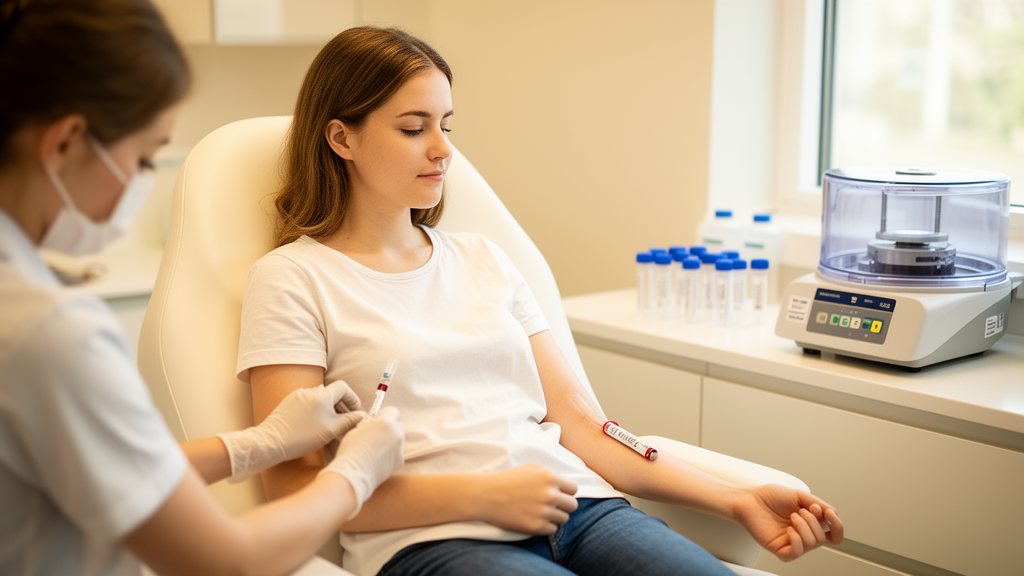
The study, led by Sofia Nilsson of the University of Gothenburg and Sahlgrenska University Hospital, presents baseline data from a prospective follow-up program designed to test whether a simple blood test can serve as a long-term surveillance tool for fertility. The hormone at the center of the effort is anti-Müllerian hormone, or AMH, a molecule produced by small growing follicles in the ovary that is detectable from birth. Because serum AMH levels correlate strongly with the number of antral follicles visible in the ovary, they are widely regarded as a proxy for the size of the primordial follicle pool, the biological reserve that determines how many reproductive years a woman has left. Unlike follicle-stimulating hormone, AMH remains relatively stable across the menstrual cycle, and unlike antral follicle counting by ultrasound, it requires nothing more invasive than a blood draw.
That last point matters enormously in pediatric oncology. Assessing ovarian reserve in a young girl or adolescent with transvaginal ultrasonography is, as the researchers note, both physically and ethically inappropriate. AMH offers a practical alternative, and it rises gradually through childhood, peaking around age 25 before declining toward menopause. The Gothenburg team enrolled participants aged 0 to 17 years at the Pediatric Oncology Center at Sahlgrenska University Hospital between May 2016 and March 2021. To be eligible, children had to have a new diagnosis of cancer or another condition requiring chemotherapy, such as aplastic anemia, and be scheduled for treatment with chemotherapy, radiotherapy, or both. The clinic serves a vast catchment area in western Sweden, where some families live more than 300 kilometers from the hospital, a logistical reality that shaped how and when blood samples could be collected.
Of 130 girls initially eligible, 87 were enrolled, and after careful data cleaning, 74 formed the final baseline cohort. Their diagnoses spanned the full spectrum of pediatric malignancy: 24 had solid tumors, 21 had leukemia, 18 had lymphoma, and 10 had tumors of the central nervous system, with one patient treated for aplastic anemia. The mean age at diagnosis was 7.7 years, with a median of 8 and an interquartile range of 3 to 12, meaning the cohort captured girls from infancy through late adolescence. That breadth matters, because fertility concerns are often raised more readily with teenagers than with the parents of a toddler, and a cohort skewed toward older children would carry selection bias. The wide age spread suggests the program reached families across the entire pediatric spectrum.
The baseline measurements revealed striking variation in AMH. Initial levels ranged from 0.03 to 9.97 micrograms per liter, with a mean of 1.7 and a median of 1.1 micrograms per liter. Using exploratory cut-off values proposed in the literature, values below 1.0 micrograms per liter were taken to suggest reduced ovarian reserve and values below 0.025 micrograms per liter to predict impending ovarian insufficiency, although the researchers emphasize these thresholds are not clinically validated in children. No participant fell below 0.025, and 34 girls, or 46 percent of the cohort, had values above 1.50 micrograms per liter. In total, 41 participants, or 55 percent, registered AMH above 1.0. Whether the 45 percent below that threshold truly have diminished reserves is difficult to say, because data on normal AMH ranges in healthy children remain scarce.
The most consequential finding emerged when the researchers split the cohort by treatment status. Fifty-six girls, 76 percent of the group, had blood drawn before any cancer therapy began, while 18, or 24 percent, were sampled only after treatment had started, anywhere from one day to 20 months in. Statistical modeling of log-transformed AMH against age showed a linear relationship in both groups, with AMH increasing by about 6.4 percent per year of age regardless of treatment status. But after adjusting for age, girls who had already been exposed to cancer treatment had AMH values on average 79 percent lower than those who had not. A finer analysis by time since treatment start showed the steepest drop during the first one to three months of therapy, with levels dipping lowest around days 8 to 90 and partially rebounding after three months, though the differences among treated subgroups were not statistically significant.
The regression line for the pre-treatment group sat below, but close to, published curves for healthy girls, echoing a 2014 Dutch study by van Dorp and colleagues that found AMH already reduced in girls with newly diagnosed cancer before any therapy, hinting that the disease itself or a child’s general health status may influence the hormone. Interestingly, the Gothenburg team also challenged the shape of the canonical AMH-versus-age model published by Kelsey and colleagues in 2011. That model, built from more than 3,000 data points spanning conception to menopause, used a twentieth-degree polynomial whose wiggles in childhood, the Swedish authors argue, are mathematical artifacts rather than biology. Their own data, along with later studies, support a far smoother, essentially linear rise in log AMH through childhood, a technical point with real implications for how clinicians interpret a child’s value against population norms.
Only two patients in the cohort were offered fertility preservation before treatment began: one underwent oocyte cryopreservation and the other had an ovary removed for ovarian tissue cryopreservation. That scarcity underscores the difficulty of the decision. For postpubertal girls, oocyte freezing is an established option when treatment can be safely delayed, but for prepubertal girls, ovarian tissue cryopreservation is the only available method, and international guidelines from the International Late Effects of Childhood Cancer Guideline Harmonization Group only moderately support it for those facing high-dose alkylating agents, ovarian radiotherapy, or stem cell transplantation. Deciding to freeze tissue or eggs for a child who may not want a family for two decades is medically feasible but emotionally and ethically fraught, which is precisely why a reliable surveillance marker could transform practice.
The Swedish program is designed to answer that question longitudinally. Participants will be followed until roughly age 25, when puberty has passed and adult ovarian reserve can be properly evaluated, with AMH measured at inclusion and every two years thereafter. The protocol also embeds psychosocial monitoring: from age 12, the girls will complete validated questionnaires including the Short Form-36 for quality of life, the Hospital Anxiety and Depression Scale, and the Sense of Coherence Questionnaire, while their parents will be surveyed about their views on their daughter’s fertility. For postpubertal participants who consent, antral follicle counts will be assessed by ultrasound at some visits. Risk stratification follows the Swedish treatment risk classification and the international harmonization guidelines, which grade gonadotoxic exposure from low-risk agents like vincristine to very high-risk exposures such as more than 10 gray of ovarian radiation or allogeneic stem cell transplantation.
The researchers are candid about the limitations. The cohort of 74 is modest, constrained by the small number of new pediatric cancer cases in the catchment area, and there is no healthy control group, making it impossible to statistically compare the untreated patients with girls free of cancer. Children may move away, staff continuity may waver, and enthusiasm among families and clinicians may fade over a follow-up period lasting decades. Yet the design remains, by the authors’ own description, unique: a prospective cohort following girls from diagnosis through adolescence to fertile age, with repeated AMH sampling and psychological assessment. If the long-term data validate AMH as a surveillance modality, clinicians could one day identify which survivors are most likely to benefit from fertility preservation, and crucially, when to offer it, turning a single anxious decision made in the shadow of a new cancer diagnosis into an informed, monitored process spanning the journey to adulthood.
Subject of Research: Ovarian reserve surveillance using anti-Müllerian hormone in girls diagnosed with pediatric cancer
Article Title: Assessment of ovarian reserve in girls diagnosed with pediatric cancer: a presentation of baseline data from a prospective follow-up study
Article References: Nilsson, S., Thurin-Kjellberg, A., Järvholm, S., Langenskiöld, C., Mehlig, K., & Jarfelt, M. (2026). Assessment of ovarian reserve in girls diagnosed with pediatric cancer: a presentation of baseline data from a prospective follow-up study. Frontiers in Cancer Control and Society, 4, Article 1775304. https://doi.org/10.3389/fcacs.2026.1775304
Image Credits: AI Generated
DOI: 10.3389/fcacs.2026.1775304
Keywords: pediatric cancer, ovarian reserve, anti-Müllerian hormone, fertility preservation, childhood cancer survivors, oncofertility, premature ovarian insufficiency, chemotherapy, radiotherapy, ovarian tissue cryopreservation, AMH surveillance, longitudinal study
Cite Scienmag News
Nathaniel Bowman. (October 17, 2026). Blood Test Tracks Ovarian Reserve in Girls With Cancer From Diagnosis to Adulthood. Scienmag. https://scienmag.com/blood-test-tracks-ovarian-reserve-in-girls-with-cancer-from-diagnosis-to-adulthood/
Nathaniel Bowman. "Blood Test Tracks Ovarian Reserve in Girls With Cancer From Diagnosis to Adulthood." Scienmag, 17 October 2026, https://scienmag.com/blood-test-tracks-ovarian-reserve-in-girls-with-cancer-from-diagnosis-to-adulthood/. Accessed 17 October 2026.
Nathaniel Bowman. "Blood Test Tracks Ovarian Reserve in Girls With Cancer From Diagnosis to Adulthood." Scienmag. October 17, 2026. https://scienmag.com/blood-test-tracks-ovarian-reserve-in-girls-with-cancer-from-diagnosis-to-adulthood/


