


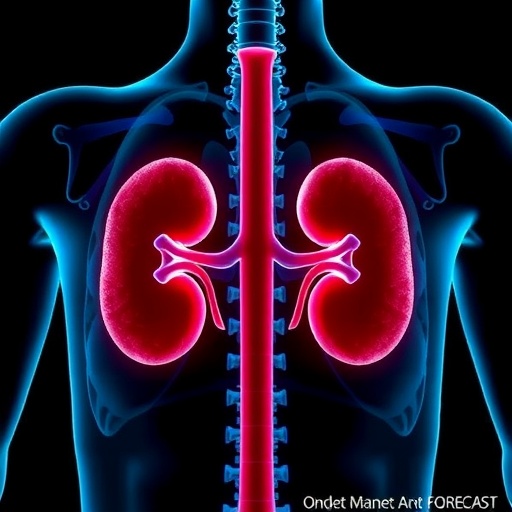
A groundbreaking development in renal medicine now offers unprecedented predictive power in identifying individuals of African ancestry who carry high-risk variants of the APOL1 gene and may face the future of kidney failure. This innovative blood test, created by researchers at the University of Pennsylvania’s Perelman School of Medicine, enables clinicians to detect the risk of kidney malfunction long before conventional clinical signs emerge. The findings, recently published in the prestigious journal Nature Medicine, represent a significant stride towards early intervention and personalized treatment for patients genetically predisposed to kidney disease.
Chronic kidney disease remains a silent global health menace, disproportionately affecting African American populations at almost four times the rate observed in individuals of European descent. Central to this disparity are specific high-risk variants of the APOL1 gene, which while offering protection against certain infections like trypanosomiasis, inadvertently elevate susceptibility to progressive kidney damage. Despite approximately 4 to 5 million carriers of these variants in the United States, only a fraction will experience deterioration in renal function. Until now, pinpointing which carriers would transition to clinical disease had been elusive, hampering preventative strategies.
This new diagnostic blood test overcomes this challenge by focusing on a nuanced panel of circulating proteins—biomarkers intimately linked with pathways of kidney injury and fibrotic remodeling. These proteins act as molecular emissaries, revealing subclinical biological alterations indicative of early damage. By quantifying and integrating these biomarkers into a calibrated risk score, the test forecasts the likelihood of progression to end-stage renal failure, major kidney function decline, or mortality over the ensuing decade. Such predictive capacity far surpasses existing clinical models reliant solely on traditional laboratory values and clinical parameters.
The study cohort comprised over 850 African ancestry individuals enrolled in the Penn Medicine BioBank, all harboring APOL1 high-risk genotypes yet maintaining normal renal function at baseline. Longitudinal monitoring revealed stark stratifications: those categorized within the highest risk tier endured renal failure necessitating dialysis or transplantation at a staggering rate exceeding 60% within ten years. Conversely, fewer than 1% of participants designated low risk reached comparable endpoints. This profound risk discrimination underscores the clinical utility of the protein-based assay in stratifying patients and tailoring surveillance.
Intriguingly, the implicated circulating proteins are deeply involved in critical pathophysiological mechanisms such as kidney parenchymal injury, cellular stress responses, and fibrogenesis. Their presence in peripheral blood serves as an early warning system, unveiling incipient renal tissue remodeling before measurable declines in glomerular filtration rates or albuminuria. By capturing this “molecular fingerprint” of early kidney insult, the test effectively bridges the gap between genetic susceptibility and clinical manifestation, facilitating preemptive clinical action.
Validation studies conducted in independent cohorts spanning the United States and the United Kingdom further affirmed the robustness and reproducibility of the risk score. Consistently outperforming traditional risk calculators, the test’s widespread applicability across diverse populations heralds a new era in personalized nephrology. This cross-cohort validation strengthens confidence that the assay can reliably inform prognosis and therapeutic decision-making irrespective of geographic or environmental variations.
The implications of this advancement extend beyond risk prediction alone. The test lays the foundation for revolutionizing interventional paradigms, guiding clinicians in selecting candidates who are most apt to benefit from emerging therapeutics aimed specifically at APOL1-driven kidney pathologies. Novel experimental drugs targeting the deleterious effects of APOL1 variants are currently in clinical trials, and the ability to identify high-risk patients at preclinical stages is critical for the success and ethical administration of these treatments.
Professor Katalin Susztak, the study’s senior author and a pioneer in kidney disease research, emphasized that this diagnostic capability fills a longstanding void in nephrology. Prior to this, early activity in APOL1-associated kidney disease was virtually undetectable using conventional clinical metrics. The ability to intervene timely offers transformative potential to attenuate disease progression or even prevent it altogether, representing hope for millions of vulnerable patients.
Beyond clinical care, the test presents a powerful tool for clinical trial design. By enriching study populations with high-risk individuals most likely to progress, researchers can enhance the efficiency and efficacy of trials evaluating APOL1-targeted therapies. This precision-medicine approach embodies the shift from broad, generalized treatment towards tailored, biology-informed strategies in nephrology.
The research exemplifies the growing appreciation of circulating protein biomarkers as windows into tissue-level pathology across a spectrum of diseases. Such biomarkers complement genomic data, translating complex molecular alterations into actionable clinical insights. This paradigm shift from indirect, late-stage clinical markers to direct assessments of disease biology heralds a new horizon in disease prediction and management.
The innovative test’s integration into routine clinical workflows hinges on the simplicity of a standard blood draw, making it feasible for widespread adoption. As more treatment options become available, early identification through this assay could become a cornerstone in the preventive nephrology arsenal, dramatically reshaping patient outcomes and health equity.
Financially supported by prominent bodies including the National Institute of Diabetes and Digestive and Kidney Diseases and the National Heart, Lung, and Blood Institute, this milestone reflects collaborative efforts at the forefront of translational medicine and exemplifies academic medical centers’ commitment to reducing health disparities through scientific innovation.
Penn Medicine’s leadership in medical research and patient care serves as the vital backdrop for this breakthrough. With a storied history of pioneering discoveries, the institution remains at the vanguard of efforts to transform complex genetic and molecular insights into tangible clinical advances with the power to save lives and improve quality of life globally.
Cite Scienmag News
Jerry Hayes. (April 15, 2026). Blood Test Forecasts Kidney Failure Risk in Black Americans Years Before Onset. Scienmag. https://scienmag.com/blood-test-forecasts-kidney-failure-risk-in-black-americans-years-before-onset/
Jerry Hayes. "Blood Test Forecasts Kidney Failure Risk in Black Americans Years Before Onset." Scienmag, 15 April 2026, https://scienmag.com/blood-test-forecasts-kidney-failure-risk-in-black-americans-years-before-onset/. Accessed 4 September 2026.
Jerry Hayes. "Blood Test Forecasts Kidney Failure Risk in Black Americans Years Before Onset." Scienmag. April 15, 2026. https://scienmag.com/blood-test-forecasts-kidney-failure-risk-in-black-americans-years-before-onset/


