Wednesday, October 28, 2026
Science
No Result
View All Result
  • Login
  • HOME
  • SCIENCE NEWS
  • CONTACT US
  • HOME
  • SCIENCE NEWS
  • CONTACT US
No Result
View All Result
Scienmag
No Result
View All Result
Home Science News

Blood-based HIV self-test shows strong accuracy in Uganda field trial

October 27, 2026
in Science News
Phoebe Ingram
By Phoebe Ingram Scienmag Editorial Profile - Epidemiology
Reading Time: 2 mins read
0
Blood-based HIV self-test shows strong accuracy in Uganda field trial

Blood-based HIV self-test shows strong accuracy in Uganda field trial

65
SHARES
587
VIEWS
Share on FacebookShare on Twitter
ADVERTISEMENT

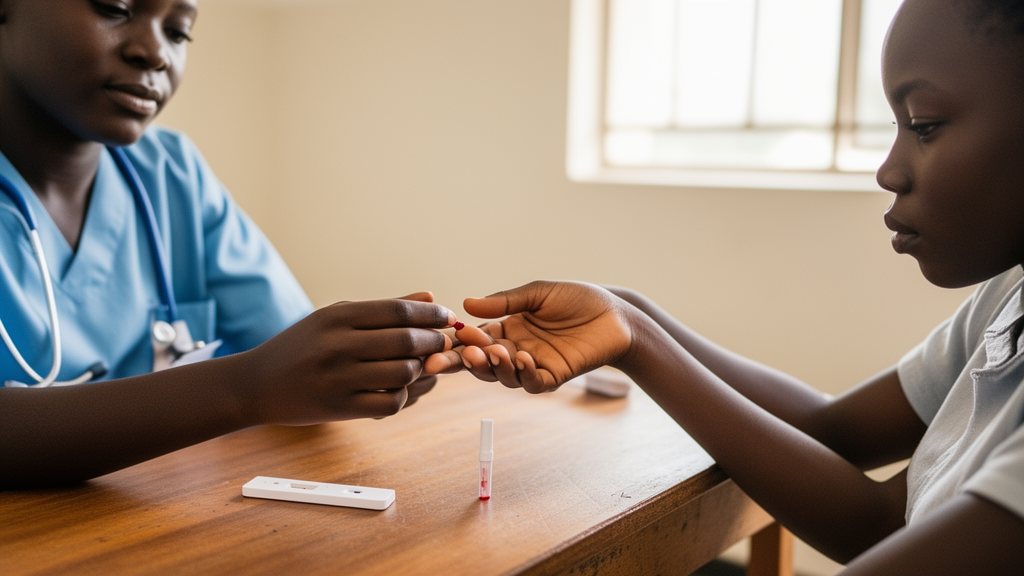
A large field study in Uganda has found that the ConfiSign HIV Self-Test, a blood-based rapid screening kit, performed with very high accuracy when used by members of the public under observation, matching the performance it showed in earlier laboratory validation.

Researchers conducted a cross-sectional mixed-methods study from 9 April 2025 to 30 May 2025 at 15 health facilities across Uganda. A total of 2,434 participants aged 14 years or older carried out self-testing with the ConfiSign device alongside the Wondfo HIV Self-Test, which served as the standard of care. Most participants were female (61.7%) and aged between 18 and 29 (51.8%).

The ConfiSign test is a single-use, direct-sampling, vertical flow rapid test that uses a small blood sample. In the field evaluation, 6.2% of ConfiSign results were positive compared with 6.0% for the Wondfo test. Measured against the Wondfo result, ConfiSign showed a sensitivity of 100% and a specificity of 99.8% (95% confidence interval: 99.53–99.93).

Three results were discordant between the two tests. These were resolved as negative when checked with laboratory-based ELISA and PCR testing, indicating that the ConfiSign device had produced false-positive rather than false-negative readings in those cases.

Beyond diagnostic accuracy, the study assessed how easy and acceptable the kit was to use. Usability questionnaires completed by 798 participants showed that 94.7% found the components easy to handle and 83.3% collected their samples without difficulty. Acceptability was also strong: 98.0% of users said they would use the test again and 99.0% said they would recommend it.

A separate feasibility assessment involving 90 participants scored the kit across operational, usability, performance, economic and acceptability domains, and returned positive results in each. The authors say these findings support integrating the ConfiSign test into Uganda’s HIV testing framework.

HIV self-testing is considered an important tool for reaching the UNAIDS 95-95-95 targets by expanding testing coverage in high-burden settings such as Uganda. The study team noted that the field results confirm the kit’s diagnostic accuracy and ease of use outside the laboratory.

The researchers also identified practical improvements that could increase acceptance of the kit, including providing instructions in the local language and including additional gauze in the test pack. The study was observational and compared ConfiSign against the Wondfo self-test rather than a laboratory reference for every sample, with discordant results alone resolved by ELISA and PCR, so the reported accuracy figures reflect that comparison.

Subject of Research: Field performance of a blood-based HIV self-test in Uganda

Article Title: Field performance evaluation of the GenBody ConfiSign HIV self-test for blood-based HIV screening in Uganda

Article References: Kyokushaba, J., Mujuni, D., Kasone, V., Namakula, A., Makoha, C., Mugalula, F., Okiira, C., Nyegenye, W., Katusiime, C., Mutumba, R., & Nabadda, S. (2026). Field performance evaluation of the GenBody ConfiSign HIV self-test for blood-based HIV screening in Uganda. PLOS One, 21(10), e0361282. https://doi.org/10.1371/journal.pone.0361282

Image Credits: AI Generated

DOI: 10.1371/journal.pone.0361282

Keywords: HIV self-testing, Uganda, rapid diagnostic test, ConfiSign, diagnostic accuracy, sensitivity, specificity, public health, field evaluation, HIV screening, Field, performance

Cite Scienmag News

Phoebe Ingram. (October 27, 2026). Blood-based HIV self-test shows strong accuracy in Uganda field trial. Scienmag. https://scienmag.com/blood-based-hiv-self-test-shows-strong-accuracy-in-uganda-field-trial/

Phoebe Ingram. "Blood-based HIV self-test shows strong accuracy in Uganda field trial." Scienmag, 27 October 2026, https://scienmag.com/blood-based-hiv-self-test-shows-strong-accuracy-in-uganda-field-trial/. Accessed 28 October 2026.

Phoebe Ingram. "Blood-based HIV self-test shows strong accuracy in Uganda field trial." Scienmag. October 27, 2026. https://scienmag.com/blood-based-hiv-self-test-shows-strong-accuracy-in-uganda-field-trial/

Tags: blood sample rapid HIV screeningblood-based rapid HIV test field trialcomparison of blood-based and oral HIV testsConfiSignConfiSign HIV self-test validationdiagnostic accuracyfalse-positive and false-negative HIV resultsfieldfield evaluationfield evaluation of HIV self-testHIV screeningHIV self-testingHIV self-testing accuracy in UgandaHIV testing acceptance and usabilityHIV testing for adolescents and adultsHIV testing in low-resource settingsHIV testing sensitivity and specificityperformancePublic healthpublic use of HIV self-test kitsrapid diagnostic testsensitivityspecificityUganda
Share26Tweet16
Previous Post

Soil Fungi and Bacteria Team Up to Help Citrus Rootstocks Cope with Drought

Next Post

Light pulse reveals hidden rivalry behind high-temperature superconductivity

Related Posts

Review of 230 studies recasts integrated writing as coordinated source-mediated L2 work
Science Education

Review of 230 studies recasts integrated writing as coordinated source-mediated L2 work

October 28, 2026
BN-coated graphene aerogel composite spreads heat and shields EMI
Technology and Engineering

BN-coated graphene aerogel composite spreads heat and shields EMI

October 28, 2026
New rainfall index captures how many days deliver heavy rain
Athmospheric

New rainfall index captures how many days deliver heavy rain

October 28, 2026
Theranostics expands from radiolabelled peptides to multiscale cancer care
Cancer

Theranostics expands from radiolabelled peptides to multiscale cancer care

October 28, 2026
Image-conditioned AI beats text prompts and fine-tuning at architectural rendering fidelity
Technology and Engineering

Image-conditioned AI beats text prompts and fine-tuning at architectural rendering fidelity

October 28, 2026
Two glaucoma stents show modest two-year results in highly myopic eyes
Medicine

Two glaucoma stents show modest two-year results in highly myopic eyes

October 28, 2026
Next Post
Light pulse reveals hidden rivalry behind high-temperature superconductivity

Light pulse reveals hidden rivalry behind high-temperature superconductivity

  • Mothers who receive childcare support from maternal grandparents show more optimized

    Mothers who receive childcare support from maternal grandparents show more parental warmth, finds NTU Singapore study

    27656 shares
    Share 11059 Tweet 6912
  • University of Seville Breaks 120-Year-Old Mystery, Revises a Key Einstein Concept

    1061 shares
    Share 424 Tweet 265
  • Bee body mass, pathogens and local climate influence heat tolerance

    682 shares
    Share 273 Tweet 171
  • Researchers record first-ever images and data of a shark experiencing a boat strike

    546 shares
    Share 218 Tweet 137
  • Groundbreaking Clinical Trial Reveals Lubiprostone Enhances Kidney Function

    531 shares
    Share 212 Tweet 133
Science

Embark on a thrilling journey of discovery with Scienmag.com—your ultimate source for cutting-edge breakthroughs. Immerse yourself in a world where curiosity knows no limits and tomorrow’s possibilities become today’s reality!

RECENT NEWS

  • Review of 230 studies recasts integrated writing as coordinated source-mediated L2 work
  • BN-coated graphene aerogel composite spreads heat and shields EMI
  • New rainfall index captures how many days deliver heavy rain
  • Theranostics expands from radiolabelled peptides to multiscale cancer care

Categories

  • Agriculture
  • Anthropology
  • Archaeology
  • Athmospheric
  • Biology
  • Biotechnology
  • Blog
  • Bussines
  • Cancer
  • Chemistry
  • Climate
  • Earth Science
  • Editorial Policy
  • Marine
  • Mathematics
  • Medicine
  • Pediatry
  • Policy
  • Psychology & Psychiatry
  • Science Education
  • Science News
  • Social Science
  • Space
  • Technology and Engineering

Subscribe to Blog via Email

Enter your email address to subscribe to this blog and receive notifications of new posts by email.

Join 5,151 other subscribers

© 2025 Scienmag - Science Magazine

Welcome Back!

Login to your account below

Forgotten Password?

Retrieve your password

Please enter your username or email address to reset your password.

Log In
No Result
View All Result
  • HOME
  • SCIENCE NEWS
  • CONTACT US

© 2025 Scienmag - Science Magazine

Discover more from Science

Subscribe now to keep reading and get access to the full archive.

Continue reading